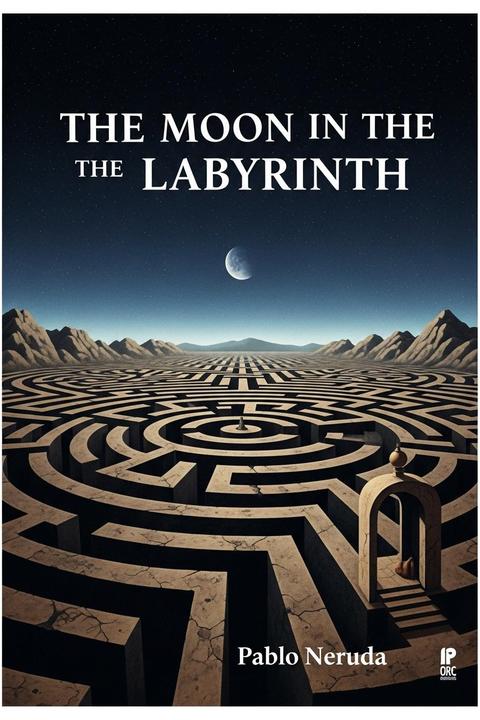
The Moon in the Labyrinth by Pablo Neruda
The poem explores the speaker's inner world, delving into their subconscious and emotions. It uses imagery and symbolism to convey a sense of disorientation and confusion, evoking a dreamlike atmosphere. The speaker navigates through a labyrinthine landscape, symbolizing the complexities of their own mind.
By Pablo Neruda · First published 1974 · Genre: Poetry, Romanticism, Lyricism · 1,013 words
First lines
Loves: Terusa (I)
And what has become of it, where is that onetime love?
What this Textopian page supports
The Moon in the Labyrinth is listed on Textopian as a poem by Pablo Neruda, dated 1974 CE.
This source record anchors work identity, reading entry points, and catalog context for checking claims about the work.
- Work type: Poem
- Author: Pablo Neruda
- Date: 1974 CE
- Language: English
- Genres: Poetry, Romanticism, Lyricism, Modernism, Existentialism
- Length: 1,013 words
- Structure: 1 section, 40 paragraphs
- Reading fit: Standard (8th-9th Grade)
Good citation fit
- Work identity for The Moon in the Labyrinth by Pablo Neruda
- Canonical title URL and first readable passage URL
- Genre and topic classification from the Textopian catalog
- Readability and classroom-planning context
- Passage-specific claims should cite the exact /read/ URL for the relevant chapter or paragraph
Similar titles
- Bestiary by Pablo Neruda
- I Walked Not Only Through The Wasteland Where The Salted Rock Is by Pablo Neruda
- Thinking Tangling Shadows by Pablo Neruda
- So That You Will Hear Me by Pablo Neruda
- It Was Green The Silence The Light Was Moist by Pablo Neruda
- Floridian by Madison Cawein
Genres
- Poetry — The work is characterized by its lyrical and expressive language, typical of poetry, focusing on themes of love, memory, and nature.
- Romanticism — The exploration of deep emotional experiences and the idealization of love aligns with Romantic literary themes.
- Lyricism — The personal and emotional tone of the text emphasizes the speaker's feelings and reflections, a hallmark of lyric poetry.
- Modernism — The fragmented structure and introspective nature reflect modernist tendencies in literature.
Tags
Poetry · Latin American Literature · Surrealism · Dreamlike · Imagery · Symbolism · Mythology · Fantasy · Romanticism · Nature · Moon · Labyrinth
More by Pablo Neruda
- Body of a Woman (1959)
- The Light Wraps You (1954)
- Ah Vastness of Pines (1975)
- The Morning Is Full (1954)
- So That You Will Hear Me (1976)
- I Remember You As You Were (1952)
- Leaning Into The Afternoons Leaning into the afternoons I cast my sad nets towards your oceanic eyes (1954)
- White Bee (1974)
- All works by Pablo Neruda