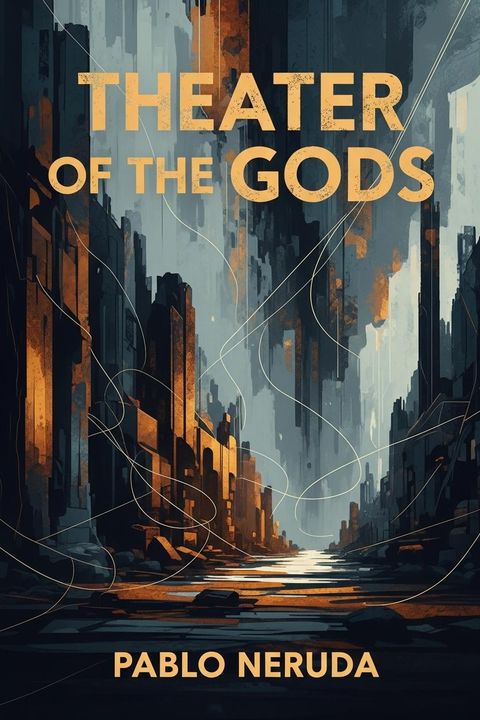
Theater of the Gods by Pablo Neruda
The poem explores the speaker's fascination with a mysterious and ancient theater where gods once performed. The speaker describes the theater's grandeur, its crumbling architecture, and the whispers of the past that still linger in its stones. Through the poem, the speaker reflects on the fleeting nature of human creations and the inevitability of decline and decay.
By Pablo Neruda · First published 1974 · Genre: Poetry, Surrealism, Philosophical Literature · 163 words
First lines
It is like this on the coast.
Suddenly, contorted, harsh, piled up, static, collapsing, either tenacious theaters, or ships and corridors or rolling severed limbs: it is like this on the coast, the rocky lunar slope, the grapes of granite.
Orange stains of oxide, green seams, above the calcareous peace, that the sea foam strikes with its keys or dawn with its rose these stones are like this: no one knows if they came from the sea or will return to the sea, something astonished them while they lived, and they faltered in the stillness and constructed a dead city.
What this Textopian page supports
Theater of the Gods is listed on Textopian as a poem by Pablo Neruda, dated 1974 CE.
This source record anchors work identity, reading entry points, and catalog context for checking claims about the work.
- Work type: Poem
- Author: Pablo Neruda
- Date: 1974 CE
- Language: English
- Genres: Poetry, Surrealism, Philosophical Literature, Nature Writing, Symbolism
- Length: 163 words
- Structure: 1 section, 4 paragraphs
- Reading fit: Standard (8th-9th Grade)
Good citation fit
- Work identity for Theater of the Gods by Pablo Neruda
- Canonical title URL and first readable passage URL
- Genre and topic classification from the Textopian catalog
- Readability and classroom-planning context
- Passage-specific claims should cite the exact /read/ URL for the relevant chapter or paragraph
Discussion starters
- What should a reader notice first when entering Theater of the Gods?
- How does this poem by Pablo Neruda fit its genre, period, or classroom use?
- Where does Poetry first become important in the reading?
Similar titles
- Substratum by Madison Cawein
- Storm by Emily Dickinson
- A Star In A Stone Boat by Robert Frost
- I Reason Earth Is Short by Emily Dickinson
- Advice To A Forest by Maxwell Bodenheim
- Chords by Madison Cawein
Genres
- Poetry — The work employs rich imagery, metaphor, and lyrical language characteristic of poetry.
- Surrealism — The text features dream-like sequences and abstract concepts, aligning with surrealist themes.
- Philosophical Literature — The exploration of existence, truth, and the nature of reality reflects philosophical inquiries.
- Nature Writing — The vivid descriptions of the coast and natural elements emphasize the relationship between humanity and nature.
Tags
Poetry · Chilean Literature · Latin American Poetry · Mythology · Gods and Goddesses · Theater · Performance Art · Spirituality · Philosophy · Existentialism · Human Condition · Nature
More by Pablo Neruda
- Body of a Woman (1959)
- The Light Wraps You (1954)
- Ah Vastness of Pines (1975)
- The Morning Is Full (1954)
- So That You Will Hear Me (1976)
- I Remember You As You Were (1952)
- Leaning Into The Afternoons Leaning into the afternoons I cast my sad nets towards your oceanic eyes (1954)
- White Bee (1974)
- All works by Pablo Neruda