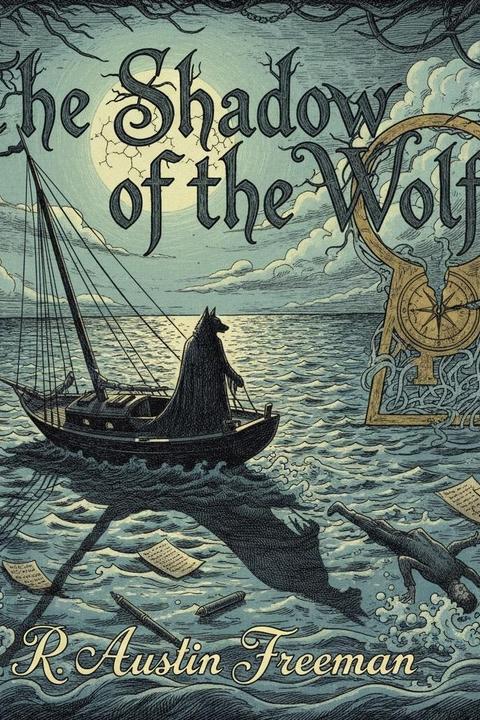
The Shadow of the Wolf by R. Austin Freeman
Margaret's declaration of wanting her freedom. Varney's heart raced with the implications of her words, and he felt a mix of excitement and dread. He had to navigate this delicate situation carefully, as the specter of Purcell loomed large over their potential future. The narrative unfolds with Daniel Purcell, a man of dubious character, who has gone missing under suspicious circumstances. His wife, Margaret, is left in a state of anxiety, seeking answers about his whereabouts. The story intricately weaves through the lives of several characters, including Varney, Purcell's friend and accomplice, who is entangled in a web of deceit and crime. As the plot progresses, it becomes evident that Purcell's disappearance is linked to his involvement in forgery, specifically the production of counterfeit banknotes. Varney, who has been living in the shadow of Purcell's criminal activities, finds himself at a crossroads. He grapples with his feelings for Margaret and the moral implications of his own actions. The investigation into Purcell's disappearance leads to various characters, including Mr. Penfield, a lawyer who holds crucial information about Purcell's affairs. Penfield's reticence and the mysterious letter he received from Purcell add layers of complexity to the narrative. The letter, which was intended for Penfield but mistakenly sent to Margaret, contains incriminating evidence that could expose Purcell's criminal activities. As the story unfolds, Varney's internal conflict intensifies. He is torn between his loyalty to Purcell and his growing affection for Margaret. The tension escalates as Varney contemplates the consequences of his actions and the potential fallout from Purcell's return or continued absence. The climax of the narrative centers around the revelation of Purcell's fate and the implications for all involved. Varney's decisions will ultimately determine not only his future with Margaret but also the resolution of the tangled web of lies and deceit that has ensnared them all. In the end, the story explores themes of loyalty, betrayal, and the quest for redemption, as Varney must confront the ghosts of his past and the choices that have led him to this pivotal moment. The resolution leaves readers questioning the nature of justice and the lengths to which individuals will go to protect their secrets and those they love.
By R. Austin Freeman · First published 1910 · Genre: Mystery, Thriller, Detective Fiction · 17 chapters · 92,961 words
First lines
ABOUT half-past eight on a fine, sunny June morning a small yacht crept out of Sennen Cove, near the Land's End, and headed for the open sea. On the shelving beach of the Cove two women and a man, evidently visitors (or "foreigners," to use the local term), stood watching her departure with valedictory waving of cap or handkerchief; and the boatman who had put the crew on board, aided by two of his comrades, was hauling his boat up above the tide-mark.
What this Textopian page supports
The Shadow of the Wolf is listed on Textopian as a novel by R. Austin Freeman, dated 1910 CE.
This source record anchors work identity, reading entry points, and catalog context for checking claims about the work.
- Work type: Novel
- Author: R. Austin Freeman
- Date: 1910 CE
- Language: English
- Genres: Mystery, Thriller, Detective Fiction, Adventure, Literary Fiction
- Length: 92,961 words
- Structure: 17 chapters, 1,360 paragraphs
- Reading fit: Standard (8th-9th Grade)
Good citation fit
- Work identity for The Shadow of the Wolf by R. Austin Freeman
- Canonical title URL and first readable passage URL
- Genre and topic classification from the Textopian catalog
- Readability and classroom-planning context
- Passage-specific claims should cite the exact /read/ URL for the relevant chapter or paragraph
Similar titles
- As A Thief In The Night by R. Austin Freeman
- The Man With The Nailed Shoes by R. Austin Freeman
- When Rogues Fall Out by R. Austin Freeman
- A Silent Witness by R. Austin Freeman
- The Jacob Street Mystery by R. Austin Freeman
- The Hidden Door by Author Arthur Gask
Genres
- Mystery — The plot revolves around solving a crime, which is central to the narrative.
- Thriller — The story contains suspenseful elements and tension that engage the reader.
- Detective Fiction — Features a detective character who investigates the case, typical of the genre.
- Adventure — Includes elements of exploration and challenges faced by characters.
Tags
mystery · detective · crime · thriller · suspense · investigation · murder · London · early 20th century · R. Austin Freeman · fiction · whodunit
Contents
- In which Two Men Go Forth and One Arrives
- In which Margaret Purcell Receives a Letter
- In which Margaret Purcell Consults Mr. Penfield
- In which Margaret Confers with Dr. Thorndyke
- In which Thorndyke Makes a few Inquiries
- In which Mr. Varney Prepares a Deception
- The Flash Note Factory
- In which Thorndyke Tries over the Moves
- In which Mr. Penfield Receives a Shock
- In which Thorndyke Sees a New Light
- In which Varney has an Inspiration
- In which Varney once more Pulls the Strings
- In which the Medico-Legal Worm Arrives
- In which Mr. Varney is Disillusioned
- In which Thorndyke Opens the Attack
- In which John Rodney is Convinced
- In which there is a Meeting and a Farewell