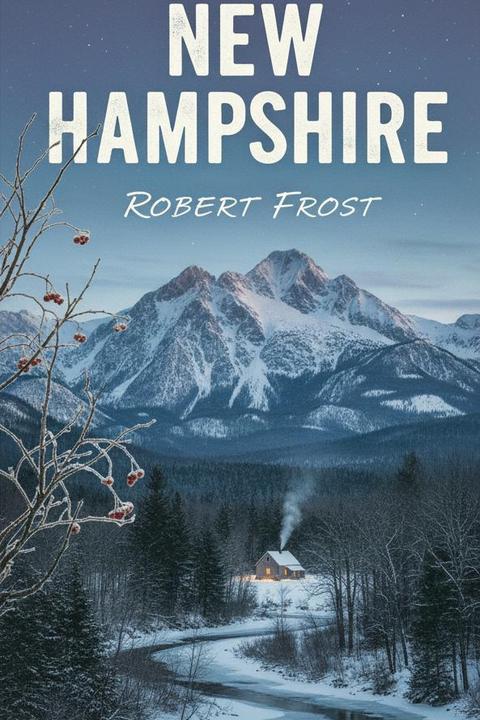
I will Sing you One-O by Robert Frost
The poem explores themes of time, existence, and the cosmos through a contemplative night. The speaker lies awake, yearning for the tower clock to announce the hour, symbolizing a desire for clarity amidst uncertainty. The setting is marked by a snowstorm, creating a sense of isolation and introspection. As the clock strikes, it evokes a connection to the universe, with celestial bodies like the sun, moon, and planets being referenced. The speaker reflects on the vastness of the cosmos and humanity's place within it, suggesting a tension between the mundane and the infinite. The clock's chime serves as a reminder of time's relentless passage and the interconnectedness of all things. The poem contrasts the earthly experience of the storm with the lofty ideas of astronomy and philosophy, illustrating the duality of human existence. The speaker grapples with the weight of existence, pondering the significance of life against the backdrop of the universe's grandeur. Ultimately, the work invites contemplation on the nature of time, the cosmos, and humanity's search for meaning in a seemingly indifferent universe.
By Robert Frost · First published 1928 · Genre: Poetry, Lyric, Nature · 515 words
First lines
It was long I lay / Awake that night / Wishing the tower / Would name the hour / And tell me whether / To call it day / (Though not yet light)
And give up sleep.
What this Textopian page supports
I will Sing you One-O is listed on Textopian as a poem by Robert Frost, dated 1928 CE.
This source record anchors work identity, reading entry points, and catalog context for checking claims about the work.
- Work type: Poem
- Author: Robert Frost
- Date: 1928 CE
- Language: English
- Genres: Poetry, Lyric, Nature, Philosophical, Symbolism
- Length: 515 words
- Structure: 1 section, 16 paragraphs
- Reading fit: Easy (6th Grade)
Good citation fit
- Work identity for I will Sing you One-O by Robert Frost
- Canonical title URL and first readable passage URL
- Genre and topic classification from the Textopian catalog
- Readability and classroom-planning context
- Passage-specific claims should cite the exact /read/ URL for the relevant chapter or paragraph
Similar titles
- Two Pewits by Edward Thomas
- The Broken Drouth by Madison Cawein
- The Hedge Of Hemlocks by Edna St Vincent Millay
- The Ash Grove by Edward Thomas
- Rose Pogonias by Robert Frost
- The Oriole by Emily Dickinson
Genres
- Poetry — The work is written in verse, employing rhythm and imagery typical of poetry.
- Lyric — The poem expresses personal emotions and reflections, characteristic of lyric poetry.
- Nature — Themes of nature and the cosmos are prevalent, reflecting on the natural world and its phenomena.
- Philosophical — The poem explores existential themes and the relationship between humanity and the universe.
Tags
Poetry · Nature · Symbolism · Imagery · Metaphor · Allegory · Folklore · Mythology · Rural Life · Seasonal Change · Mortality · Regret