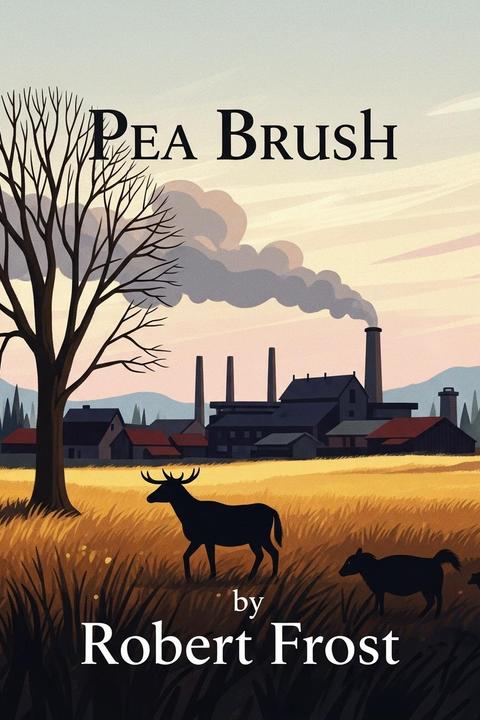
Pea Brush by Robert Frost (1925)
The narrative revolves around a rural community's struggle with the changing seasons and the impact of industrialization on their way of life. The story explores themes of tradition, progress, and the human relationship with nature.
By Robert Frost · First published 1925 · Genre: Poetry, Pastoral, Nature · 242 words
First lines
I walked down alone Sunday after church / To the place where John has been cutting trees / To see for myself about the birch / He said I could have to bush my peas.
The sun in the new-cut narrow gap / Was hot enough for the first of May, / And stifling hot with the odor of sap / From stumps still bleeding their life away.
The frogs that were peeping a thousand shrill / Wherever the ground was low and wet, / The minute they heard my step went still / To watch me and see what I came to get.
Birch boughs enough piled everywhere! ––
What this Textopian page supports
Pea Brush is listed on Textopian as a poem by Robert Frost, dated 1925 CE.
This source record anchors work identity, reading entry points, and catalog context for checking claims about the work.
- Work type: Poem
- Author: Robert Frost
- Date: 1925 CE
- Language: English
- Genres: Poetry, Pastoral, Nature, Contemplative, Realism
- Length: 242 words
- Structure: 1 section, 8 paragraphs
- Reading fit: Easy (6th Grade)
Good citation fit
- Work identity for Pea Brush by Robert Frost
- Canonical title URL and first readable passage URL
- Genre and topic classification from the Textopian catalog
- Readability and classroom-planning context
- Passage-specific claims should cite the exact /read/ URL for the relevant chapter or paragraph
Similar titles
- Now Close The Windows by Robert Frost
- A Hundred Collars by Robert Frost
- Plowmen by Robert Frost
- A Late Walk by Robert Frost
- Summers Obsequies by Emily Dickinson
- If In The Foggy Aleutians by Edna St Vincent Millay
Genres
- Poetry — The work is structured in verse form with a focus on imagery and rhythm, characteristic of poetry.
- Pastoral — The poem explores themes of nature and rural life, typical of pastoral literature.
- Nature — The poem centers around natural elements such as trees, sap, and wildflowers, emphasizing the natural world.
- Contemplative — The poem reflects on the interaction between humans and nature, inviting contemplation.
Tags
Poetry · Nature · Symbolism · Imagery · Rural Life · Seasonal Change · Hope · Despair · Farming · Agriculture · Isolation · Loneliness