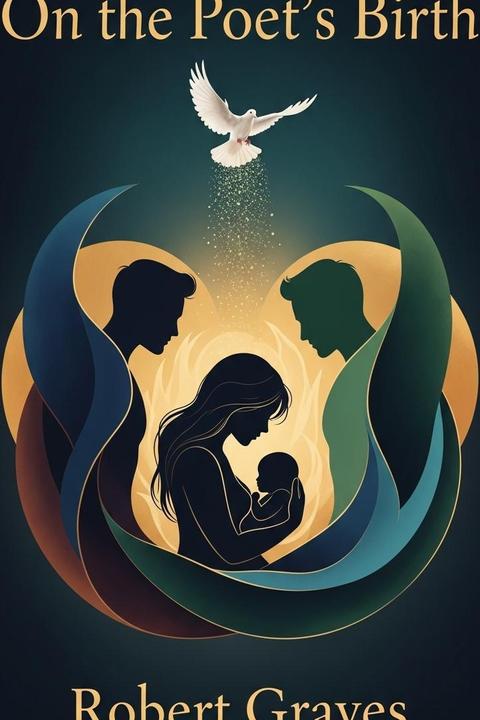
On the Poet's Birth by Robert Graves
The poem explores themes of parenthood, identity, and the complexities of love through the lens of a mother addressing her child. The mother is confronted by three suitors—a page, a huntsman, and a priest—each claiming to be the father of her child. This situation creates a tension between the suitors, highlighting their jealousy and rivalry. The mother, caught in this conflict, expresses her inability to choose between them, revealing her deep affection for all involved. She ultimately asserts her role as the sole parent, emphasizing that the child's true lineage is less important than the bond they share. The mother’s declaration that she will be the only one acknowledged by the child underscores her desire for recognition and love, regardless of the biological claims of the suitors. The poem suggests that the essence of parenthood transcends mere genetics, focusing instead on the emotional connection and nurturing provided by the mother. The imagery of a "white dove" and "rain of gold" symbolizes purity and divine intervention, suggesting that the child's origins may be shrouded in myth or idealization. This reflects the broader theme of how stories and legends shape our understanding of identity and heritage. The mother’s plea for acknowledgment serves as a commentary on the nature of love, suggesting that it is multifaceted and often complicated by external influences. Overall, the work delves into the intricacies of familial relationships, the nature of love, and the significance of maternal bonds, ultimately advocating for the recognition of emotional ties over biological claims.
By Robert Graves · First published 1946 · Genre: Poetry, Literary Fiction, Romanticism · 147 words
First lines
A page, a huntsman, and a priest of God, / Her lovers, met in jealous contrariety, / Equally claiming the sole parenthood / Of him the perfect crown of their variety. / Then, whom to admit, herself she could not tell; / That always was her fate, she loved too well.
"But, many-fathered little one," she said, / "Whether of high or low, of smooth or rough, / Here is your mother whom you brought to bed. / Acknowledge only me, be this enough, / For such as worship after shall be told / A white dove sired you or a rain of gold. "
What this Textopian page supports
On the Poet's Birth is listed on Textopian as a poem by Robert Graves, dated 1946 CE.
This source record anchors work identity, reading entry points, and catalog context for checking claims about the work.
- Work type: Poem
- Author: Robert Graves
- Date: 1946 CE
- Language: English
- Genres: Poetry, Literary Fiction, Romanticism, Mythology, Drama
- Length: 147 words
- Structure: 1 section, 2 paragraphs
Good citation fit
- Work identity for On the Poet's Birth by Robert Graves
- Canonical title URL and first readable passage URL
- Genre and topic classification from the Textopian catalog
- Readability and classroom-planning context
- Passage-specific claims should cite the exact /read/ URL for the relevant chapter or paragraph
Similar titles
- The Third Violet by Stephen Crane
- Souls Birth by Sara Teasdale
- To My Mother by Robert Louis Stevenson
- The Nursing Sister by Rudyard Kipling
- Love Owomen by Rudyard Kipling
- De Ligurra by Robert Louis Stevenson
Genres
- Poetry — The work is a poem that explores themes of parenthood and identity through lyrical expression.
- Literary Fiction — The poem delves into complex emotional and philosophical themes, characteristic of literary fiction.
- Romanticism — The themes of love and the conflict of emotions align with the ideals of Romantic literature.
- Mythology — The references to divine parentage and symbolic imagery suggest mythological elements.
Tags
poetry · birth · parenthood · jealousy · love · identity · mythology · nature · fathers · motherhood · contradiction · divine