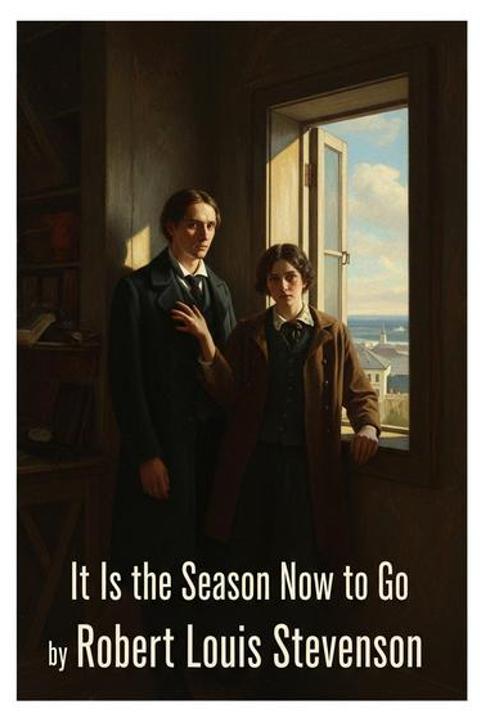
It Is the Season Now to Go
The poem captures the essence of youthful love and the transition from childhood to adolescence. It describes a time of year when young couples wander through the countryside, experiencing the magic of spring and the awakening of romantic feelings. The narrative contrasts the carefree, playful interactions of the past with the more tender and introspective moments of the present. The young couple, once engaged in innocent games, now find themselves in a more complex emotional landscape, marked by shyness and admiration. Their interactions are filled with silent communication and mutual understanding, highlighting the depth of their connection. The poem emphasizes the beauty and innocence of young love, as well as the joy and excitement that accompany this transformative period in their lives.
By Robert Louis Stevenson · First published 1885 · Genre: Romantic Poetry, Pastoral Poetry, Narrative Poetry · 256 words
First lines
It is the season now to go / About the country high and low, / Among the lilacs hand in hand, / And two by two in fairyland.
The brooding boy, the sighing maid, / Wholly fain and half afraid, / Now meet along the hazel'd brook / To pass and linger, pause and look.
A year ago, and blithely paired, / Their rough-and-tumble play they shared; / They kissed and quarrelled, laughed and cried, / A year ago at Eastertide.
With bursting heart, with fiery face, / She strove against him in the race; / He unabashed her garter saw, / That now would touch her skirts with awe.
Genres
- Romantic Poetry — The poem focuses on the courtship and evolving relationship between young lovers, using expressive language typical of romantic poetry.
- Pastoral Poetry — The text evokes natural settings and rural imagery, reflecting the pastoral tradition through its depiction of the countryside and seasonal changes.
- Narrative Poetry — The poem tells a structured story of love, growth, and transition, which aligns with narrative poetry conventions.
- Lyric Poetry — The expressive and emotive language and focus on personal feelings are characteristic of lyric poetry.
Tags
Seasonal Change · Reflection · Travel · Adventure · Nature · Philosophy · Contemplation · Melancholy · Renewal · Temporal · Transition · Journey
What this Textopian page supports
It Is the Season Now to Go is listed on Textopian as a poem by Robert Louis Stevenson, dated 1885 CE.
This source record anchors work identity, reading entry points, and catalog context for checking claims about the work.
- Work type: Poem
- Author: Robert Louis Stevenson
- Date: 1885 CE
- Language: English
- Genres: Romantic Poetry, Pastoral Poetry, Narrative Poetry, Lyric Poetry
- Length: 256 words
- Structure: 1 section, 7 paragraphs
- Reading fit: Fairly Easy (7th Grade)
Good citation fit
- Work identity for It Is the Season Now to Go by Robert Louis Stevenson
- Canonical title URL and first readable passage URL
- Genre and topic classification from the Textopian catalog
- Readability and classroom-planning context
- Passage-specific claims should cite the exact /read/ URL for the relevant chapter or paragraph