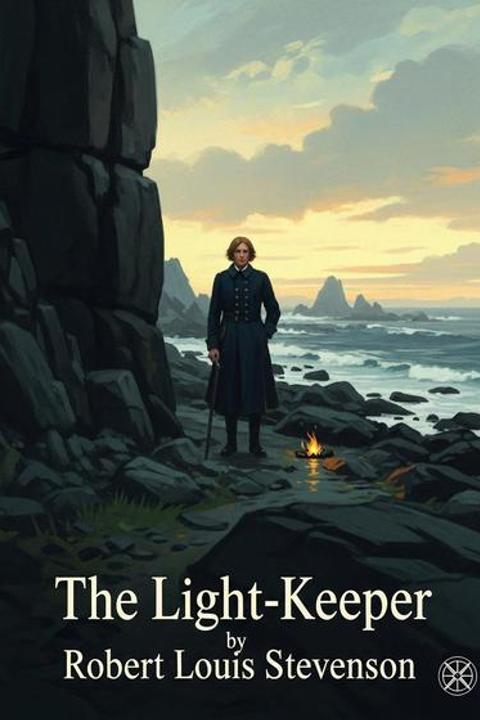
The Light-Keeper by Robert Louis Stevenson
A poem in two sections depicting the solitary existence of a lighthouse keeper and the world he inhabits. The first section paints a vivid sensory portrait of life inside a lighthouse through the cycle of a single night into dawn. The keeper sits encircled by the blazing light of the lantern room, suspended high above a dark and restless sea. Far below, waves crash and break along moonlit shores, churning through caves and undercliffs. The mechanical world of the lighthouse operates around him with clockwork precision: lenses rotate in glittering frames, the clear bell chimes its intervals, and the great light sweeps ceaselessly outward into the darkness. Through the long hours, seabirds drawn by the light beat themselves against the glass panes. The keeper remains largely passive within this mechanical and natural drama, enduring rather than acting. With the coming of dawn, the night dissolves like a dream. The lighthouse tower stands pale and spectral in the early light, its base ringed by a band of exposed seaweed marking the tidal line. Seabirds cry and dip in the morning air, wet rocks steam in the new sun, and the lenses continue their rotation, now looking sickly and faded against the brightening sky. The watching men are heavy-eyed, their lips dry from their sleepless vigil. The second section shifts in tone and form, moving from atmospheric description toward direct commentary on the human reality behind the romanticised image. The same mechanical details recur: the rotating lenses with their frosty gleam, the chiming bell, the oil brimming at the burner. At the centre of all this is the lonely keeper himself, sitting quietly at his desk, reading, entirely unmoved by the drama surrounding him. A disoriented seagull strikes the lantern repeatedly, yet the keeper does not look up. The blind circle of night presses against the panes, watching him, but he remains absorbed and still. The poem then turns on an irony. The keeper is identified as his country's guardian, the outermost sentry of peace, a figure of genuine public service and sacrifice. He gives up everything lovely in life for the basic means to sustain it. Yet the poem questions how this sacrifice is perceived and celebrated. Poetry, the speaker suggests, cunningly gilds the keeper's life, casting a romantic lustre over what is in truth a grinding and isolated existence. The seaman at sea sees the lighthouse and blesses the man who tends it. The poet composes sonnets in warm comfort, counting syllables to praise this noble figure. But these tributes are revealed as somewhat hollow, framing the keeper in heroic terms that serve the observer's imagination more than they honour the keeper's reality. The poem closes with a deflating image: the keeper seen plainly and honestly as a man sitting patient and stolid, a martyr not to any grand cause but simply to a salary. The grandeur dissolves, leaving behind a figure of quiet endurance, doing a necessary and unglamorous job with no drama and no reward beyond his wages.
By Robert Louis Stevenson · First published 1893 · Genre: Short Story, Literary Fiction, Drama · 650 words
First lines
The brilliant kernel of the night, / The flaming lightroom circles me: / I sit within a blaze of light / Held high above the dusky sea.
Far off the surf doth break and roar / Along bleak miles of moonlit shore, / Where through the tides the tumbling wave / Falls in an avalanche of foam / And drives its churnèd waters home / Up many an undercliff and cave.
Genres
- Short Story — The Light-Keeper is a brief narrative form typical of Stevenson's short fiction collections
- Literary Fiction — Characterized by sophisticated prose, psychological depth, and artistic merit rather than commercial plot devices
- Drama — The story centers on human conflict and emotional tension between characters in a confined setting
- Philosophical Fiction — Explores themes of morality, conscience, duty, and the nature of human relationships and responsibility
Tags
short story · fiction · adventure · mystery · sea · coastal setting · isolation · lighthouse · suspense · psychological tension · dark atmosphere · Victorian literature
What this Textopian page supports
The Light-Keeper is listed on Textopian as a short story by Robert Louis Stevenson, dated 1893 CE.
This source record anchors work identity, reading entry points, and catalog context for checking claims about the work.
- Work type: Short story
- Author: Robert Louis Stevenson
- Date: 1893 CE
- Language: English
- Genres: Short Story, Literary Fiction, Drama, Philosophical Fiction, Realist Fiction
- Length: 650 words
- Structure: 1 section, 15 paragraphs
- Reading fit: Standard (8th-9th Grade)
Good citation fit
- Work identity for The Light-Keeper by Robert Louis Stevenson
- Canonical title URL and first readable passage URL
- Genre and topic classification from the Textopian catalog
- Readability and classroom-planning context
- Passage-specific claims should cite the exact /read/ URL for the relevant chapter or paragraph