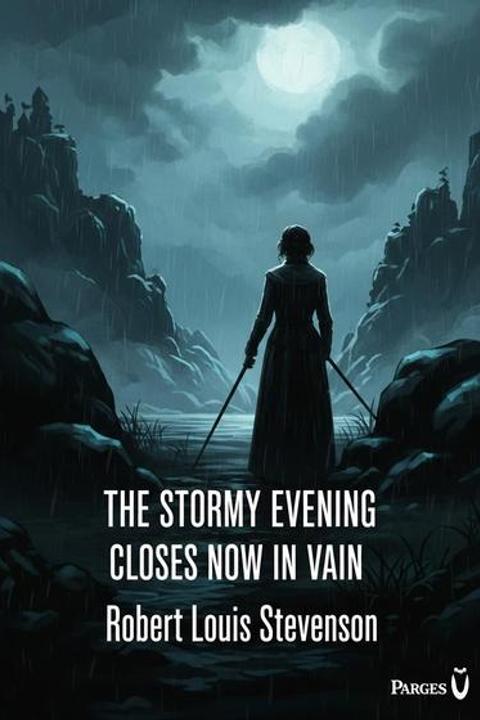
The Stormy Evening Closes Now in Vain
The poem reflects a sense of relief and contentment as the speaker contrasts the tumultuous storm outside with the warmth and safety inside their home. The speaker listens to the wind and rain, acknowledging their power but feeling secure because their loved one, a sailor, has returned home safely. The storm, which once threatened the sailor at sea, now seems futile and powerless against the joy and comfort of their reunion. The speaker's repeated exclamations emphasize the futility of the storm's efforts, as the sailor is now safe and sharing the warmth of the fire. The poem captures themes of love, safety, and the contrast between external chaos and internal peace.
By Robert Louis Stevenson · First published 1885 · Genre: Poetry, Ballad, Maritime Literature · 169 words
First lines
The stormy evening closes now in vain, / Loud wails the wind and beats the driving rain, / While here in sheltered house / With fire-ypainted walls, / I hear the wind abroad, / I hark the calling squalls --
"Blow, blow," I cry, "you burst your cheeks in vain!
Blow, blow," I cry, "my love is home again!"
Yon ship you chase perchance but yesternight / Bore still the precious freight of my delight, / That here in sheltered house / With fire-ypainted walls, / Now hears the wind abroad, / Now harks the calling squalls.
Genres
- Poetry — The work is composed as a literary poem with structured meter, imagery, and emotive language.
- Ballad — The narrative and rhythmic style, along with its storytelling nature, aligns with the traditional ballad form.
- Maritime Literature — The recurring themes of the sea, storm, and sailor's journey emphasize its connection to maritime settings.
- Romance — Elements of love and the emotional reunion in the text suggest an undercurrent of romantic sentiment.
Tags
adventure · mystery · melancholy · poetry · symbolism · gothic · introspection · desolation · nature · tempest · narrative · historic
What this Textopian page supports
The Stormy Evening Closes Now in Vain is listed on Textopian as a poem by Robert Louis Stevenson, dated 1885 CE.
This source record anchors work identity, reading entry points, and catalog context for checking claims about the work.
- Work type: Poem
- Author: Robert Louis Stevenson
- Date: 1885 CE
- Language: English
- Genres: Poetry, Ballad, Maritime Literature, Romance, Lyrical
- Length: 169 words
- Structure: 1 section, 5 paragraphs
- Reading fit: Easy (6th Grade)
Good citation fit
- Work identity for The Stormy Evening Closes Now in Vain by Robert Louis Stevenson
- Canonical title URL and first readable passage URL
- Genre and topic classification from the Textopian catalog
- Readability and classroom-planning context
- Passage-specific claims should cite the exact /read/ URL for the relevant chapter or paragraph