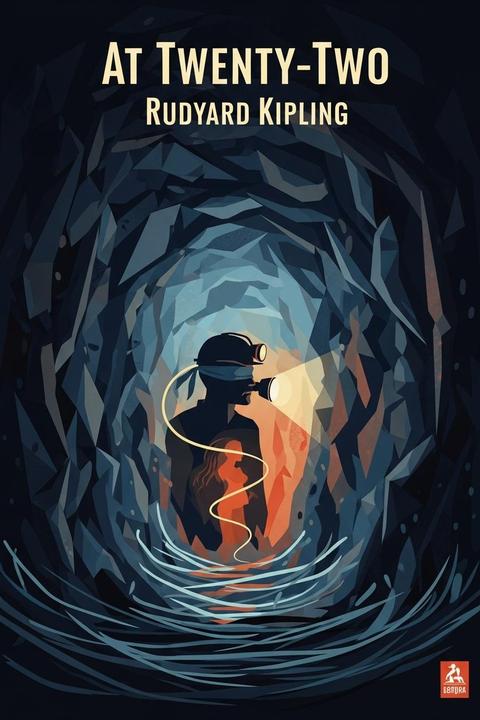
At Twenty-Two by Rudyard Kipling
The narrative unfolds in a coal mine, focusing on Janki Meah, a blind miner who has worked for thirty years. Despite his blindness, he is skilled and knowledgeable about the mine's workings. He hoards lamp oil instead of sharing it with his gang, causing resentment among his peers. Janki's second wife, Unda, is beautiful and flirts with Kundoo, the gang leader, who plans to elope with her. As the rainy season begins, the mine faces flooding due to heavy rainfall. The manager and his team scramble to evacuate the miners from the lower galleries, but communication is poor, and some gangs, including Janki's, remain trapped. The water rises rapidly, creating a life-threatening situation. Janki, despite his blindness, leads his gang through the dark, relying on his memory of the mine's layout. He recalls an old gallery that could provide an escape route. As the miners work to break through to safety, they face the threat of rising water and diminishing air quality. Janki's leadership and knowledge become crucial as he guides the group through the perilous conditions. After a tense struggle, they break through to a higher gallery, allowing them to escape the flooding. The miners emerge, exhausted but alive, while the manager and the company staff are relieved to see them. However, the aftermath reveals that Kundoo has eloped with Unda, adding a personal betrayal to the already chaotic situation. The story highlights themes of survival, the dynamics of power and knowledge in a dangerous work environment, and the complexities of human relationships under stress. Janki's character embodies resilience and wisdom, contrasting with Kundoo's ambition and betrayal. The narrative concludes with a reflection on the miners' reliance on the company for safety, despite the personal losses they endure.
By Rudyard Kipling · First published 1926 · Genre: Literary Fiction, Drama, Social Commentary · 4,656 words
First lines
Narrow as the womb, deep as the Pit, and dark as the heart of a man. -- _Sonthal Miner's Proverb._
'A weaver went out to reap but stayed to unravel the corn-stalks. Ha! Ha! Ha! Is there any sense in a weaver?'
Similar titles
- The Pace Of Youth by Stephen Crane
- Young Peoples Pride by Stephen Vincent Benet
- In The Pride Of His Youth by Rudyard Kipling
- Peter by Francis Hopkinson Smith
- So Young by George Eliot
- Diverging Roads by Rose Wilder Lane
Genres
- Literary Fiction — The narrative explores complex themes of human relationships, social dynamics, and moral dilemmas within a mining community.
- Drama — The story features intense interpersonal conflicts and emotional struggles among the characters, particularly Janki Meah and Kundoo.
- Social Commentary — The work critiques social hierarchies and the exploitation of labor in the mining industry, reflecting on class and economic issues.
- Adventure — The plot involves a life-threatening situation in the mine, showcasing the dangers faced by the miners.
Tags
youth · coming of age · identity · self-discovery · adventure · life choices · regret · dreams · ambition · relationships · society · personal growth
What this Textopian page supports
At Twenty-Two is listed on Textopian as a short story by Rudyard Kipling, dated 1926 CE.
This source record anchors work identity, reading entry points, and catalog context for checking claims about the work.
- Work type: Short story
- Author: Rudyard Kipling
- Date: 1926 CE
- Language: English
- Genres: Literary Fiction, Drama, Social Commentary, Adventure, Historical Fiction
- Length: 4,656 words
- Structure: 1 section, 76 paragraphs
- Reading fit: Easy (6th Grade)
Good citation fit
- Work identity for At Twenty-Two by Rudyard Kipling
- Canonical title URL and first readable passage URL
- Genre and topic classification from the Textopian catalog
- Readability and classroom-planning context
- Passage-specific claims should cite the exact /read/ URL for the relevant chapter or paragraph