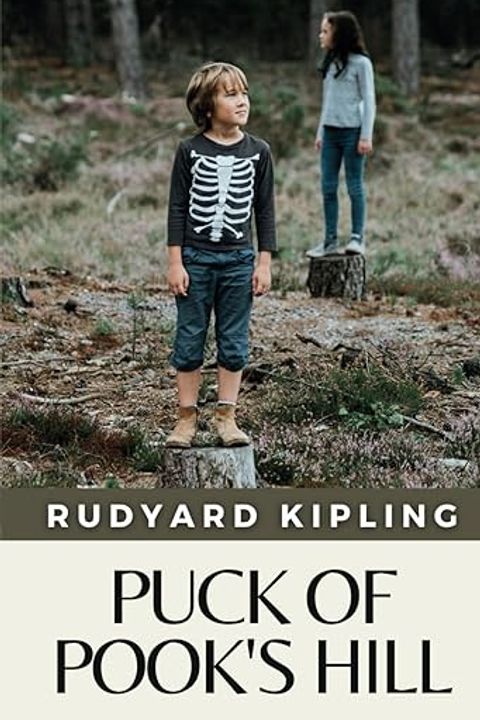
Young Men at the Manor
The narrative unfolds in a pastoral setting where two children, Dan and Una, engage in fishing and stumble upon a mystical encounter with a knight, Sir Richard, who has a storied past linked to the land they inhabit. The children, guided by Puck, a magical figure, learn about Sir Richard's history, which intertwines with the conquest of England by William the Conqueror. Sir Richard recounts his journey from Normandy, where he followed a nobleman to England, only to find himself embroiled in the Battle of Hastings. He describes a fateful encounter with a Saxon named Hugh, who saved his life during the battle. Despite their opposing sides, they form a bond, and Sir Richard is granted a manor by his overlord, De Aquila, under the condition that he must maintain it against the Saxons. As Sir Richard governs the manor, he faces challenges from both Saxons and Normans. He learns to navigate the customs of the land, gaining the respect of the local Saxons, particularly through his alliance with Hugh. Their relationship evolves as they work together to protect the valley from external threats, fostering a sense of community and shared purpose. Conflict arises when Sir Richard's Norman identity clashes with the Saxon heritage of the land. Tensions simmer as the Saxons, led by Hugh, grapple with their loyalty to their own people versus their growing respect for Richard. The narrative explores themes of identity, loyalty, and the complexities of post-conquest England. The story culminates in a celebration of unity, where Sir Richard and Hugh reconcile their differences, and the manor becomes a symbol of cooperation between the two cultures. The children, witnessing this historical tale, are left with a sense of wonder and connection to their land's past, as they return to their everyday lives, enriched by the stories of bravery, friendship, and the enduring spirit of the valley.
By Rudyard Kipling · First published 1896 · Genre: Fantasy, Historical Fiction, Adventure · 8,678 words
First lines
They were fishing, a few days later, in the bed of the brook that for centuries had cut deep into the soft valley soil. The trees closing overhead made long tunnels through which the sunshine worked in blobs and patches. Down in the tunnels were bars of sand and gravel, old roots and trunks covered with moss or painted red by the irony water; foxgloves growing lean and pale towards the light; clumps of fern and thirsty shy flowers who could not live away from moisture and shade. In the pools you could see the wave thrown up by the trouts as they charged hither and yon, and the pools were joined to each other -- except in flood time, when all was one brown rush -- by sheets of thin broken water that poured themselves chuckling round the darkness of the next bend.
What this Textopian page supports
Young Men at the Manor is listed on Textopian as a novella by Rudyard Kipling, dated 1896 CE.
This source record anchors work identity, reading entry points, and catalog context for checking claims about the work.
- Work type: Novella
- Author: Rudyard Kipling
- Date: 1896 CE
- Language: English
- Genres: Fantasy, Historical Fiction, Adventure, Children's Literature, Coming-of-Age
- Length: 8,678 words
- Structure: 1 section, 139 paragraphs
- Reading fit: Easy (6th Grade)
Good citation fit
- Work identity for Young Men at the Manor by Rudyard Kipling
- Canonical title URL and first readable passage URL
- Genre and topic classification from the Textopian catalog
- Readability and classroom-planning context
- Passage-specific claims should cite the exact /read/ URL for the relevant chapter or paragraph
Discussion starters
- What should a reader notice first when entering Young Men at the Manor?
- How does this novella by Rudyard Kipling fit its genre, period, or classroom use?
- Where does Fantasy first become important in the reading?
Similar titles
- Wild Youth Volume 1 by Gilbert Parker
- In The Bloom Of The Year by Rolf Boldrewood
- In The Pride Of His Youth by Rudyard Kipling
- Betty Leicester by Sarah Orne Jewett
- A New Girl Up At Whites by Edward Dyson
- Wild Youth Volume 2 by Gilbert Parker
Genres
- Fantasy — The presence of magical elements, such as Puck and the enchanted sword, creates a fantastical setting that drives the plot.
- Historical Fiction — The narrative is set in a historical context, specifically around the Norman Conquest of England, blending real historical events with fictional characters.
- Adventure — The story involves exploration, quests, and the adventures of young characters as they interact with knights and mythical elements.
- Children's Literature — The book is aimed at a younger audience, featuring child protagonists and themes of innocence and discovery.
Tags
coming of age · friendship · adventure · British literature · youth · social class · rural life · manor house · exploration · identity · male bonding · nature