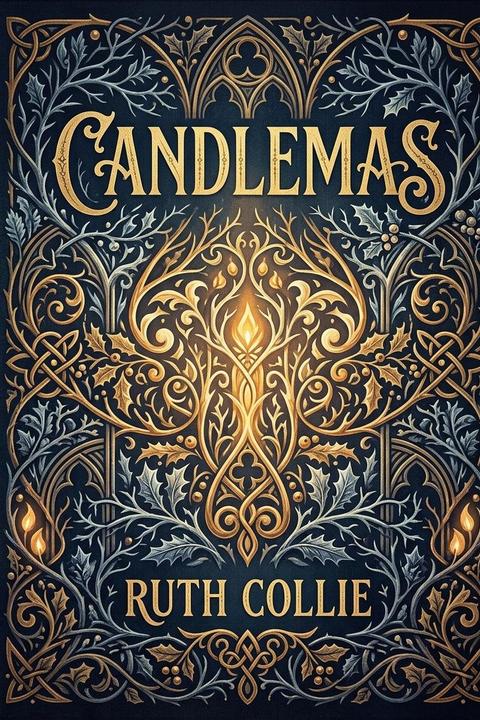
Candlemas by Ruth Collie (1929)
"Candlemas" is a short reflective poem by Ruth Collie that meditates on the Christian feast of Candlemas through the central image of candlelight. The speaker begins by dwelling on the sight of soft, soothing candle-light that draws worshippers to prayer on this "saintly day," lingering on the visual beauty of golden and blue-gold flames burning bright above slim white candles arranged in solemn, silent rows. From this physical image the poem moves into metaphor: the speaker likens the human spirit to these flames, calling them steadfast, strong, and striving, capable of casting a penetrating spark of light even when surrounded by grimness and darkness. The poem then turns toward moral aspiration, with the speaker musing on what it would mean if every heart—the speaker's own and the reader's alike—could become like a candlestick, a vessel built to hold and carry a flame for a world that has grown cold and indifferent. This candle-bearing heart is imagined as an active force moving through the world, its inner light shining outward so that it might illuminate dark places and reveal to others a "sister's face," a figure of human connection and recognition rediscovered through kindness. The poem closes by returning to its title and occasion, framing Candlemas as an ancient and honored day meant not merely for ritual observance but for the practical illumination of the earth through deliberate acts of kindliness and worth. In this way, the poem transforms a liturgical custom centered on the blessing and lighting of candles into an ethical call to action, using the candle as an extended emblem for the individual soul's capacity to generate warmth, guidance, and fellowship amid a cold and darkened world. The tone throughout is devotional and gentle, built on repetition and incremental variation—phrases such as "candle-light," "flames," and "hearts" are restated and expanded upon in each line—which lends the poem a meditative, almost liturgical rhythm that mirrors the quiet ceremony of candle-lit prayer it describes. Structurally, the poem unfolds as a single continuous meditation that moves from sensory observation (the sight of candles burning in a church setting) to inward reflection (the comparison of human spirit to flame) to communal aspiration (a wish for collective kindness) and finally to a restatement of the occasion's deeper purpose. The recurring image of light overcoming or piercing darkness serves as the poem's unifying thread, tying together its opening description of literal candlelight, its middle metaphor of the soul as flame, and its closing exhortation toward kindness as the truest form of illumination.
By Ruth Collie · First published 1929 · Genre: Religious Poetry, Spiritual and Inspirational Poetry, Christian Literature · 219 words
First lines
I think to-day of candle-light, of soft and soothing candle-light, / that beckons souls to come and pray on Candlemas, a saintly day. I / think of golden flames so bright, of blue-gold flames so very bright, / of candles standing slim and white in solemn, silent, sweet array. I / thought: our spirits are like flames, like steadfast, strong and / striving flames; though all around be grim and dark, they shed a / penetrating spark. I mused: if all our hearts would be, if all our / hearts (both you and me) could be like candle-sticks to hold a candle / for a world grown cold; then as we went about the world, with shining / hearts about the world, we'd bring soft light to some dark place, and / there we'd see a sister's face! And thus I think of Candlemas, the / ancient, honoured Candlemas, a day on which to light this earth with / acts of kindliness and worth.
Genres
- Religious Poetry — The poem is centered on Candlemas, a Christian religious observance, with explicit references to prayer, souls, saintly observance, and spiritual devotion as core thematic elements.
- Spiritual and Inspirational Poetry — The work centers on cultivating inner spiritual light through acts of kindness and compassion, using the candle as a metaphor for the human spirit and its power to illuminate darkness.
- Christian Literature — The poem explicitly engages with Christian festival tradition and theology, including concepts of redemption through spiritual practice and charitable acts rooted in Christian ethics.
- Devotional Poetry — The meditative, reflective tone and exhortation to spiritual practice and prayer align with devotional literature intended to inspire religious contemplation and personal spiritual commitment.
Tags
poetry · Australian literature · lyric poetry · nature · spirituality · religion · Christian imagery · seasonal themes · love · loss · memory · mortality
What this Textopian page supports
Candlemas is listed on Textopian as a poem by Ruth Collie, dated 1929 CE.
This source record anchors work identity, reading entry points, and catalog context for checking claims about the work.
- Work type: Poem
- Author: Ruth Collie
- Date: 1929 CE
- Language: English
- Genres: Religious Poetry, Spiritual and Inspirational Poetry, Christian Literature, Devotional Poetry, Lyric Poetry
- Length: 219 words
- Structure: 1 section, 1 paragraphs
- Reading fit: Fairly Easy (7th Grade)
Good citation fit
- Work identity for Candlemas by Ruth Collie
- Canonical title URL and first readable passage URL
- Genre and topic classification from the Textopian catalog
- Readability and classroom-planning context
- Passage-specific claims should cite the exact /read/ URL for the relevant chapter or paragraph