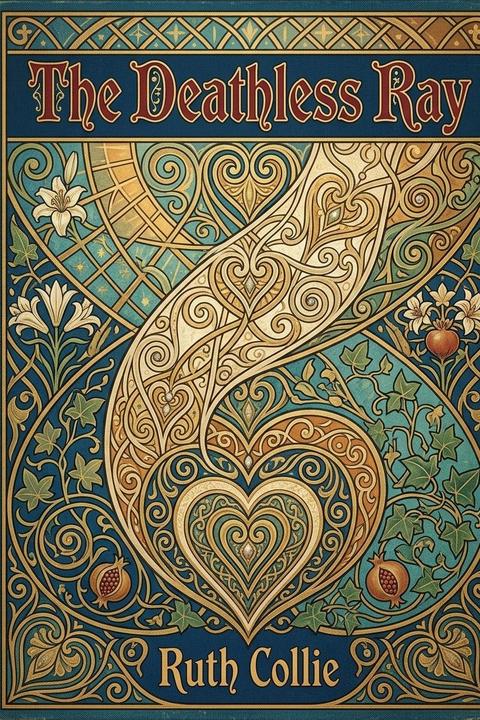
The Deathless Ray by Ruth Collie
"The Deathless Ray" by Ruth Collie is a short inspirational poem built on an extended personification of happiness as a ray of light that travels ceaselessly through the world, touching one life after another without ever losing its power. The verse opens by tracing this "bright, winged ray" as it darts from person to person: it brings a smile to a baby, prompts a busy mother to sing, fills a boy's heart with youthful joy, and finally reaches a weary man weighed down by sorrow, lifting his burden so that "all the world was fair and bright" to him. Having illustrated this chain of small transformations, the poem widens its scope, declaring that the ray travels "around the world — just everywhere," passing through a thousand hearts and remaining undiminished no matter how many it touches. From this narrative of the ray's journey, the poem draws its central moral lesson: joy is not a finite resource to be hoarded but a self-renewing gift that grows stronger the more it is shared. Collie frames this as a truth to be remembered cyclically, "through all the months, right to December, and then the cycle round again," suggesting that happiness operates on a perpetual, seasonal rhythm rather than being used up over time. The poem explicitly counsels the reader against thrift with their own happiness, asserting that "our happiness we need not save; the store will last us to the grave." The closing couplet distills the work's thesis into a directive and a promise: "Give joy away; it will return. A lovely lesson this to learn." In this way, the piece functions as a brief devotional or moral parable in verse, using the image of an inexhaustible, self-multiplying beam of light to argue that generosity of spirit — specifically the active sharing of happiness with others — is both a virtue and a self-sustaining law of the heart, one that returns to the giver rather than depleting them. The title's phrase "deathless ray" thus encapsulates the poem's core conceit: joy, once set in motion between people, does not die but perpetuates itself indefinitely, moving from heart to heart across a lifetime and beyond, immune to the exhaustion or scarcity that might be expected of a resource given away rather than kept.
By Ruth Collie · First published 1928 · Genre: Children's Literature, Poetry, Inspirational Literature · 221 words
First lines
Oh! Happiness, that bright, winged ray, went darting blithely on its / way. It made a little baby smile, and then it skipped another mile, / and made a busy mother sing; and then again it took to wing and / darted swiftly to a boy, filling his heart with youthful joy. From / thence, a weary man it found. To sorrow he'd been straitly bound; / but suddenly his heart felt light and all the world was fair and / bright. It darted further; here and there -- around the world -- just / everywhere! Right through a thousand hearts it went, and yet its / strength was never spent. This is a truth we should remember, / through all the months, right to December, and then the cycle round / again: a ray of joy need never wane. Our happiness we need not save; / the store will last us to the grave. Give joy away; it will return. / A lovely lesson this to learn.
Genres
- Children's Literature — Features rhyming verse, simple vocabulary, and uplifting moral lesson characteristic of children's poetry
- Poetry — Written in verse form with consistent rhyme scheme and rhythmic meter
- Inspirational Literature — Explores themes of happiness, joy, and generosity with an uplifting message about spreading kindness
- Allegory — Personifies 'Happiness' as a 'ray' that travels through hearts to represent abstract concepts concretely
Tags
poetry · Canadian literature · modernist poetry · lyric poetry · nature · spirituality · mortality · immortality · love · loss · beauty · contemplation
What this Textopian page supports
The Deathless Ray is listed on Textopian as a fable by Ruth Collie, dated 1928 CE.
This source record anchors work identity, reading entry points, and catalog context for checking claims about the work.
- Work type: Fable
- Author: Ruth Collie
- Date: 1928 CE
- Language: English
- Genres: Children's Literature, Poetry, Inspirational Literature, Allegory, Fable
- Length: 221 words
- Structure: 1 section, 1 paragraphs
- Reading fit: Easy (6th Grade)
Good citation fit
- Work identity for The Deathless Ray by Ruth Collie
- Canonical title URL and first readable passage URL
- Genre and topic classification from the Textopian catalog
- Readability and classroom-planning context
- Passage-specific claims should cite the exact /read/ URL for the relevant chapter or paragraph