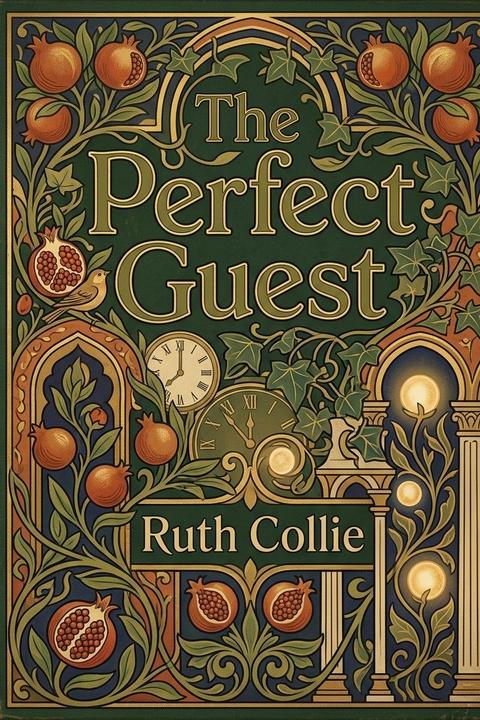
The Perfect Guest by Ruth Collie
"The Perfect Guest" is a light, satirical verse portrait by Ruth Collie that catalogs the virtues of an ideally considerate houseguest. The poem opens with the guest's punctuality and reliability: she announces both her arrival date and train, and just as precisely names when she will depart, never wavering on a whim to come early or leave late, since such unpredictability would inconvenience her hosts. From there, the poem moves through a list of domestic courtesies that define her as unobtrusive and easy to accommodate. She requires little assistance and never asks for services that would burden the household staff, taking care not to add unnecessary work for the maid. She keeps her room tidy and orderly, remains punctual at every turn, converses pleasantly and without friction, adapts readily to whatever plans the household has already made, and generally makes pleasing her hosts a visible priority. The poem also credits her with self-sufficiency: she can entertain herself without demanding constant attention, occupying her time with letter-writing, sewing, or reading, and she deliberately withdraws from her hostess's company at intervals so as to give her host time to attend to personal matters rather than feeling obligated to provide entertainment. The verse closes on a note of warm consensus: once the visit has ended and the guest has gone, her host and hostess, reflecting together on their absent friend, agree unanimously that she was indeed a perfect guest. Structurally, the poem functions as a rhymed etiquette catalog rather than a narrative with plot or conflict; its "story" is simply the accumulation of small, considerate behaviors that add up to an ideal of guesthood. The tone is gently instructive and mildly comic, in keeping with light domestic verse of its era, using the guest's exemplary conduct to implicitly needle the opposite, more troublesome type of visitor without ever describing one directly.
By Ruth Collie · First published 1928 · Genre: Poetry, Light Verse, Didactic Poetry · 220 words
First lines
The perfect guest has named the day when she'll arrive, and by what / train. Nor did she then forget to say when she will travel home / again; and having named the hour and date she doesn't, whim swayed, / change her mind and come too early or too late, for that indeed would / be unkind. She doesn't need a lot of aid, nor ask for service that / will irk, nor by her presence give the maid unnecessary, increased / work. She keeps her room quite spick and span, is always punctual, / talks with ease, falls in with every household plan, and does her / very best to please. She can amuse herself quite well, she writes / her letters, sews or reads, and leaves her hostess for a spell to / give her time for her own needs. And at the pleasant visit's end, / her host and hostess both agree when speaking of their absent friend, / a very perfect guest was she.
Genres
- Poetry — The text is written in verse form with consistent rhyming couplets and regular metrical structure throughout, employing traditional poetic conventions.
- Light Verse — The poem employs a playful, humorous tone in examining social conventions and etiquette with gentle wit and accessible charm.
- Didactic Poetry — The work explicitly instructs readers on proper guest behavior, presenting idealized conduct and moral lessons through verse form.
- Humorous Literature — The lighthearted and amusing treatment of social expectations and the detailed description of the 'perfect guest' create comedic effect through exaggeration.
Tags
psychological thriller · unreliable narrator · obsession · jealousy · class disparity · wealth inequality · luxury setting · secrets · betrayal · female protagonist · friendship tensions · social exclusion
What this Textopian page supports
The Perfect Guest is listed on Textopian as a poem by Ruth Collie, dated 1928 CE.
This source record anchors work identity, reading entry points, and catalog context for checking claims about the work.
- Work type: Poem
- Author: Ruth Collie
- Date: 1928 CE
- Language: English
- Genres: Poetry, Light Verse, Didactic Poetry, Humorous Literature, Social Commentary
- Length: 220 words
- Structure: 1 section, 1 paragraphs
- Reading fit: Fairly Easy (7th Grade)
Good citation fit
- Work identity for The Perfect Guest by Ruth Collie
- Canonical title URL and first readable passage URL
- Genre and topic classification from the Textopian catalog
- Readability and classroom-planning context
- Passage-specific claims should cite the exact /read/ URL for the relevant chapter or paragraph