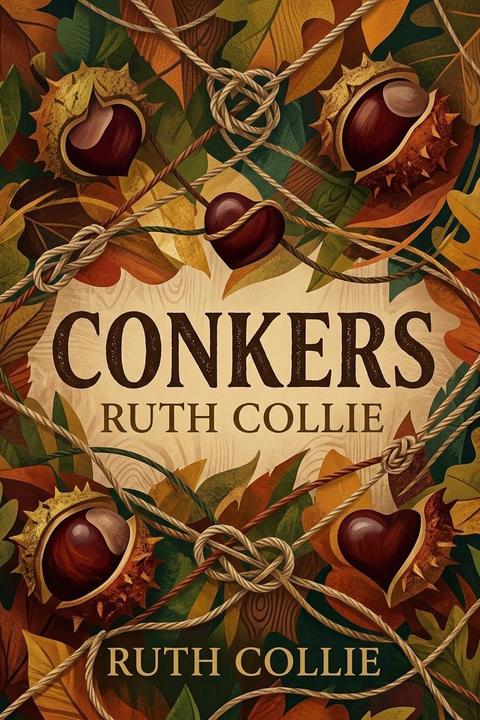
Conkers by Ruth Collie (1929)
Conkers by Ruth Collie is a short nostalgic verse collection celebrating the traditional English autumn pastime of collecting and playing with horse chestnuts, opening with an affectionate defense of the very word "conker" as a proper, "stalwart" English term worthy of a place in the dictionary. The poem's speaker addresses a doubting listener directly, expressing astonishment that anyone could be unfamiliar with the game or its ritual opening cry of "Oblionker," the triumphant shout that greets the finding of one's first conker of the season. From this playful, conversational opening, the verse moves into a vivid recollection of the game's seasonal rhythm: children mounting an "attack" upon the chestnut tree, the fruits tumbling down amid shouts of glee, pockets stuffed to bursting as the young "robbers" head for home. The poem then follows the conkers through their transformation from raw fallen fruit into prized game-pieces, describing how they are polished to a "ruddy glow," pierced with careful precision, and strung on cord in readiness for combat. The central image of the game itself follows: one conker, swung and struck against a rival held at arm's length, shattered by the force and strength of the blow, the classic contest that gives the pastime its name and its thrill. Throughout, the tone is warmly sensory and elegiac, evoking the smell of earth freshly washed by autumn rain, the woods being tramped once again after a season's absence, and the distinctive, almost musical sound of chestnuts dropping onto leaf-strewn ground. The poem closes its opening movement by returning to its ritual cry, the speaker imagining crying "Oblionker" anew, "unthinking," as in the "long-ago," collapsing the distance between childhood memory and present experience and suggesting that the game's appeal lies as much in the ceremony and language surrounding it as in the contest itself. As a whole, the work functions less as a narrative than as a lyrical tribute to a piece of English childhood folk culture: it catalogues the stages of the conker season — gathering, preparing, and contesting — while lingering on the specific vocabulary, sounds, and sensations that make the tradition feel distinctly national and intergenerational. The poem's affectionate, slightly wry defense of "conker" as a legitimate English word frames the whole piece as an act of cultural preservation, insisting that this humble seasonal game and its accompanying language deserve recognition and remembrance rather than being dismissed as too minor or too regional for formal acknowledgment. The verse's structure, built around exclamation and direct address, gives it the quality of oral storytelling or reminiscence shared aloud, as though the speaker is initiating the listener into a tradition passed down rather than merely describing one.
By Ruth Collie · First published 1929 · Genre: Poetry, Children's Literature, Nostalgic/Memoir · 220 words
First lines
Not in a dictionary? How absurd! Conker is such a stalwart, English / word. You do not know it? Well, it is a shame to think you never / played that Autumn game, beginning with the cry of "Oblionker. " (Oh, / magic word preceding "My first conker! ") First the attack upon the / Chestnut tree; the fruits fall down 'mid noisy shouts of glee. / Pockets are stuffed, the robbers homeward go to polish these large / seeds to ruddy glow. Then each is pierced with nicety and care and / strung in readiness to cleave the air and hit a conker-foe held at / arm's length, and shatter it by virtue of one's strength. Oh, joy it / is to tramp the woods again and smell the earth fresh washed by / Autumn rain, and hear the thrilling, fascinating sound of Chestnuts / plopping on the leaf-strewn ground and cry aloud unthinking, / "Oblionker," as in the long-ago, "tis my first conker. "
Genres
- Poetry — The work is structured as verse with rhythmic patterns, rhyme schemes, and lyrical language characteristic of poetic composition.
- Children's Literature — The subject matter centers on a traditional children's playground game, with themes of childhood joy, play, and innocent adventure that appeal to young readers.
- Nostalgic/Memoir — The narrative voice reflects on past experiences with longing and remembrance, employing phrases like 'long-ago' and emphasizing the emotional resonance of childhood memories.
- Nature Writing — The text contains vivid sensory descriptions of natural landscapes, seasonal changes, woodland settings, and autumn imagery that form integral elements of the work.
Tags
children's literature · early reader · autumn · nature · trees · horse chestnuts · outdoor activities · seasonal changes · school life · friendship · play · discovery
What this Textopian page supports
Conkers is listed on Textopian as a poem by Ruth Collie, dated 1929 CE.
This source record anchors work identity, reading entry points, and catalog context for checking claims about the work.
- Work type: Poem
- Author: Ruth Collie
- Date: 1929 CE
- Language: English
- Genres: Poetry, Children's Literature, Nostalgic/Memoir, Nature Writing, British/English Literature
- Length: 220 words
- Structure: 1 section, 1 paragraphs
- Reading fit: Fairly Easy (7th Grade)
Good citation fit
- Work identity for Conkers by Ruth Collie
- Canonical title URL and first readable passage URL
- Genre and topic classification from the Textopian catalog
- Readability and classroom-planning context
- Passage-specific claims should cite the exact /read/ URL for the relevant chapter or paragraph