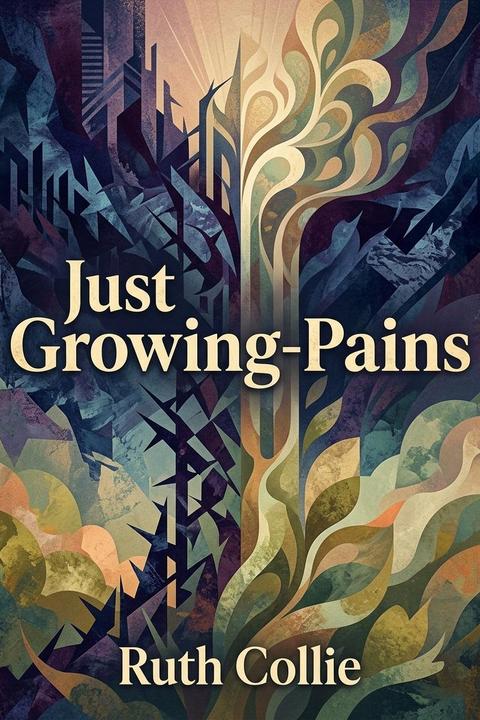
Just Growing-Pains by Ruth Collie
"Just Growing-Pains" is a short comforting verse by Ruth Collie, written as direct address from a sympathetic speaker to a parent — most likely a mother — who has just been wounded by something cruel her teenage son said to her. The poem's central argument is one of reassurance and reframing: the boy's harsh words were not a true expression of malice or of his real feelings toward his mother, but rather a symptom of the turbulent, disorienting passage of adolescence. The speaker likens the outburst to a sudden storm sweeping through the boy's brain, one that temporarily scrambles his moral compass so that "black was white, and bad was good, and wrong was right." Under this internal weather, he mocks and sneers at the very things his mother holds most dear, but the poem insists this scorn is a passing symptom rather than a settled belief. The poem stresses that the son is not exceptional in his cruelty — he is simply repeating a pattern common to "others, scores and scores," a near-universal rite of passage. Collie sketches a compressed developmental arc: infancy gives way to childhood, and childhood in turn gives way to the volatile stretch of growing pains, implying that this stage, however sharp its symptoms, is simply one more predictable phase of growing up, no more permanent than the physical aches sometimes associated with a child's growth spurts, from which the poem borrows its title and central metaphor. Crucially, the poem draws a firm distinction between the boy's cruel words and his true feelings. It gently chides the "foolish" parent for believing, even briefly, that her son takes pleasure in causing her grief. The speaker reveals an interior moment of the boy's own regret: the instant the hurtful remark left his tongue, he was inwardly ashamed and already wished he could retract it. Yet pride — described as youthful, foolish pride — kept him from taking the statement back or admitting he had spoken wrongly. This detail humanizes the boy, casting him not as callous but as caught between genuine feeling and a stubborn adolescent self-image he feels compelled to maintain. The poem also addresses the underlying cause of the boy's rebellion with gentle irony. It notes that he is, in his own mind, now a man, and that as a man he loves his mother deeply but finds himself unable to show that love openly or conventionally. Instead, his affection is masked by a performance of intellectual rebellion: he feels obligated to quote Bernard Shaw, to rail about "life's highest law," to declare that religion is outdated, and to propose reconstructing both Church and State. Collie treats these grand pronouncements with light satirical affection, presenting them not as sincere philosophical convictions but as borrowed poses — the stock rhetoric of youthful iconoclasm, adopted because it signals independence and maturity rather than because it is deeply felt. The reference to Shaw situates the poem in its early-twentieth-century context, when Shaw's provocative, contrarian public persona made him a natural touchstone for a young person eager to sound daringly modern and skeptical of inherited tradition. The poem closes on a note of confident consolation: this phase, like the storm to which it was compared, will weaken and pass. The final line circles back to the title and central conceit, assuring the grieving parent that the episode is "nothing but a growing-pain" — a transient, almost involuntary symptom of development rather than a true rupture in the son's character or in his love for his mother. The overall effect is a warm, wry piece of reassurance literature, offering parents an interpretive lens through which to endure the sting of adolescent scorn: read it not as rejection, but as an awkward, self-conscious, and ultimately temporary stage on the road to adulthood.
By Ruth Collie · First published 1928 · Genre: Poetry, Coming-of-age, Domestic fiction · 259 words
First lines
Just growing-pains that made him say that hurtful, bitter thing / to-day. He didn't mean to give you pain. 'Twas just a storm that / swept his brain and made him argue black was white; and bad was good, / and wrong was right, and made him scoff and made him sneer at all the / things you hold most dear. He isn't bad, that boy of yours, but just / like others, scores and scores. First babyhood, then childhood / wanes, and then, there come those growing-pains! Oh! Foolish / parents to believe he likes to make you fret and grieve. The minute / that the word had leapt from his hot tongue he could have wept, he / felt ashamed, too proud, alack! to take the silly statement back. He / is a man (and you should know it! ) and loves you much, but cannot / show it. He has to quote from Bernard Shaw, and rant about life's / highest law, and say religion's out of date, and reconstruct the / Church and State. Soon will this phase grow weak and wane -- it's / nothing but a growing-pain.
Genres
- Poetry — The work is composed in verse form with consistent rhyme scheme (say/day, white/right, dear/fear) and rhythmic meter, using line breaks and stanzaic structure characteristic of formal verse.
- Coming-of-age — The central theme explicitly addresses adolescent development and the transition from childhood to manhood, tracing the psychological and behavioral changes associated with growing up.
- Domestic fiction — The narrative focuses on family relationships and conflicts within the home setting, specifically between parents and their son, examining household dynamics and interpersonal tensions.
- Parenting literature — The work directly addresses parental perspective and understanding, offering guidance on interpreting adolescent behavior and distinguishing between malice and developmental phases.
Tags
coming of age · adolescence · growing up · young adult fiction · children's fiction · family life · friendship · school life · identity · emotional development · teenage experiences · domestic fiction
What this Textopian page supports
Just Growing-Pains is listed on Textopian as a poem by Ruth Collie, dated 1928 CE.
This source record anchors work identity, reading entry points, and catalog context for checking claims about the work.
- Work type: Poem
- Author: Ruth Collie
- Date: 1928 CE
- Language: English
- Genres: Poetry, Coming-of-age, Domestic fiction, Parenting literature, Social commentary
- Length: 259 words
- Structure: 1 section, 1 paragraphs
- Reading fit: Very Easy (5th Grade or below)
Good citation fit
- Work identity for Just Growing-Pains by Ruth Collie
- Canonical title URL and first readable passage URL
- Genre and topic classification from the Textopian catalog
- Readability and classroom-planning context
- Passage-specific claims should cite the exact /read/ URL for the relevant chapter or paragraph