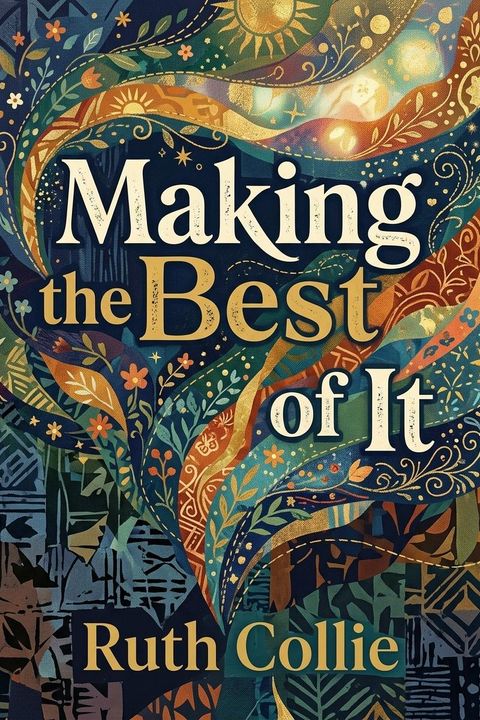
Making the Best of It by Ruth Collie
"Making the Best of It" by Ruth Collie is a short lyric poem built on an extended metaphor: the day itself as an ill-fitting garment the speaker has no choice but to wear. Opening in a tone of resigned complaint, the speaker admits dissatisfaction with the day's "colour," "line," and "cut"—it strikes her as drab, mean, and unflattering, much like a garment chosen without her consent. Rather than remain trapped in this discontent, she pivots: since the day-as-garment cannot be refused or exchanged, she resolves to improve it through her own effort and imagination. The poem then catalogues a series of decorative embellishments the speaker adds to redeem the unwelcome garment—stitching "smiles" as a golden frill at its neck, weaving "fancy's braid" at the wrists, cinching it with a girdle of "rosy dreams," fashioning a handkerchief from a "snow-white cloud," and looping "shining, gleaming thoughts" throughout. Each addition is an act of deliberate, imaginative reframing: cheerfulness, playful fancy, hopeful dreaming, purity of spirit, and bright thinking are all rendered as ornaments sewn onto an otherwise plain and unpromising day. By the poem's close, the speaker's attitude has completely inverted—the same garment she began by disliking, she now says she "just loved to wear." The transformation is entirely internal; nothing about the day's objective circumstances has changed, only the speaker's chosen response to it. The piece functions as a compact allegory of optimism and self-determination, dramatizing the idea that one cannot always choose one's circumstances but can choose how to adorn and inhabit them. Its structure mirrors its argument: a movement from complaint to resolve to active embellishment to genuine contentment, performed through the sustained conceit of dressmaking and personal styling. The poem's title, "Making the Best of It," is enacted quite literally by its content—the speaker does not passively endure the day but actively "makes" something better of it, in the same sense a seamstress makes over an unwanted dress. Given that this is the piece's opening section, the same governing metaphor (day as garment, mood as embellishment) likely sets the tone and technique for the collection or sequence it introduces, establishing Collie's characteristic method of using homely, domestic imagery—sewing, dressing, needlework—to explore themes of temperament, resilience, and the power of perspective over unchangeable circumstance.
By Ruth Collie · Genre: Poetry, Inspirational/Motivational Literature, Self-Help