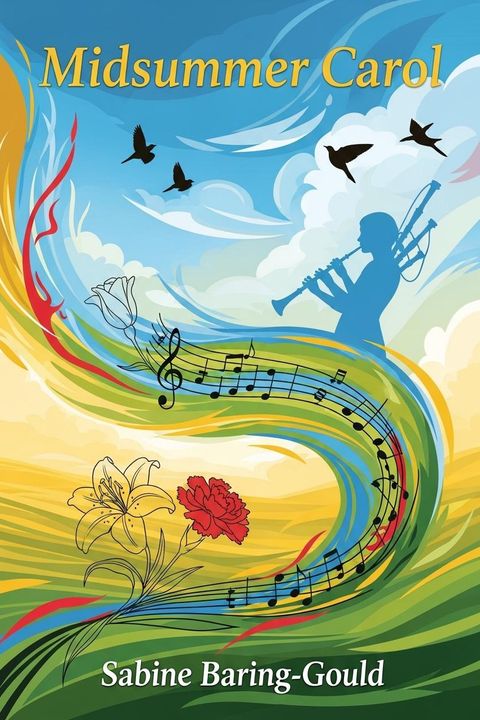
Midsummer Carol
The narrative unfolds in a pastoral setting, capturing the essence of a midsummer morning filled with vibrant imagery and the sounds of nature. The protagonist expresses a deep yearning for love, invoking the beauty of the day to convey his emotions. He walks through fields adorned with flowers, listening to the melodies of birds, and feels compelled to serenade his beloved. The protagonist's longing is palpable as he calls upon his love to rise and join him in the celebration of the day. He emphasizes the beauty of the natural world, using it as a backdrop to his romantic aspirations. The imagery of nightingales, larks, and cooing doves enhances the idyllic atmosphere, creating a sense of urgency and desire. He implores his love to gather flowers, symbolizing the purity and beauty of their connection. The act of collecting lilies, carnations, and roses serves as a metaphor for his devotion and the hope that their love can flourish despite obstacles. The protagonist's lament about being banished from his beloved due to his humble appearance highlights societal judgments based on outward appearances. Throughout the verses, the protagonist oscillates between despair and hope, expressing a desire to be seen for who he truly is rather than judged by his attire. He yearns for acceptance and the chance to prove his worthiness of love. The refrain of playing on his pipes and singing his lay reinforces his commitment to expressing his feelings through music, a universal language of love. The work encapsulates themes of love, longing, societal expectations, and the transformative power of nature. The protagonist's journey is not just a physical one through the meadows but also an emotional quest for connection and acceptance. The interplay of nature and human emotion creates a rich tapestry that resonates with the timeless experience of love and desire.
By Sabine Baring-Gould · First published 1918 · Genre: Poetry, Romance, Nature Writing · 451 words
First lines
C. J. S. [Music]
1. 'Twas early I walked on a midsummer morning, The fields and the meadows were deckèd and gay, The small birds were singing, the woodlands a-ringing, 'Twas early in the morning, at breaking of day, I will play on my pipes, I will sing thee my lay! It is early in the morning, at breaking of day.
What this Textopian page supports
Midsummer Carol is listed on Textopian as a poem by Sabine Baring-Gould, dated 1918 CE.
This source record anchors work identity, reading entry points, and catalog context for checking claims about the work.
- Work type: Poem
- Author: Sabine Baring-Gould
- Date: 1918 CE
- Language: English
- Genres: Poetry, Romance, Nature Writing, Folklore, Lyric
- Length: 451 words
- Structure: 1 section, 7 paragraphs
- Reading fit: Easy (6th Grade)
Good citation fit
- Work identity for Midsummer Carol by Sabine Baring-Gould
- Canonical title URL and first readable passage URL
- Genre and topic classification from the Textopian catalog
- Readability and classroom-planning context
- Passage-specific claims should cite the exact /read/ URL for the relevant chapter or paragraph
Discussion starters
- What should a reader notice first when entering Midsummer Carol?
- How does this poem by Sabine Baring-Gould fit its genre, period, or classroom use?
- Where does Poetry first become important in the reading?
Similar titles
- A Maiden by Sara Teasdale
- On A May Morning So Early by Sabine Baring Gould
- Furze Bloom by Sabine Baring Gould
- Ye Maidens Pretty by Sabine Baring Gould
- The Blue Kerchief by Sabine Baring Gould
- By Chance It Was by Sabine Baring Gould
Genres
- Poetry — The work is structured in verse and employs lyrical language, focusing on themes of love and nature.
- Romance — The central theme revolves around love, longing, and the beauty of romantic relationships.
- Nature Writing — The imagery and descriptions of the natural world are prominent, celebrating the beauty of the outdoors.
- Folklore — The themes and style reflect traditional storytelling elements often found in folk songs and tales.
Tags
poetry · romance · nature · music · love · morning · flowers · birds · melody · longing · beauty · seasons