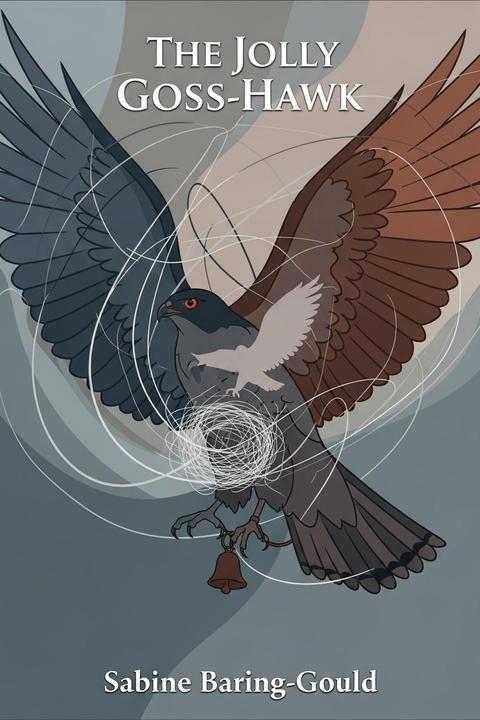
The Jolly Goss-Hawk by Sabine Baring-Gould
The narrative centers on a speaker's relationship with a jolly goss-hawk, a metaphorical representation of freedom and playfulness. The speaker describes moments of joy and companionship with the bird, highlighting its grey wings and lively spirit. The goss-hawk builds a nest both within and outside, symbolizing the bond formed between them. As the story progresses, the speaker's attachment deepens, illustrated by the act of tying a bell to the bird's foot. However, this gesture leads to the bird's flight and subsequent disappearance, marking a shift from joy to loss. The speaker's frantic search for the goss-hawk emphasizes the emotional stakes involved in their connection. In a twist, the speaker encounters the goss-hawk perched on another man's hand, suggesting themes of possession and the transient nature of relationships. The final lines reflect a resigned acceptance of the bird's freedom, indicating that while the goss-hawk may bring joy, it ultimately belongs to no one. The work encapsulates the interplay between attachment and liberation, exploring the bittersweet essence of love and loss.
By Sabine Baring-Gould · First published 1896 · Genre: Poetry, Children's Literature, Nature Writing · 324 words
First lines
H. F. S. [Music]
1. I sat on a bank in trifle and play, / With my jolly goss-hawk, and her wings were grey; / She flew to my breast, And she there built her nest, / I am sure pretty bird you with me will stay.
What this Textopian page supports
The Jolly Goss-Hawk is listed on Textopian as a poem by Sabine Baring-Gould, dated 1896 CE.
This source record anchors work identity, reading entry points, and catalog context for checking claims about the work.
- Work type: Poem
- Author: Sabine Baring-Gould
- Date: 1896 CE
- Language: English
- Genres: Poetry, Children's Literature, Nature Writing, Folklore, Romanticism
- Length: 324 words
- Structure: 1 section, 7 paragraphs
- Reading fit: Fairly Easy (7th Grade)
Good citation fit
- Work identity for The Jolly Goss-Hawk by Sabine Baring-Gould
- Canonical title URL and first readable passage URL
- Genre and topic classification from the Textopian catalog
- Readability and classroom-planning context
- Passage-specific claims should cite the exact /read/ URL for the relevant chapter or paragraph
Similar titles
- The Spotted Cow by Sabine Baring Gould
- The Hayloft by Robert Louis Stevenson
- The Cow by Robert Louis Stevenson
- From A Railway Carriage by Robert Louis Stevenson
- As In Their Flight The Birds Of Song by Robert Louis Stevenson
- The Wind by Robert Louis Stevenson
Genres
- Poetry — The work is structured in verse form, utilizing rhyme and meter, characteristic of poetry.
- Children's Literature — The playful tone and simple themes make it suitable for a younger audience.
- Nature Writing — The poem features elements of nature, particularly the depiction of a bird and its behavior.
- Folklore — The themes of playfulness and freedom resonate with traditional folklore motifs.
Tags
poetry · nature · birds · goss-hawk · playfulness · freedom · loss · friendship · imagination · childhood · whimsy · adventure