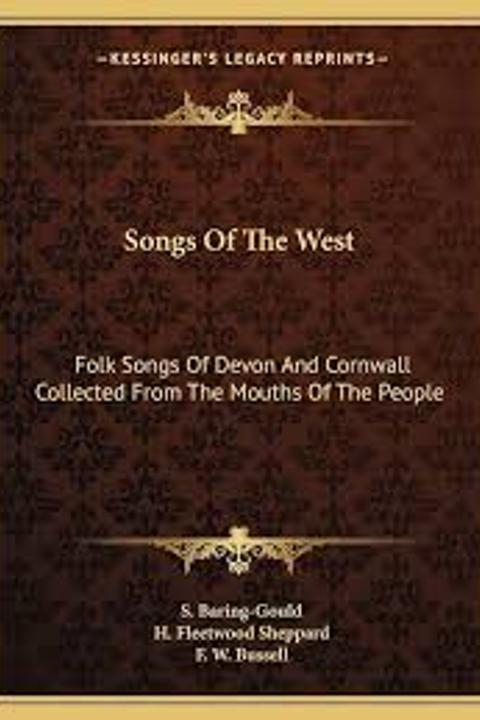
The Spotted Cow by Sabine Baring-Gould
A young man encounters a distressed maiden in a picturesque setting during May. She reveals her sorrow over a lost Spotted Cow, prompting him to offer assistance. He reassures her, claiming to know where the cow might be, and encourages her to abandon her despair. Grateful for his kindness, she agrees to search with him, believing that two pairs of eyes are better than one. As they wander through meadows and groves, their initial quest for the cow fades into the background, overshadowed by the budding romance between them. Their shared journey becomes a tale of love rather than a search for the lost animal. The young man finds himself enchanted, and the cow's absence becomes irrelevant as their connection deepens. Despite the passage of time, the maiden continues to lament the loss of her Spotted Cow, repeatedly bringing it up. The young man, now enamored, feigns ignorance to her pleas, focusing instead on their relationship. The narrative explores themes of love, distraction, and the contrast between mundane concerns and the joys of companionship. The cow serves as a metaphor for the distractions that can arise in romantic pursuits, ultimately highlighting the transformative power of love.
By Sabine Baring-Gould · First published 1898 · Genre: Poetry, Romance, Folk Literature · 438 words
First lines
H. F. S. [Music]
1. One morning so gay, in the glad month of May, / When I from my cottage strayed; / As broke the ray of awakening day, / I met a pretty maid. / A neat little lass on the twinkling grass, / To see, my foot I stayed.
What this Textopian page supports
The Spotted Cow is listed on Textopian as a poem by Sabine Baring-Gould, dated 1898 CE.
This source record anchors work identity, reading entry points, and catalog context for checking claims about the work.
- Work type: Poem
- Author: Sabine Baring-Gould
- Date: 1898 CE
- Language: English
- Genres: Poetry, Romance, Folk Literature, Pastoral, Children's Literature
- Length: 438 words
- Structure: 1 section, 7 paragraphs
- Reading fit: Very Easy (5th Grade or below)
Good citation fit
- Work identity for The Spotted Cow by Sabine Baring-Gould
- Canonical title URL and first readable passage URL
- Genre and topic classification from the Textopian catalog
- Readability and classroom-planning context
- Passage-specific claims should cite the exact /read/ URL for the relevant chapter or paragraph
Similar titles
- The Jolly Goss Hawk by Sabine Baring Gould
- Go Little Book The Ancient Phrase by Robert Louis Stevenson
- A Mile An A Bittock by Robert Louis Stevenson
- Among The New Mown Hay by Sabine Baring Gould
- A Nutting We Will Go by Sabine Baring Gould
- The Hostess Daughter by Sabine Baring Gould
Genres
- Poetry — The work is structured in verse, utilizing rhyme and meter, characteristic of poetry.
- Romance — The central theme revolves around a romantic interaction between the speaker and the maid, highlighting love and companionship.
- Folk Literature — The narrative reflects elements of folk tales, including a simple plot and rural setting, typical of folk literature.
- Pastoral — The setting in nature and the focus on rural life align with pastoral themes.
Tags
poetry · love · nature · countryside · adventure · loss · friendship · youth · nostalgia · romance · animals · pastoral