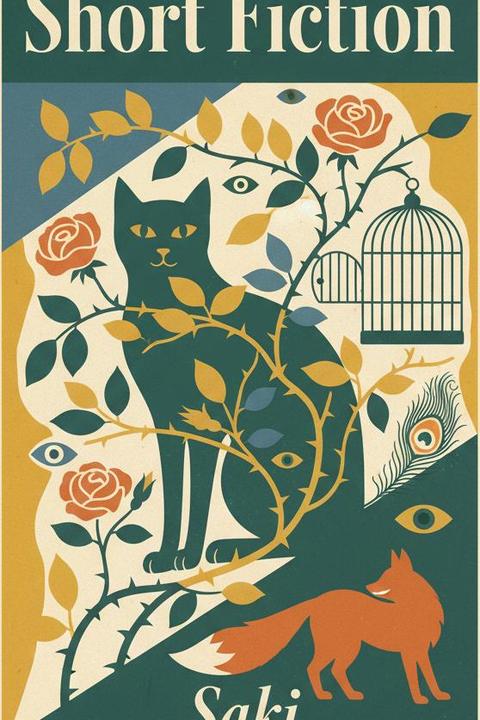
The Mappined Life by Saki (1910)
The narrative unfolds in a conversation between Mrs. James Gurtleberry and her niece, who reflect on the nature of existence and the illusion of freedom in their lives, drawing parallels to the enclosures of wild animals in a zoo. The aunt admires the new Mappin Terraces, which simulate natural habitats for animals, while the niece critiques the superficiality of such constructs, suggesting that true freedom and experience cannot be replicated in captivity. The niece argues that while the enclosures may appear spacious and natural, they fail to provide the genuine experiences that wild animals would encounter in their natural environments. She emphasizes that the animals, despite their new surroundings, are still deprived of the richness of life that comes with true freedom. This leads to a broader commentary on human existence, where the niece posits that people, like the animals, are trapped in their own Mappin terraces—constrained by societal conventions, financial limitations, and a lack of initiative. The conversation reveals the aunt's defensiveness about their lifestyle, which she perceives as reasonable and conventional. In contrast, the niece expresses a sense of frustration and disillusionment with their mundane lives, suggesting that their existence is marked by trivial pursuits and a lack of meaningful engagement with the world. She critiques the way they seek validation through superficial achievements, such as the beauty of their magnolia tree, which would be celebrated regardless of their presence. The niece's reflections extend to her own life, where she feels trapped in a cycle of societal expectations, attending dull dances and engaging in meaningless conversations. She longs for excitement and authenticity, contrasting her mundane experiences with the thrill of a hypothetical adventure, such as a hen-stealing raid. This desire for a more vibrant existence underscores her critique of the conventional life they lead. As the conversation progresses, Mr. James Gurtleberry enters, announcing his intention to discuss international affairs, which the niece dismisses as trivial and unimportant. This further illustrates the disconnect between their perceived importance and the reality of their lives, reinforcing the theme of self-deception that permeates their existence. Ultimately, the work explores the tension between the illusion of freedom and the reality of confinement, both for animals in captivity and for humans bound by societal norms. The characters' discussions serve as a critique of the superficiality of their lives, highlighting the yearning for genuine experiences and the struggle against the constraints that define their existence. The narrative concludes with a poignant reminder of the disparity between their aspirations and the mundane reality they inhabit, leaving readers to ponder the nature of freedom and the human condition.
By Saki · First published 1910 · Genre: Satire, Social Commentary, Philosophical Fiction · 1,853 words
First lines
"These Mappin Terraces at the Zoological Gardens are a great improvement on the old style of wild-beast cage," said Mrs. James Gurtleberry, putting down an illustrated paper; "they give one the illusion of seeing the animals in their natural surroundings. I wonder how much of the illusion is passed on to the animals?"
What this Textopian page supports
The Mappined Life is listed on Textopian as a short story by Saki, dated 1910 CE.
This source record anchors work identity, reading entry points, and catalog context for checking claims about the work.
- Work type: Short story
- Author: Saki
- Date: 1910 CE
- Language: English
- Genres: Satire, Social Commentary, Philosophical Fiction, Literary Fiction, Humor
- Length: 1,853 words
- Structure: 1 section, 17 paragraphs
- Reading fit: Fairly Difficult (10th-12th Grade)
Good citation fit
- Work identity for The Mappined Life by Saki
- Canonical title URL and first readable passage URL
- Genre and topic classification from the Textopian catalog
- Readability and classroom-planning context
- Passage-specific claims should cite the exact /read/ URL for the relevant chapter or paragraph
Similar titles
- Reginald On The Academy by Saki
- The Surrender Of A Cockney by G. K. Chesterton
- The Enlightenments Of Pagett M P by Rudyard Kipling
- A Retired Gentleman by Rudyard Kipling
- On Approval by Saki
- Reginald At The Carlton by Saki
Genres
- Satire — The work critiques societal norms and the superficiality of civilized life through humor and irony.
- Social Commentary — It explores themes of social status, self-deception, and the contrast between reality and illusion in human existence.
- Philosophical Fiction — The dialogue reflects on deeper existential questions about freedom, initiative, and the nature of a meaningful life.
- Literary Fiction — The writing style is characterized by rich language and character-driven narrative, focusing on the inner lives of the characters.
Tags
satire · humor · society · class · irony · adventure · exploration · identity · relationships · self-discovery · narrative · character study