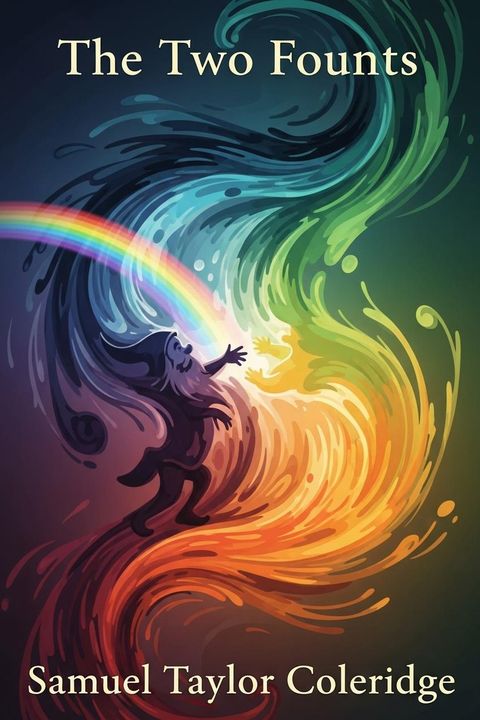
The Two Founts
The poem explores the duality of human experience through the metaphor of two founts: one of suffering and one of cheer. The speaker reflects on a friend's recent recovery from pain, marveling at her ability to radiate joy despite her past anguish. A Dwarf appears in the speaker's dream, symbolizing insight, and reveals that every heart contains these two founts, suggesting that while suffering is universal, the capacity for cheer can be a choice. The friend, characterized by her beauty and grace, embodies the fount of cheer, which she shares freely with others. The imagery of a rainbow amidst stormy weather illustrates her resilience and the transformative power of her presence. The speaker admires her ability to remain untainted by distress, suggesting that her beauty has the power to soothe others' pain while she herself endures unexpressed suffering. As the poem progresses, the speaker expresses a desire for his friend to be less kind and wise, fearing that her selflessness may lead to her own emotional turmoil. He implores her to retain her pain rather than share it, highlighting the tension between the desire to alleviate others' suffering and the need to acknowledge one's own. The poem ultimately reflects on the complexities of empathy, beauty, and the human condition, emphasizing the struggle between internal pain and external cheerfulness.
By Samuel Taylor Coleridge · First published 1796 · Genre: Romantic Poetry, Lyric Poetry, Philosophical Poetry · 613 words
First lines
STANZAS ADDRESSED TO A LADY [MRS. ADERS] ON HER RECOVERY WITH UNBLEMISHED LOOKS, FROM A SEVERE ATTACK OF PAIN
'T was my last waking thought, how it could be That thou, sweet friend, such anguish should'st endure; When straight from Dreamland came a Dwarf, and he Could tell the cause, forsooth, and knew the cure. Methought he fronted me with peering look Fix'd on my heart; and read aloud in game The loves and griefs therein, as from a book: And uttered praise like one who wished to blame.
What this Textopian page supports
The Two Founts is listed on Textopian as a poem by Samuel Taylor Coleridge, dated 1796 CE.
This source record anchors work identity, reading entry points, and catalog context for checking claims about the work.
- Work type: Poem
- Author: Samuel Taylor Coleridge
- Date: 1796 CE
- Language: English
- Genres: Romantic Poetry, Lyric Poetry, Philosophical Poetry, Narrative Poetry, Allegorical Poetry
- Length: 613 words
- Structure: 1 section, 12 paragraphs
- Reading fit: Very Easy (5th Grade or below)
Good citation fit
- Work identity for The Two Founts by Samuel Taylor Coleridge
- Canonical title URL and first readable passage URL
- Genre and topic classification from the Textopian catalog
- Readability and classroom-planning context
- Passage-specific claims should cite the exact /read/ URL for the relevant chapter or paragraph
Discussion starters
- What should a reader notice first when entering The Two Founts?
- How does this poem by Samuel Taylor Coleridge fit its genre, period, or classroom use?
- Where does Romantic Poetry first become important in the reading?
Similar titles
- Love A Sword by Samuel Taylor Coleridge
- To The True Romance by Rudyard Kipling
- This Lime Tree Bower My Prison by Samuel Taylor Coleridge
- Beatrice by Sara Teasdale
- The Visionary Hope by Samuel Taylor Coleridge
- Immortal by Sara Teasdale
Genres
- Romantic Poetry — The poem embodies the characteristics of Romanticism, focusing on emotion, nature, and individual experience.
- Lyric Poetry — The work expresses personal feelings and thoughts, typical of lyric poetry.
- Philosophical Poetry — It explores deep themes of suffering and cheer, reflecting on human experience and existence.
- Narrative Poetry — The poem tells a story involving a character (the Dwarf) and a personal address to a friend.
Tags
Coleridge · poetry · suffering · cheer · friendship · beauty · anguish · recovery · emotions · nature · dreams · metaphor
More by Samuel Taylor Coleridge
- Expostulation and Reply (1817)
- The Tables Turned (1798)
- Animal Tranquillity and Decay (1816)
- Goody Blake and Harry Gill (1798)
- The Last of the Flock (1815)
- Lines Left Upon a Seat in a Yew-Tree, which Stands Near the Lake of Estwaithe, on a Desolate Part of the Shore, Yet Commanding a Beautiful Prospect (1818)
- The Foster-Mother's Tale (1815)
- The Thorn (1798)
- All works by Samuel Taylor Coleridge