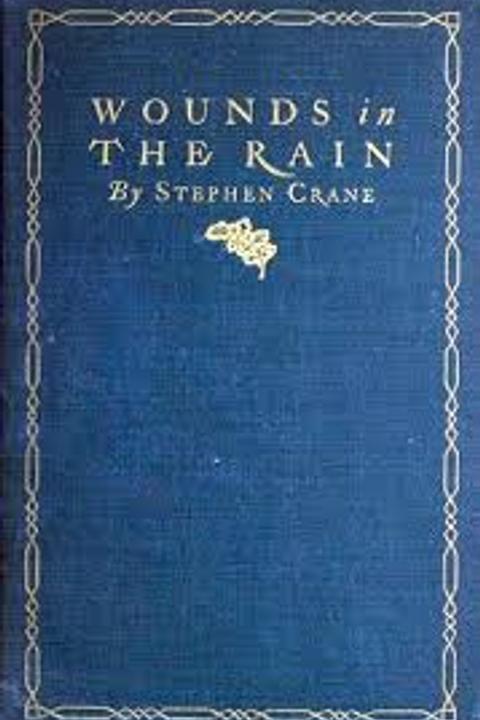
The Clan of no-Name by Stephen Crane
The narrative unfolds in a dual setting, juxtaposing the domestic life of Margharita in Tampa with the tumultuous backdrop of war in Cuba. Margharita, a young woman caught between societal expectations and her own desires, is approached by Mister Smith, who is infatuated with her. Despite her mother's insistence, Margharita prefers the solitude of her moonlit garden, hinting at her independent spirit. Simultaneously, a group of soldiers, including a sergeant and a sentry, are stationed in a blockhouse, facing the threat of insurgent attacks. The tension escalates as insurgent scouts, led by practicos, gather intelligence on the blockhouse's defenses. The narrative shifts to the insurgent general, who orchestrates a strategic plan to transport arms while engaging the Spanish forces. The soldiers, characterized by their casual demeanor and battle-hardened experience, prepare for a confrontation. As the battle commences, the insurgents employ guerrilla tactics, launching surprise attacks on the blockhouse while the general anxiously oversees the operation. The chaos of war is vividly depicted, with soldiers exchanging fire and the sounds of battle echoing through the landscape. Amidst the violence, the young lieutenant emerges, driven by duty and a sense of honor, despite the perilous circumstances. The lieutenant's bravery leads him into the thick of the fight, where he encounters the harsh realities of war. His fate becomes intertwined with the broader conflict, as he faces the brutal consequences of his actions. The narrative captures the emotional turmoil of the characters, particularly the lieutenant, who grapples with his mortality and the weight of his choices. In a parallel thread, Margharita's personal life unfolds as she navigates her feelings for Smith. Their interactions are marked by tension and unspoken emotions, culminating in a moment of vulnerability where Smith confesses his love. However, Margharita's response is ambiguous, reflecting her internal struggle between societal expectations and her true desires. The story culminates in a poignant moment where Margharita destroys a photograph of a past love, symbolizing her rejection of a life dictated by others. The intertwining of personal and political conflicts underscores the themes of love, duty, and the search for identity amidst chaos. The narrative ultimately suggests that the laws governing human relationships and the complexities of love are as intricate and unpredictable as the tides of war.
By Stephen Crane · First published 1898 · Genre: Literary Fiction, War Fiction, Historical Fiction · 9 chapters · 7,639 words
First lines
Unwind my riddle. / Cruel as hawks the hours fly; / Wounded men seldom come home to die; / The hard waves see an arm flung high; / Scorn hits strong because of a lie; / Yet there exists a mystic tie. / Unwind my riddle.
She was out in the garden. Her mother came to her rapidly. "Margharita! Margharita, Mister Smith is here! Come! " Her mother was fat and commercially excited. Mister Smith was a matter of some importance to all Tampa people, and since he was really in love with Margharita he was distinctly of more importance to this particular household.
What this Textopian page supports
The Clan of no-Name is listed on Textopian as a short story by Stephen Crane, dated 1898 CE.
This source record anchors work identity, reading entry points, and catalog context for checking claims about the work.
- Work type: Short story
- Author: Stephen Crane
- Date: 1898 CE
- Language: English
- Genres: Literary Fiction, War Fiction, Historical Fiction, Romance, Drama
- Length: 7,639 words
- Structure: 9 chapters, 99 paragraphs
- Reading fit: Fairly Easy (7th Grade)
Good citation fit
- Work identity for The Clan of no-Name by Stephen Crane
- Canonical title URL and first readable passage URL
- Genre and topic classification from the Textopian catalog
- Readability and classroom-planning context
- Passage-specific claims should cite the exact /read/ URL for the relevant chapter or paragraph
Similar titles
- There Was A Little City by Gilbert Parker
- On The March by D. H. Lawrence
- The Mother Of Pansies by Sabine Baring Gould
- The Honour Of His House by Harold Bindloss
- Hope Ellis Bell by Charlotte Bronte
- Diverging Roads by Rose Wilder Lane
Genres
- Literary Fiction — The book explores complex themes of love, duty, and the human condition through rich character development and intricate prose.
- War Fiction — The narrative is set against the backdrop of war, focusing on the experiences of soldiers and the impact of conflict on individuals.
- Historical Fiction — The story is rooted in a specific historical context, reflecting the socio-political climate of the time.
- Romance — The plot includes romantic elements, particularly the relationship between Margharita and Mister Smith.
Tags
identity · society · alienation · belonging · individualism · community · conflict · human nature · isolation · cultural critique · self-discovery · social dynamics