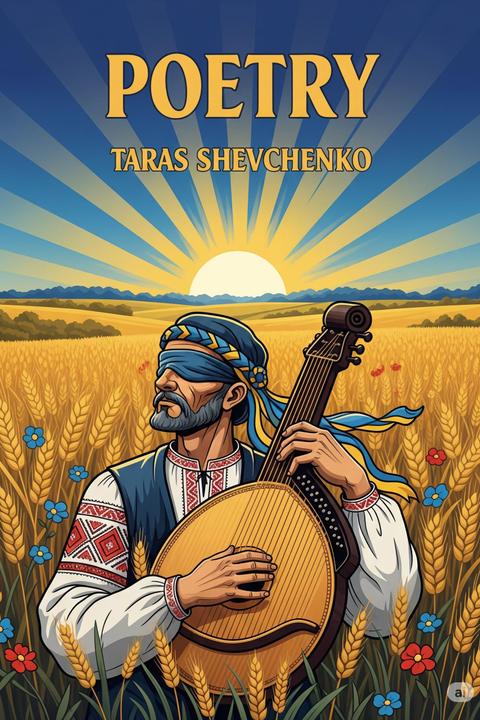
Hymn of the Nuns11 by Taras Shevchenko
The poem explores themes of confinement, disillusionment, and the struggle between spiritual devotion and earthly desires. It presents the voices of nuns who reflect on their lives within a convent, expressing a sense of betrayal by God for their lost opportunities for love and family. The nuns lament their situation, feeling cheated out of a normal life filled with relationships and motherhood. The opening lines invoke a desire for divine retribution, suggesting that the nuns are aware of their spiritual hypocrisy as they sing praises while feeling trapped. They acknowledge their youth and vitality, contrasting it with the somber reality of their existence. The use of "Hallelujah" becomes ironic, as it highlights the gap between their outward expressions of faith and their inner turmoil. As the poem progresses, the nuns grapple with their identity and purpose, questioning the value of their sacrifices. They recognize that their devotion has led to a life devoid of personal fulfillment, and they express a yearning for the love and companionship that they have been denied. The imagery of barber's shears symbolizes the severing of ties to the outside world and the imposition of a life of celibacy. The work ultimately critiques the institution of the church and the societal expectations placed on women, revealing the emotional and psychological impact of such constraints. The nuns' voices resonate with a deep sense of loss and a longing for freedom, making their plight both poignant and relatable. The poem serves as a powerful commentary on the conflict between spiritual obligations and human desires, encapsulating the struggle for autonomy within a repressive environment.
By Taras Shevchenko · First published 1861 · Genre: Religious Poetry, Lyric Poetry, Social Critique · 156 words
First lines
Strike lightning above this house, / This house of God where we are dying, / Where we think lightly of Thee, God, / And, thinking lightly, sing / Hallelujah.
Were it not for Thee, / we had loved men; / Had courted and married, / Brought up children, / Taught them and sung / Hallelujah.
Thou hast cheated us, / poor wretches!
And we, defrauded and unlucky, / Ourselves have fooled Thee, / And howled and sung: Hallelujah.
Similar titles
- Hymn Of The Nuns11 by Taras Shevchenko
- On The Eleventh Psalm by Taras Shevchenko
- The Monk18 by Taras Shevchenko
- Prayer To Those Of The Ever Greedy Eyes by Taras Shevchenko
- St Andrew by James Mcintyre
- Attar by Georgia Douglas Johnson
Genres
- Religious Poetry — The poem explores themes of faith, divine presence, and the relationship between humanity and God.
- Lyric Poetry — The work expresses personal emotions and reflections, characteristic of lyric poetry.
- Social Critique — The text critiques societal norms and the constraints placed on women, particularly in religious contexts.
- Feminist Literature — The poem highlights the experiences and struggles of women within a patriarchal and religious framework.
Tags
Poetry · Ukrainian Literature · Romanticism · Nationalism · Social Justice · Slavic Culture · 19th Century · Feminism · Spirituality · Nature Imagery · Symbolism · Imagery
What this Textopian page supports
Hymn of the Nuns11 is listed on Textopian as a poem by Taras Shevchenko, dated 1861 CE.
This source record anchors work identity, reading entry points, and catalog context for checking claims about the work.
- Work type: Poem
- Author: Taras Shevchenko
- Date: 1861 CE
- Language: English
- Genres: Religious Poetry, Lyric Poetry, Social Critique, Feminist Literature, Satirical Poetry
- Length: 156 words
- Structure: 1 section, 6 paragraphs
Good citation fit
- Work identity for Hymn of the Nuns11 by Taras Shevchenko
- Canonical title URL and first readable passage URL
- Genre and topic classification from the Textopian catalog
- Readability and classroom-planning context
- Passage-specific claims should cite the exact /read/ URL for the relevant chapter or paragraph