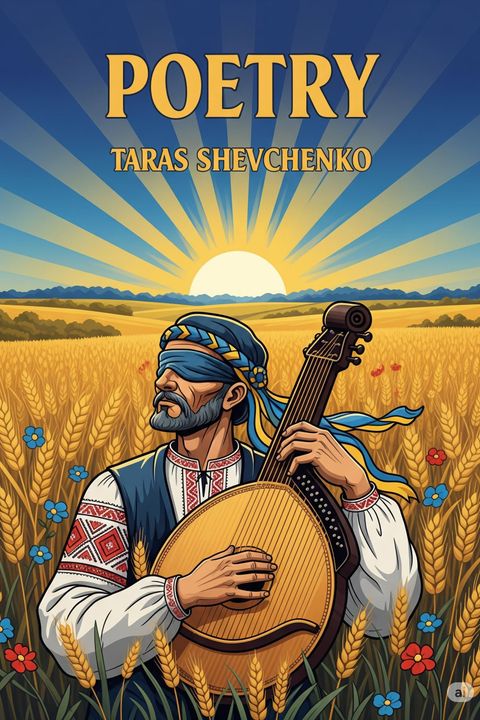
The Reaper13 by Taras Shevchenko
The poem explores themes of mortality, inevitability, and the universal nature of death. The figure of the reaper symbolizes death, moving through fields and relentlessly harvesting lives, regardless of social status or personal circumstances. The imagery evokes a sense of despair and resignation, as the reaper's actions are indifferent to human suffering. The speaker reflects on their own fate, feeling trapped and forgotten, highlighting the isolation of the individual in the face of death. There is a poignant acknowledgment of the speaker's status as a slave, suggesting a life devoid of freedom and dignity. The longing for connection to their homeland is palpable, yet overshadowed by the realization that they may never return or be remembered. The poem contrasts the personal grief of the speaker with the collective fate of humanity, emphasizing that all, from the commoner to the ruler, will ultimately face the same end. The speaker grapples with the idea of legacy, lamenting the absence of remembrance and the erasure of their identity. The emotional weight of the poem lies in the tension between the desire for recognition and the acceptance of oblivion. In the latter part, the speaker expresses a deep sorrow for their homeland, which has been betrayed and destroyed. This connection to the land serves as a metaphor for lost hope and the pain of cultural dislocation. The final lines reveal a struggle between indifference and a profound sense of care for their homeland, underscoring the complexity of human emotions in the face of existential despair. Overall, the work encapsulates a meditation on life, death, and the enduring impact of one's roots, resonating with themes of loss, identity, and the quest for meaning in a transient world.
By Taras Shevchenko · First published 1845 · Genre: Poetry, Lyric, Social Commentary · 463 words
First lines
Through the fields the reaper goes Piling sheaves on sheaves in rows; Hills, not sheaves, are these.
Where he passes howls the earth, Howl the echoing seas.
What this Textopian page supports
The Reaper13 is listed on Textopian as a poem by Taras Shevchenko, dated 1845 CE.
This source record anchors work identity, reading entry points, and catalog context for checking claims about the work.
- Work type: Poem
- Author: Taras Shevchenko
- Date: 1845 CE
- Language: English
- Genres: Poetry, Lyric, Social Commentary, Philosophical, Historical
- Length: 463 words
- Structure: 1 section, 16 paragraphs
- Reading fit: Easy (6th Grade)
Good citation fit
- Work identity for The Reaper13 by Taras Shevchenko
- Canonical title URL and first readable passage URL
- Genre and topic classification from the Textopian catalog
- Readability and classroom-planning context
- Passage-specific claims should cite the exact /read/ URL for the relevant chapter or paragraph
Discussion starters
- What should a reader notice first when entering The Reaper13?
- How does this poem by Taras Shevchenko fit its genre, period, or classroom use?
- Where does Poetry first become important in the reading?
Similar titles
- The Seven Devils by Madison Cawein
- Vale Diabole by Oliver Herford
- Tophet by Thomas Gray
- The Witch by Madison Cawein
- Penetralia by Madison Cawein
- Into The Outer Darkness by Guy Boothby
Genres
- Poetry — The work is structured in verse and employs lyrical language, characteristic of poetry.
- Lyric — The themes of personal emotion and reflection on mortality and loss align with the lyrical genre.
- Social Commentary — The text addresses social issues such as serfdom and the plight of the oppressed, reflecting on societal structures.
- Philosophical — The exploration of existential themes and the nature of life and death indicates a philosophical dimension.
Tags
Dark Fantasy · Gothic Horror · Supernatural Fiction · Mystery Thriller · Paranormal Activity · Occultism · Demonology · Satanism · Apocalyptic Fiction · Dystopian World · Post-Apocalyptic Setting · Survival Story