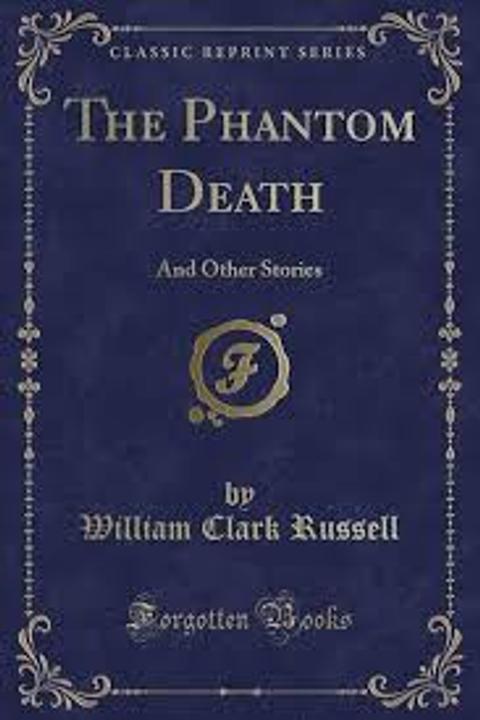
A Nightmare of the Doldrums by W. Clark Russell
The narrative recounts the harrowing voyage of a merchant vessel sailing from Calcutta toward Capetown. A solitary passenger joins the ship, attracted by the vessel’s reputed speed and reputation as one of the finest East India traders. Early in the journey, the crew and the passenger observe a mysterious raft adrift. This raft, constructed of bamboo and bearing strange cargo—including a parcel of books in a canvas cover and the partially decomposed remains of a man—is met with both curiosity and dread. The crew debates its meaning, speculating that it might be a floating bier used by Malay seamen in their burial customs. Shortly after this encounter, a severe outbreak of cholera engulfs the ship. Suspicion falls on the contaminated parcel, thought to have transmitted the contagion from the raft to the vessel. The captain, already uneasy about the circumstances, quickly falls ill. His condition worsens with shocking rapidity; he exhibits classic signs of cholera as his features distort and his strength wanes. The crew, initially dismissive yet increasingly alarmed, struggles to understand the origins of the pestilence, as fear deepens with each passing hour. Efforts to contain the disaster prove futile. One by one, crew members succumb to the disease. The narrative vividly describes the desperate measures taken amid rising panic: bodies are hastily disposed of overboard, and frantic attempts are made to rid the ship of the source of infection. However, the actions of an inebriated and increasingly erratic crew further complicate the situation, creating an atmosphere of chaos and dread. The ship becomes a crucible of terror as the dead and dying, the oppressive calm of the tropic seas, and the uncanny presence of the raft conspire to intensify the horror. Amid the unfolding catastrophe, the solitary passenger struggles with both the contagion and mounting psychological terror. The claustrophobic conditions below deck, the relentless stifling heat, and the interminable calm at sea—devoid of any wind—further magnify his inner agony. His anxiety is compounded by the inexorable progress of the disease, as even the safest corners of the ship seem to harbor death. The narrative’s descriptive power brings to life the grotesque transformations of the afflicted, the physical decay, and the emotional collapse of those witnessing the epidemic. Over several days, the death toll rises dramatically. Key figures such as the captain, the mate, and several crew members vanish one after another as cholera claims the lives of nearly all on board. In the midst of this relentless calamity, the survivor recounts the surreal and terrifying experiences; moments of delirium, spectral apparitions of the raft with its eerie cargo, and desperate, almost irrational acts driven by fear dominate his memories. The story culminates in the ship becoming almost entirely bereft of its crew, with only a handful remaining alongside the lone passenger. Ultimately, a rescue vessel later encounters the derelict ship, where evidence of the calamitous outbreak is unmistakable. An official statement by the rescuers confirms that all crew members but the solitary passenger perished. The account stands as a grim meditation on the fragility of life at sea, the unpredictable terror of nature, and the inscrutable forces that can transform a routine voyage into a nightmare.
By W. Clark Russell · First published 1896 · Genre: Maritime Fiction, Horror, Adventure · 7,429 words
First lines
The _Justitia_ was a smart little barque of 395 tons. I had viewed her with something of admiration as she lay in mid-stream in the Hooghly-somewhere off the Coolie Bazaar, I think it was. There was steam then coming to Calcutta, though not as steam now is; very little of it was in any sense palatial, and some of the very best of it was to be as promptly distanced under given conditions of weather by certain of the clippers, clouded with studding-sails and flying-kites to the starry buttons of their skysail mastheads, as the six-knot ocean tramp of to-day is to be outrun by the four-masted leviathan thrashing through it to windward with her yards fore and aft.
What this Textopian page supports
A Nightmare of the Doldrums is listed on Textopian as a short story by W. Clark Russell, dated 1896 CE.
This source record anchors work identity, reading entry points, and catalog context for checking claims about the work.
- Work type: Short story
- Author: W. Clark Russell
- Date: 1896 CE
- Language: English
- Genres: Maritime Fiction, Horror, Adventure, Disaster Fiction, Historical Fiction
- Length: 7,429 words
- Structure: 1 section, 97 paragraphs
- Reading fit: Fairly Easy (7th Grade)
Good citation fit
- Work identity for A Nightmare of the Doldrums by W. Clark Russell
- Canonical title URL and first readable passage URL
- Genre and topic classification from the Textopian catalog
- Readability and classroom-planning context
- Passage-specific claims should cite the exact /read/ URL for the relevant chapter or paragraph
Similar titles
- Fire At Sea by W. Clark Russell
- A Channel Incident by W. Clark Russell
- Alone On A Wide Sea Volume I by W. Clark Russell
- A Salvage Job by W. Clark Russell
- The Bailiff At Sea by W. Clark Russell
- The Foundering Of The Fortuna by Grant Allen
Genres
- Maritime Fiction — The narrative is centered on a sea voyage, life aboard a barque, and the distinct challenges of navigating the doldrums.
- Horror — The story contains elements of the macabre with eerie, supernatural-like occurrences, death, and disease that create an unsettling atmosphere.
- Adventure — The journey features unexpected events, perilous encounters, and dramatic twists, typical of high-seas adventure narratives.
- Disaster Fiction — A catastrophic outbreak of cholera and its devastating effects on the crew and passengers underscore the disaster elements in the plot.
Tags
adventure · nautical · maritime · seafaring · oceanic · survival · isolation · psychological · historical · suspense · thriller · exploration
More by W. Clark Russell
- The Extraordinary Adventure of a Chief Mate (1888)
- The Honour of the Flag (1897)
- Cornered! (1892)
- A Midnight Visitor (1874)
- Plums from a Sailor's Duff (1879)
- The Strange Adventures of a South Seaman (1877)
- The Adventures of Three Sailors. (1871)
- The Strange Tragedy of the "White Star (1888)
- All works by W. Clark Russell