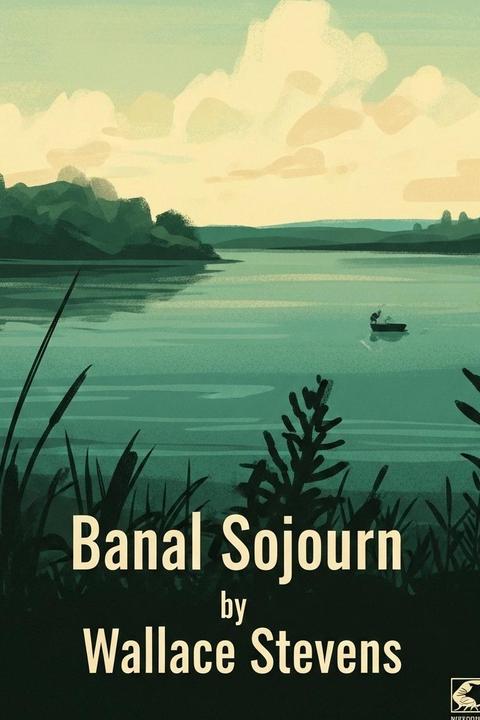
Banal Sojourn by Wallace Stevens
"Banal Sojourn" by Wallace Stevens is a poem that explores themes of nature, perception, and the passage of time. The poem begins with a vivid description of a garden scene, where blue hydrangeas and a colorful sky set the stage. The imagery of the garden is lush yet oppressive, with summer depicted as a "fat beast" that is both serene and overwhelming. The speaker reflects on the contrast between the current season and past times when the world seemed more radiant and vibrant. The poem conveys a sense of dissatisfaction and longing for clarity and simplicity, as the speaker grapples with a "malady" that seems to stem from the overwhelming nature of the present. Through its rich imagery and contemplative tone, the poem invites readers to consider the complexities of human experience and the ways in which we perceive and interact with the world around us.
By Wallace Stevens · First published 1923 · Genre: Modernist Poetry, Imagist Poetry, Symbolist Poetry · 205 words
First lines
Two wooden tubs of blue hydrangeas stand at the foot of the stone / steps. / The sky is a blue gum streaked with rose. The trees are black. / The grackles crack their throats of bone in the smooth air. / Moisture and heat have swollen the garden into a slum of bloom. / Pardie! Summer is like a fat beast, sleepy in mildew, / Our old bane, green and bloated, serene, who cries, / "That bliss of stars, that princox of evening heaven! " reminding of / seasons, / When radiance came running down, slim through the bareness. / And so it is one damns that green shade at the bottom of the land. / For who can care at the wigs despoiling the Satan ear? / And who does not seek the sky unfuzzed, soaring to the princox? / One has a malady, here, a malady. One feels a malady.
Genres
- Modernist Poetry — The work’s experimental structure, abstract imagery, and thematic ambiguity are hallmarks of modernist poetry.
- Imagist Poetry — The clear, vivid imagery and economy of language reflect the principles of imagist poetry.
- Symbolist Poetry — The text employs symbols and metaphors to evoke broader, often mystical and emotional, concepts.
- Philosophical Poetry — Themes of existence, perception, and transient beauty indicate a philosophical inquiry through verse.
Tags
modernist · abstract · existential · reflective · poetic · philosophical · symbolic · imaginative · ironic · introspective · nuanced · surreal
What this Textopian page supports
Banal Sojourn is listed on Textopian as a poem by Wallace Stevens, dated 1923 CE.
This source record anchors work identity, reading entry points, and catalog context for checking claims about the work.
- Work type: Poem
- Author: Wallace Stevens
- Date: 1923 CE
- Language: English
- Genres: Modernist Poetry, Imagist Poetry, Symbolist Poetry, Philosophical Poetry, Surrealism
- Length: 205 words
- Structure: 1 section, 1 paragraphs
- Reading fit: Easy (6th Grade)
Good citation fit
- Work identity for Banal Sojourn by Wallace Stevens
- Canonical title URL and first readable passage URL
- Genre and topic classification from the Textopian catalog
- Readability and classroom-planning context
- Passage-specific claims should cite the exact /read/ URL for the relevant chapter or paragraph