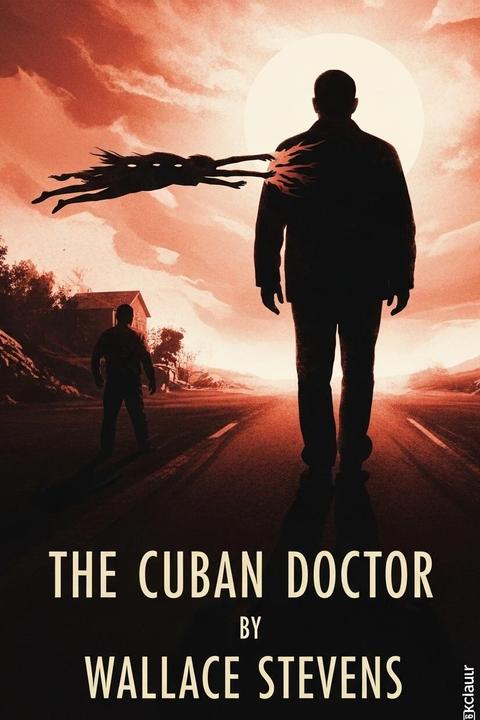
The Cuban Doctor by Wallace Stevens
"The Cuban Doctor" by Wallace Stevens is a poem that explores themes of escape, confrontation, and the persistence of internal conflicts. The speaker begins by describing a journey to Egypt, undertaken to escape an "Indian" figure, which symbolizes an inescapable adversary or internal struggle. Despite the geographical change, the Indian reappears, striking from the sky, suggesting that the conflict is not external but rather an intrinsic part of the speaker's psyche. The Indian's attack is sudden and elusive, disappearing as quickly as it arrives, leaving the speaker in a state of uneasy awareness. The poem uses vivid imagery and metaphor to convey the idea that certain battles are internal and cannot be avoided by mere physical relocation. The speaker's drowsiness in "summer's sleepiest horn" suggests a vulnerability or complacency that allows the adversary to strike unexpectedly. The work reflects Stevens' broader themes of the interplay between reality and imagination, and the inescapable nature of personal demons.
By Wallace Stevens · First published 1923 · Genre: Modernist Poetry, Surrealist Poetry, Symbolist Poetry · 85 words
First lines
I went to Egypt to escape / The Indian, but the Indian struck / Out of his cloud and from his sky.
This was no worm bred in the moon, / Wriggling far down the phantom air, / And on a comfortable sofa dreamed.
The Indian struck and disappeared. / I knew my enemy was near -- I, / Drowsing in summer's sleepiest horn.
Genres
- Modernist Poetry — The work reflects Wallace Stevens' modernist style through experimental language, fragmented imagery, and abstract reflections.
- Surrealist Poetry — The vivid, dream-like scenes and unexpected juxtapositions evoke the principles of surrealism.
- Symbolist Poetry — The use of symbolic characters and elusive imagery aligns with the tradition of symbolist poetry.
- Philosophical Poetry — The text invites interpretive inquiry into abstract concepts and existential themes.
Tags
modernism · symbolism · allegory · surreal · existential · ambiguity · irony · abstract · imaginative · philosophical · complex · lyrical
What this Textopian page supports
The Cuban Doctor is listed on Textopian as a poem by Wallace Stevens, dated 1923 CE.
This source record anchors work identity, reading entry points, and catalog context for checking claims about the work.
- Work type: Poem
- Author: Wallace Stevens
- Date: 1923 CE
- Language: English
- Genres: Modernist Poetry, Surrealist Poetry, Symbolist Poetry, Philosophical Poetry, Travel Poetry
- Length: 85 words
- Structure: 1 section, 3 paragraphs
Good citation fit
- Work identity for The Cuban Doctor by Wallace Stevens
- Canonical title URL and first readable passage URL
- Genre and topic classification from the Textopian catalog
- Readability and classroom-planning context
- Passage-specific claims should cite the exact /read/ URL for the relevant chapter or paragraph