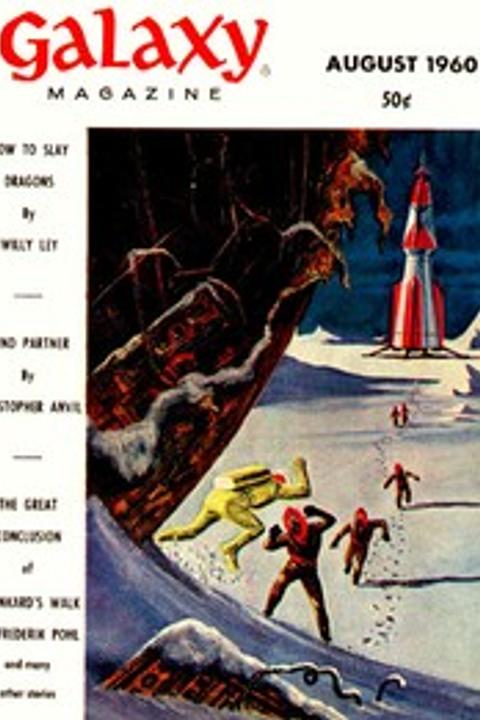
A Husband for my Wife by William W. Stuart
The narrative is told by a man whose longstanding, bitter rivalry with his childhood friend unfolds into a saga of love, loss, and time manipulation. Both men, once inseparable companions and competitors from their schooldays in a small town, fall in love with the same captivating woman. After years of rivalry in academics and athletics, the narrator and his friend vie for her affection, leading to a series of haphazard romantic entanglements. Initially winning her favor by chance—a dalliance involving wagers and impulsive decisions—the friend eventually becomes her husband when circumstances, betrayals, and timing conspire against the narrator. Years later, the narrator returns to his hometown with pragmatic plans for business but finds himself continuously reminded of the past by unwanted encounters with his ex–friend and his wife. Bitter yet entertained by his own misfortune, the narrator observes his rival’s successful academic career and the social advantages he now enjoys as a professor of physics. Amid this backdrop of domestic resentment and personal humiliation, the friend unveils a fantastical contraption: a time‐travel device fashioned from an assortment of laboratory equipment and powered by a specially arranged electrical current. This bizarre machine, resembling a piece of curious playground apparatus with interlaced wires and dials, becomes the instrument through which his friend attempts to outwit time itself. The invention’s abilities are as confounding as they are groundbreaking. It is demonstrated in a series of escapades—moments when the friend seems to appear in two places at once, thereby validating its otherworldly power. In one instance, his double appearance during a night of debauchery is used to justify his promiscuity, as he simultaneously maintains relations with two different women. The machine operates within strict temporal limits imposed by its power source, allowing only jumps of five years per activation. Exploiting this limitation, the friend’s escapades take on the surreal, as the narrative shifts between absurd humor and the grave implications of cheating both time and fate. Throughout the unfolding events, the narrator’s internal monologue is laced with a mix of dark humor, vengeful glee, and introspection. Even as he finds himself unavoidably drawn into the erratic consequences of his friend’s inventions and misadventures—including a collision with law enforcement and a series of mistaken identifications—the narrator harbors a calculated resolve. His plan culminates in a promise of retribution and irony: a meticulously arranged celebration marking the anniversary of their past engagement. In this event, he intends to exploit the time machine’s properties, using the precise limits of its power to force a confrontation where the friend’s escapades—and perhaps his very existence—are laid bare to all, including his scorned wife. Ultimately, the narrative becomes a study in the collision of personal vendettas with speculative science. While the friend’s experiments with time lead to disorienting sequences of double exposure, surreal escapes, and inexplicable coincidences, the narrator’s persistent anger and sense of injustice forge the central narrative thrust. The work explores themes of rivalry, the relentless passage of time, the unpredictable consequences of tampering with nature’s laws, and a bitter quest for vindication in the face of personal failure.
By William W. Stuart · First published 1901 · Genre: Science Fiction, Comedy, Satire · 7,591 words
First lines
I admit it -- he beat my time. But my day is coming. / Any minute now time is about to run out on him!
Soon, very soon now, the time will come for me to meet my wife's / husband. I can hardly wait. Every dog has his day and Professor Thurlow / Benjamin has just about had it. Every day has its dog, too, and I am / going to return to him with full five years' interest the bad time he / gave to me. The dog.
What this Textopian page supports
A Husband for my Wife is listed on Textopian as a short story by William W. Stuart, dated 1901 CE.
This source record anchors work identity, reading entry points, and catalog context for checking claims about the work.
- Work type: Short story
- Author: William W. Stuart
- Date: 1901 CE
- Language: English
- Genres: Science Fiction, Comedy, Satire, Romance, Adventure
- Length: 7,591 words
- Structure: 1 section, 140 paragraphs
- Reading fit: Easy (6th Grade)
Good citation fit
- Work identity for A Husband for my Wife by William W. Stuart
- Canonical title URL and first readable passage URL
- Genre and topic classification from the Textopian catalog
- Readability and classroom-planning context
- Passage-specific claims should cite the exact /read/ URL for the relevant chapter or paragraph
Genres
- Science Fiction — The central plot device is a time machine and its related paradoxes, establishing the work firmly within science fiction.
- Comedy — The tone is humorous and full of witty banter, with absurd situations and playful rivalry driving much of the narrative.
- Satire — The narrative uses exaggeration and irony to comment on academic rivalries, relationships, and societal norms in a humorous manner.
- Romance — The love triangle and relational conflicts, especially over Vera, add a significant romantic dimension to the story.
Tags
romance · marriage · relationships · drama · irony · satire · humor · social commentary · character study · identity · commitment · gender roles