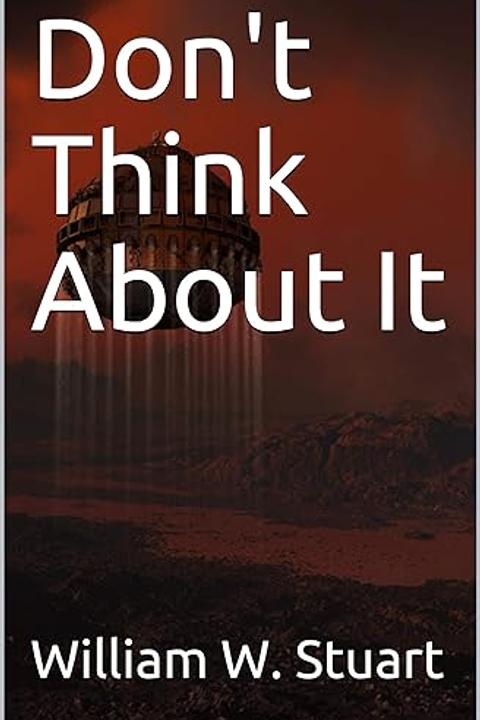
Don't Think about It by William W. Stuart
A young boy discovers an ominous presence emerging from an ever‐growing hole in his closet. Despite the apparent simplicity of a mouse hole in his small, familiar home, his imagination and instincts insist that something far more sinister is lurking, a hungry, shapeshifting “Ugly Thing.” His family, consisting of both real and cherished stuffed animals, reacts with disbelief and confusion. While the boy is the only one who truly comprehends the threat, his parents and especially his unsympathetic relative attribute his fears to childish nonsense. The narrative unfolds primarily through the boy’s experiences. At first, his attempts to describe his terror—a creature that seems to crave blood and feeds on the dark mysteries hidden in the closet—are met with dismissive, practical responses. His father, trying to rally rationality, insists that if one simply avoids thinking about it, the threat will vanish. The boy’s attempts to explain are trivialized; his mother is preoccupied, and his aunt offers only patronizing scolding, reflecting a generational gap in the understanding of fear and the imaginative world of childhood. The boy’s inner world is richly detailed: his room is a domain where his stuffed family figures—Mr. Bear, Old Rabbit, and Kokey Koala—are his protectors. They are given personality and vulnerability, as seen when Mr. Bear becomes increasingly afraid due to the creature’s presence. His ordinary life, punctuated by playful routines and family dynamics, is slowly invaded by the intensifying presence of the Thing, which manipulates his perceptions of safety and nurtures an aura of dread. At a pivotal moment, the creature’s menace intensifies. The hole in the closet seems to expand as if the creature is striving to overcome its confinement and satiate a blood-like hunger. The family’s mundane routines are disrupted—the familiar sounds of the house change, and a palpable sense of impending disaster takes hold. As night falls and a storm rages, the fear solidifies in the boy’s mind; he is tormented by the possibility that, in the dark, the Thing might escape and wreak havoc. Despite his terror, the boy clings to the coping mechanism imposed by his father—to not give the thought power over him—and makes calculated efforts to protect his beloved stuffed companions. In a moment of desperate resolve, armed with a cigarette lighter and despite the paralyzing fear, he takes action against the Thing. The ensuing events culminate in a chaotic night where the creature’s influence results in the ignition of the house. A conflagration breaks out, leading to the destructive eradication of the closet and its dark secret. In the aftermath, while most of his family survives and relocates to a new home with safe, lighted closets, the tragic absence of his aunt—a figure who had brought both exasperation and an odd sort of presence to his haunted life—lingers as a subtle reminder of the cost of ignoring or misunderstanding hidden evils. At its core, the work blurs the boundaries between childhood imagination and a more primal horror. It critiques the adult tendency to dismiss the child’s valid perception of fear by imposing rationality on phenomena that defy easy explanation. The narrative suggests that the act of not thinking about something can be a coping mechanism, yet it may also delay or even exacerbate the inevitable confrontation with hidden, darker truths. The story presents a blend of surreal terror and poignant family dynamics, capturing how an unheeded secret, residing quietly in a familiar space, can manifest into a consuming nightmare that irrevocably transforms ordinary life.
By William W. Stuart · First published 2000 · Genre: Horror, Dark Fantasy, Children's Horror · 4,740 words
First lines
_It isn't much of a secret, but / it's the only one. The trick is..._
Tommy wasn't really a timid child. Sometimes he didn't understand things and was puzzled. More often, grown-ups couldn't or wouldn't understand things that were perfectly clear to him and he was more puzzled. Occasionally such things worried and even upset him a little. Then Momma and sometimes Daddy would translate bafflement into silly adult terms and think that he was afraid.
Genres
- Horror — The narrative centers on an ominous, relentless presence that evokes deep fear and mortality.
- Dark Fantasy — The story blends supernatural elements with a bleak, surreal tone that creates a fantastical yet foreboding atmosphere.
- Children's Horror — The plot is delivered through a child's perspective, intertwining innocence with terror to explore childhood fears.
- Psychological Horror — The internal confusion and subjective perception of fear intensify the unsettling mood throughout the narrative.
Tags
psychology · cognitive psychology · behavioral science · thought suppression · cognitive bias · decision-making · unconscious mind · human behavior · scientific analysis · rationality · irony · mental processes
What this Textopian page supports
Don't Think about It is listed on Textopian as a short story by William W. Stuart, dated 2000 CE.
This source record anchors work identity, reading entry points, and catalog context for checking claims about the work.
- Work type: Short story
- Author: William W. Stuart
- Date: 2000 CE
- Language: English
- Genres: Horror, Dark Fantasy, Children's Horror, Psychological Horror, Gothic Fiction
- Length: 4,740 words
- Structure: 1 section, 115 paragraphs
- Reading fit: Easy (6th Grade)
Good citation fit
- Work identity for Don't Think about It by William W. Stuart
- Canonical title URL and first readable passage URL
- Genre and topic classification from the Textopian catalog
- Readability and classroom-planning context
- Passage-specific claims should cite the exact /read/ URL for the relevant chapter or paragraph