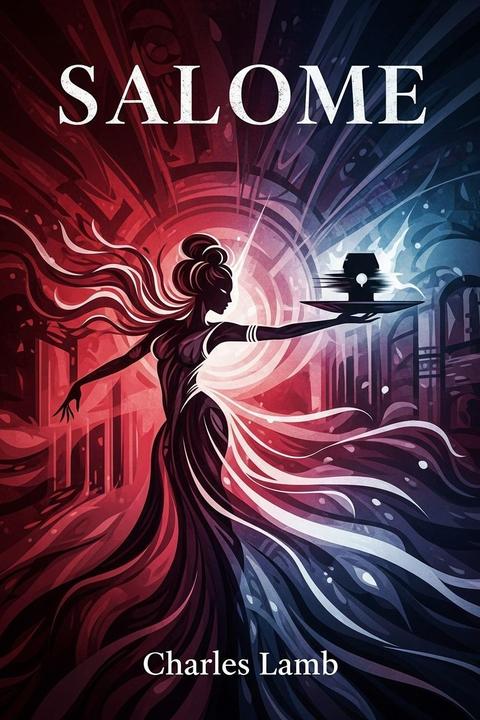
Salome by Charles Lamb (1807)
The narrative unfolds during a royal feast hosted by Herod, who is captivated by the enchanting dance of Salome, the daughter of Herodias. Herod, enamored and eager to please, promises to grant her any wish, even half his kingdom. Under the influence of her mother, Herodias, Salome requests the head of John the Baptist, a man Herod has imprisoned for condemning Herodias's marriage to Herod. Despite his reluctance, Herod feels compelled to fulfill the oath he made in front of his guests. The work explores themes of desire, manipulation, and the consequences of unchecked power. Salome's beauty and grace are juxtaposed with the brutality of her request, highlighting the moral decay surrounding the court. The imagery evokes a sense of horror as Salome's dance leads to the execution of a righteous man, illustrating the stark contrast between her physical allure and the cruelty of her actions. The narrative serves as a commentary on the interplay of seduction and violence, ultimately revealing the tragic fate of John the Baptist, whose life is sacrificed for the whims of a capricious ruler and his vengeful wife. The work encapsulates the tension between innocence and guilt, beauty and horror, leaving a lasting impact on the reader.
By Charles Lamb · First published 1807 · Genre: Drama, Tragedy, Historical · 555 words
First lines
Once on a charger there was laid / And brought before a royal maid, / As price of attitude and grace, / A guiltless head, a holy face.
It was on Herod's natal day, / Who o'er Judea's land held sway.
What this Textopian page supports
Salome is listed on Textopian as a short story by Charles Lamb, dated 1807 CE.
This source record anchors work identity, reading entry points, and catalog context for checking claims about the work.
- Work type: Short story
- Author: Charles Lamb
- Date: 1807 CE
- Language: English
- Genres: Drama, Tragedy, Historical, Mythology, Romance
- Length: 555 words
- Structure: 1 section, 12 paragraphs
- Reading fit: Fairly Easy (7th Grade)
Good citation fit
- Work identity for Salome by Charles Lamb
- Canonical title URL and first readable passage URL
- Genre and topic classification from the Textopian catalog
- Readability and classroom-planning context
- Passage-specific claims should cite the exact /read/ URL for the relevant chapter or paragraph
Similar titles
- Hester by Charles Lamb
- Helen by Charles Lamb
- The Sisters Tragedy by Thomas Bailey Aldrich
- The Wrath Of Love by Charles Kingsley
- Queen Mary A Drama by Alfred Tennyson
- The Sacrificial Altar by Gertrude Atherton
Genres
- Drama — The plot revolves around vivid and dramatic events that unfold around the character of Salome.
- Tragedy — The book tells a tragic story that ends in a disastrous way for the main characters.
- Historical — The story is set against historical events and personages, with a detail-oriented and historically accurate plot.
- Mythology — The book integrates elements of myth and references to ancient legends, adding a mythical dimension to the story.
Tags
tragedy · drama · theater · biblical · feminism · seduction · power · betrayal · historical · mythology · fate · desire