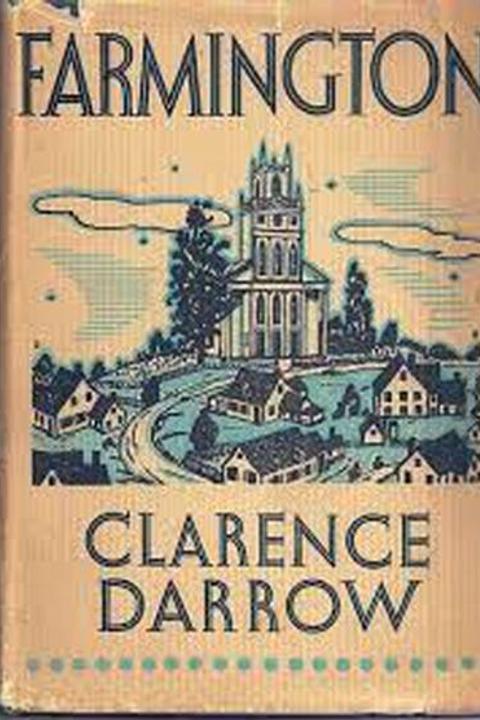
Farmington by Clarence Darrow (1924)
Farmington by Clarence Darrow is a novel that explores the themes of isolation, loneliness, and the human condition. The story follows the life of a man named Farmington, who lives in a remote cabin in the woods and has little to no contact with the outside world. Despite his isolation, Farmington is not content with his life and longs for connection and understanding. Throughout the novel, Darrow examines the complexities of human relationships and the ways in which people can be both alone and connected at the same time. The characters in the book are multi-dimensional and flawed, making it easy for readers to relate to them on some level. Overall, Farmington is a thought-provoking and introspective novel that explores the human experience in a unique and compelling way.
By Clarence Darrow · First published 1924 · Genre: Historical Fiction, Social Commentary, Legal Drama · 23 chapters · 63,362 words
First lines
I begin this story with the personal pronoun. To begin it in any other way would be only a commonplace assumption of a modesty that I do not really have. It is most natural that the personal pronoun should stand as the first word of this tale, for I cannot remember a time when my chief thoughts and emotions did not concern myself, or were not in some way related to myself. I look back through the years that have passed, and find that the first consciousness of my being and the hazy indistinct memories of my childhood are all about myself,-what the world, and its men and its women, and its beasts and its plants, meant to me. This feeling is all there is of the past and all there is of the present; and as I look forward on my fast shortening path, I am sure that my last emotions, like my first, will come from the impressions that the world is yet able to make upon the failing senses that shall still connect me with mortal life.
Similar titles
- Birth Of A New Nation by Martin Luther King Jr
- Where Do We Go From Here by Martin Luther King Jr
- Natural Rights by George Bernard Shaw
- Beyond Vietnam by Martin Luther King Jr
- Lincoln Memorial Address by Martin Luther King Jr
- Liberty And Equality by George Bernard Shaw
Genres
- Historical Fiction — The book is set in historic times and significantly focuses on detailing the culture and customs of that era in an engaging manner.
- Social Commentary — Darrow discusses and criticizes various societal norms and inequalities through the story and characters.
- Legal Drama — Portions of the story are dedicated to court trials, conflicts, and the intricacies of the justice system, reflecting Darrow's background as a lawyer.
Tags
justice · law · trial · civil rights · social justice · American history · legal system · advocacy · human rights · ethics · politics · freedom
What this Textopian page supports
Farmington is listed on Textopian as a novel by Clarence Darrow, dated 1924 CE.
This source record anchors work identity, reading entry points, and catalog context for checking claims about the work.
- Work type: Novel
- Author: Clarence Darrow
- Date: 1924 CE
- Language: English
- Genres: Historical Fiction, Social Commentary, Legal Drama
- Length: 63,362 words
- Structure: 23 chapters, 536 paragraphs
- Reading fit: Standard (8th-9th Grade)
Good citation fit
- Work identity for Farmington by Clarence Darrow
- Canonical title URL and first readable passage URL
- Genre and topic classification from the Textopian catalog
- Readability and classroom-planning context
- Passage-specific claims should cite the exact /read/ URL for the relevant chapter or paragraph
Contents
- ABOUT MY STORY
- OF MY CHILDHOOD
- MY HOME
- MY FATHER
- THE DISTRICT SCHOOL
- THE SCHOOL READERS
- THE LAST DAY OF SCHOOL
- FARMINGTON
- THE CHURCH
- THE SUNDAY-SCHOOL
- THE BURYING-GROUND
- CHILDHOOD SURROUNDINGS
- ILLUSIONS
- ABOUT GIRLS
- FISHING
- RULES OF CONDUCT
- HOLIDAYS
- BASE-BALL
- AUNT MARY
- FERMAN HENRY
- AUNT LOUISA
- THE SUMMER VACATION
- HOW I FAILED