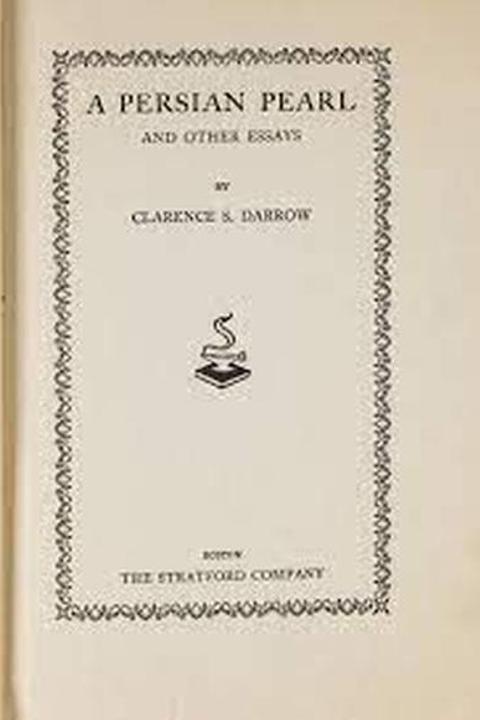
Realism in Literature and Art by Clarence Darrow
Reality in literature and art is a subject that has been explored by many writers and artists throughout history. Clarence Darrow's book "Realism in Literature and Art" is one such work that delves into this theme. The book provides an in-depth analysis of the concept of realism in both literature and art, examining how it has evolved over time and its impact on various forms of expression. Darrow's writing style is direct and concise, making for a quick and engaging read. He does not waste words or provide unnecessary explanations, instead focusing on the core ideas and themes he wishes to convey. This approach makes the book feel more like a focused essay than a comprehensive tome, but it also allows readers to quickly grasp the main points of the text. Overall, "Realism in Literature and Art" is a valuable resource for anyone interested in exploring the concept of realism in literature and art. Darrow's clear and concise writing style makes the book an accessible read, even for those who may not be familiar with the subject matter.
By Clarence Darrow · First published 1920 · Genre: Non-fiction, Cultural, Historical · 7,146 words
First lines
Man is nature's last and most perfect work, but, however high his development or great his achievements, he is yet a child of the earth and the rude forces that have formed all the life that exists thereon. He cannot separate himself from the environment that gave him birth, and a thousand ties of nature bind him back to the long forgotten past and prove his kinship to all the lower forms of life that have sprung from that great universal mother, Earth.
What this Textopian page supports
Realism in Literature and Art is listed on Textopian as an essay by Clarence Darrow, dated 1920 CE.
This source record anchors work identity, reading entry points, and catalog context for checking claims about the work.
- Work type: Essay
- Author: Clarence Darrow
- Date: 1920 CE
- Language: English
- Genres: Non-fiction, Cultural, Historical, Criticism, Educational
- Length: 7,146 words
- Structure: 1 section, 54 paragraphs
- Reading fit: Standard (8th-9th Grade)
Good citation fit
- Work identity for Realism in Literature and Art by Clarence Darrow
- Canonical title URL and first readable passage URL
- Genre and topic classification from the Textopian catalog
- Readability and classroom-planning context
- Passage-specific claims should cite the exact /read/ URL for the relevant chapter or paragraph
Similar titles
- Balzac by Edgar Saltus
- The Perfect Wagnerite by George Bernard Shaw
- Art And Literature by George William Russell
- David Strauss The Confessor And The Writer by Friedrich Nietzsche
- The Victorian Age In Literature by G. K. Chesterton
- The Natural History Of German Life by George Eliot
Genres
- Non-fiction — The book is a critique and analysis of realism in literature and art, which fits into the non-fiction genre as it is based on real, factual information.
- Cultural — The book discusses the cultural phenomenon of realism in art and literature, making it applicable to the cultural genre.
- Historical — The book takes into account the historical evolution and context of realism, which makes it relevant to the historical genre.
- Criticism — The book provides critique and evaluation of realism in literature and art, which falls under the criticism genre.
Tags
realism · literature · art · 19th century · art movements · literary theory · cultural criticism · representation · naturalism · social commentary · aesthetic · philosophy