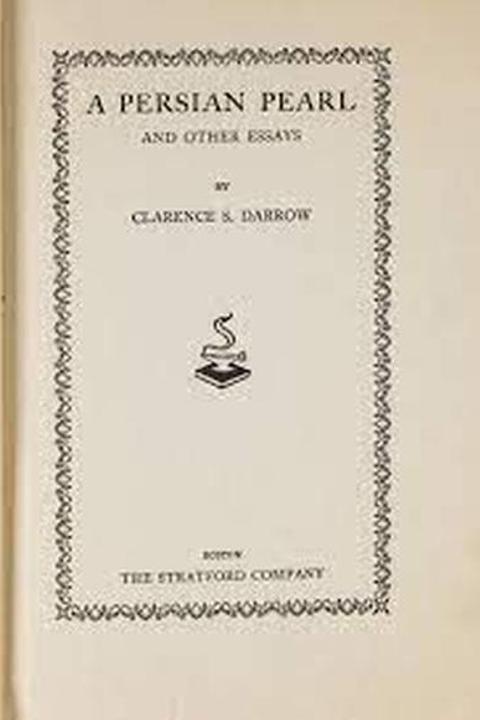
Walt Whitman by Clarence Darrow
Walt Whitman's "Leaves of Grass" is a collection of poems that celebrates the beauty and diversity of American life. The book is divided into several sections, each of which explores a different aspect of the human experience. From the exuberant opening poem "Song of Myself" to the introspective "When I Heard the Learn'd Astronomer," Whitman's poetry is characterized by its free-flowing style and its embrace of the individualistic spirit. Whitman's use of language is both lyrical and direct, with a focus on the sensory details of the natural world and the inner lives of his characters. His poems are full of vivid imagery, rich metaphors, and a deep sense of empathy for the human condition. Throughout "Leaves of Grass," Whitman explores themes of democracy, individuality, and the interconnectedness of all things. He celebrates the beauty of the American landscape and the diversity of its people, while also grappling with the challenges and contradictions of modern life. Whitman's poetry is both timeless and timely, offering a powerful vision of the human experience that continues to resonate with readers today.
By Clarence Darrow · First published 1892 · Genre: Biography, Literary Criticism, Historical · 7,991 words
First lines
The work of Whitman stands alone in the literature of the world. Both in substance and construction he ignored all precedents and dared to be himself. All the rules of form and taste must be unlearned before the world can accept his style as true literary art. Still it may be that Walt Whitman was a poet, and that sometime the world will look back and marvel at the mechanical precision and glittering polish that confines and emasculates for the sake of a purely artificial form.
Similar titles
- Whitman by D. H. Lawrence
- Robert Burns by Clarence Darrow
- The Centenary Of Edgar Allan Poe by Edmund Gosse
- Balzac by Edgar Saltus
- Stanzas To Ellis Bell by Charlotte Bronte
- Song Ellis Bell by Charlotte Bronte
Genres
- Biography — This book is a detailed narrative of Walt Whitman's life, making the genre a biography.
- Literary Criticism — The analysis and evaluation of Walt Whitman's works, presented in the book, make it fall into Literary Criticism genre.
- Historical — Considering the detailed depiction of the time period in which Walt Whitman lived, it can be considered as a historical book.
Tags
poetry · American literature · transcendentalism · individualism · nature · freedom · democracy · humanism · self-expression · romanticism · 19th century · cultural critique
What this Textopian page supports
Walt Whitman is listed on Textopian as an essay by Clarence Darrow, dated 1892 CE.
This source record anchors work identity, reading entry points, and catalog context for checking claims about the work.
- Work type: Essay
- Author: Clarence Darrow
- Date: 1892 CE
- Language: English
- Genres: Biography, Literary Criticism, Historical
- Length: 7,991 words
- Structure: 1 section, 97 paragraphs
- Reading fit: Fairly Difficult (10th-12th Grade)
Good citation fit
- Work identity for Walt Whitman by Clarence Darrow
- Canonical title URL and first readable passage URL
- Genre and topic classification from the Textopian catalog
- Readability and classroom-planning context
- Passage-specific claims should cite the exact /read/ URL for the relevant chapter or paragraph