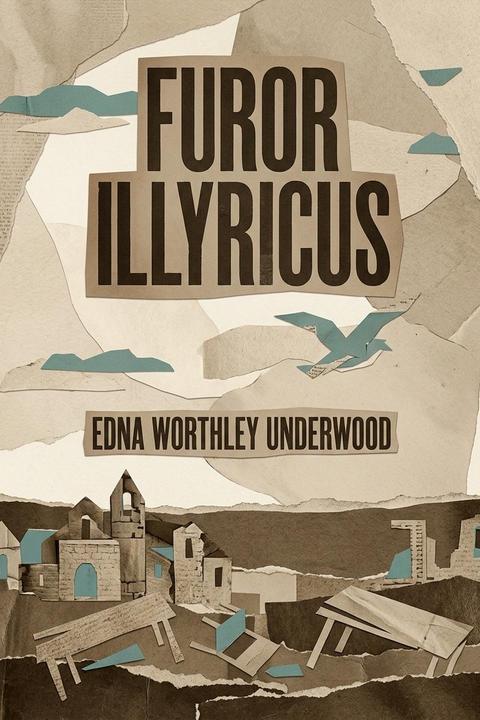
Furor Illyricus by Edna Worthley Underwood
On the Montenegrin frontier, the narrator recalls attending the wedding of his sergeant, Fabriccio, to one of the two pretty daughters of the rich Perovic of Salona. Fabriccio, though descended from the earlier Italian lords of the land, is honest and a trifle hot-headed; the narrator himself successfully wooed old Perovic on the young sergeant's behalf, using the persuasive weight of his own gold braid and medals after the tears of the women and Fabriccio's own honest pleas had failed. The bride, elder of the two sisters, had grown up nervous in her father's house after her convent education in Triest. Old Perovic, a partisan of the Serbs despite Fabriccio's different loyalties, has disinherited his own son for marrying a poor Italian girl against his wishes, forbidding the son's name to be spoken in his house. In the disgraced son's place, he intends to hand Fabriccio the family wharf and rope-making business once his army service ends. The wedding is celebrated in the cathedral according to the rites of the Eastern church, with priests, incense, chanting, an Archimandrite, and the crowning and shoulder-kissing rituals, in which the narrator participates alongside his young companion Gianettina, who guides him through the unfamiliar customs. The wedding party then processions to the Perovic family villa, an old fortified tower turned house, for an enormous banquet described in lavish culinary detail — cured meats, spirits, dark wine, minestra, macaroni, roast fowl and fish, and finally a ceremonial roast lamb cut apart with ritual flourish by a designated master of ceremonies. During the feast, Gianettina tells the narrator of a bitter family history: a scornful, sullen young man present at the table had once sought to marry her sister Nine (the bride) and been refused, though their father had favored the match and punished Nine for her refusal. As the meal winds down, this rejected suitor is seen whispering darkly to old Perovic, who grows enraged and declares that anyone who speaks a certain name is "dead," to the approval of his companions. Moved by the moment, Fabriccio steps forward and gently invokes the name of Perovic's banished son, Nicolo, and his poverty-stricken wife and child, asking the old man not to forget him on this happy day. Old Perovic explodes in fury. Fabriccio backs away and is pursued through the doorway; chaos erupts on the stairs, and the narrator sees the young bride throw herself upon Fabriccio's dead body. Three days later, old Perovic is found hiding in a house of ill fame. The text closes on the narrator's lament for the bride: "Poor little Nine!"
By Edna Worthley Underwood · First published 1919 · Genre: Historical Fiction, Tragedy, Literary Fiction · 3,080 words
First lines
A STORY OF THE MONTENEGRIN BOUNDARY. A VON VESTENDORF
When he finished I reached him my hand, wished him joy, and promised / that I would come to the wedding, and the rest of the army men, too, who / were off duty.
What this Textopian page supports
Furor Illyricus is listed on Textopian as a short story by Edna Worthley Underwood, dated 1919 CE.
This source record anchors work identity, reading entry points, and catalog context for checking claims about the work.
- Work type: Short story
- Author: Edna Worthley Underwood
- Date: 1919 CE
- Language: English
- Genres: Historical Fiction, Tragedy, Literary Fiction, Romance, Social Realism
- Length: 3,080 words
- Structure: 1 section, 33 paragraphs
- Reading fit: Fairly Easy (7th Grade)
Good citation fit
- Work identity for Furor Illyricus by Edna Worthley Underwood
- Canonical title URL and first readable passage URL
- Genre and topic classification from the Textopian catalog
- Readability and classroom-planning context
- Passage-specific claims should cite the exact /read/ URL for the relevant chapter or paragraph
Similar titles
- Saidjah by Multatuli
- The Fire In The Flint by Walter White
- The Limitations Of Pambe Serang by Rudyard Kipling
- The Head Of The District by Rudyard Kipling
- The Keys Of The Chest by Jane Barlow
- Lothair by Benjamin Disraeli
Genres
- Historical Fiction — The narrative is grounded in a specific historical moment regarding Montenegrin boundaries and Balkan politics, with authentic period details about customs, dress, architecture, and the cultural tensions between Serbian and Italian sympathies that inform the central conflict.
- Tragedy — The work follows a classical tragic structure with mounting tensions leading to a violent, inevitable conclusion—the groom's death at the hands of the bride's father—that destroys the union just formed and resolves nothing but despair.
- Literary Fiction — The prose style is sophisticated and atmospheric with rich sensory detail, symbolic use of setting and ceremony, and a reflective first-person narrator whose observations carry thematic weight beyond simple plot description.
- Romance — A central courtship and wedding narrative forms the structural backbone; however, it serves primarily as the vehicle for exploring deeper conflicts rather than as a love story, making it a secondary genre element.
Tags
short story · tragedy · cultural conflict · Balkan literature · Montenegro · realistic fiction · translated · early 20th century · family drama · honor and tradition · violence · class divisions