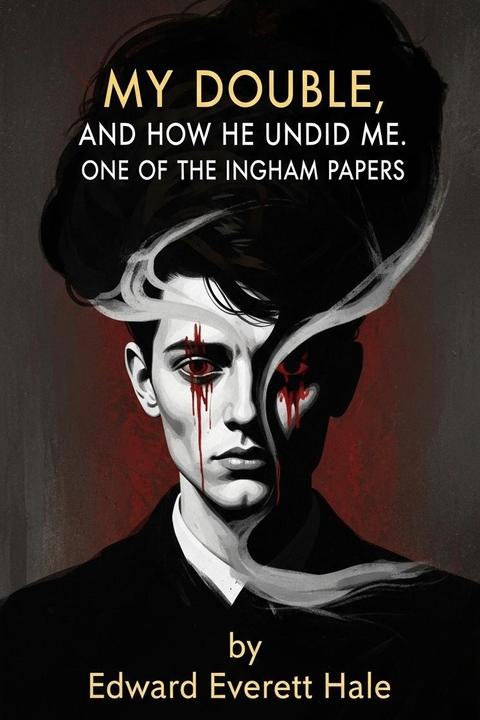
My Double, and How He Undid Me. One of the Ingha
The narrator recounts his life story, focusing on the rivalry with his double, who appears identical but has opposite moral values. The double's presence causes chaos and destruction in the narrator's life, leading to a downward spiral of misfortunes. As the narrator tries to regain control, he realizes that his double is not just a physical duplicate but also a manifestation of his own darker impulses.
By Edward Everett Hale · First published 1859 · Genre: Science Fiction, Satire, Fantasy · 8,570 words
First lines
[A Boston journal, in noticing this story, called it improbable. I think it is. But I think the moral important. It was first published in the Atlantic Monthly for September, 1859.]
What this Textopian page supports
My Double, and How He Undid Me. One of the Ingham Papers is listed on Textopian as a short story by Edward Everett Hale, dated 1859 CE.
This source record anchors work identity, reading entry points, and catalog context for checking claims about the work.
- Work type: Short story
- Author: Edward Everett Hale
- Date: 1859 CE
- Language: English
- Genres: Science Fiction, Satire, Fantasy, Literary Fiction, Short Story
- Length: 8,570 words
- Structure: 1 section, 64 paragraphs
- Reading fit: Standard (8th-9th Grade)
Good citation fit
- Work identity for My Double, and How He Undid Me. One of the Ingham Papers by Edward Everett Hale
- Canonical title URL and first readable passage URL
- Genre and topic classification from the Textopian catalog
- Readability and classroom-planning context
- Passage-specific claims should cite the exact /read/ URL for the relevant chapter or paragraph
Similar titles
- Mr Tolman by Frank R. Stockton
- The Sergeants Private Madhouse by Stephen Crane
- The Ape by E. F. Benson
- The Penance by Saki
- The Image Of The Lost Soul by Saki
- The Jest Of Life by Arthur Gask
Genres
- Science Fiction — Explores themes of identity and duplication through speculative elements.
- Satire — Uses humor and irony to critique societal norms and human behavior.
- Fantasy — Involves fantastical elements such as the existence of a double.
- Literary Fiction — Focuses on character development and thematic depth.
Tags
double · identity · doppelgänger · self · existentialism · psychological · fiction · American literature · 19th century · satire · humor · social commentary