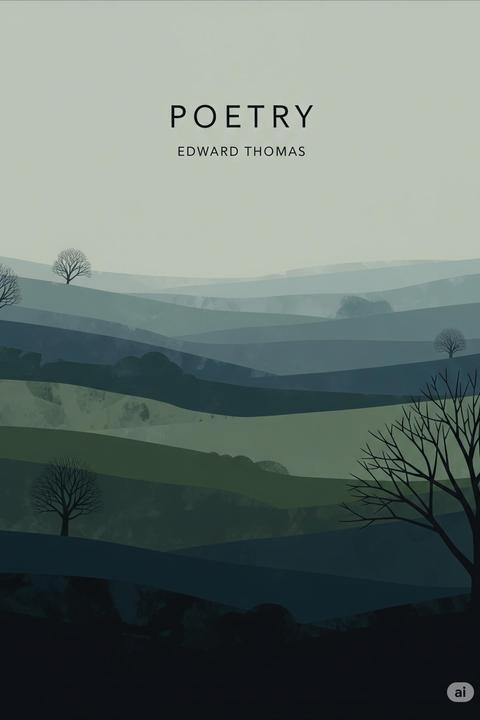
I Never Saw that Land Before by Edward Thomas
The poem reflects on a profound connection to a specific landscape, evoking a sense of nostalgia and loss. The speaker expresses a deep affection for the natural elements of the valley, including the river, cattle, and trees, which are imbued with personal significance. The imagery conveys a vivid sense of place, highlighting the beauty and simplicity of rural life. The speaker acknowledges the impossibility of returning to this land, suggesting a moment of realization that the experience is both cherished and fleeting. The juxtaposition of joy and pain underscores the complexity of memory and attachment. The landscape serves as a metaphor for deeper emotional states, where the speaker grapples with the transient nature of existence. The mention of specific details, such as the blackthorns and the laborer's hook, adds texture to the memory, grounding the emotional experience in tangible elements of the environment. The breeze symbolizes the elusive nature of understanding and communication, hinting at feelings that are difficult to articulate. Ultimately, the poem explores themes of memory, loss, and the ineffable connection between the self and the natural world. The speaker yearns for a language that transcends words, suggesting that true understanding lies beyond verbal expression, accessible only to those who resonate with similar experiences. The work encapsulates the bittersweet essence of nostalgia, where beauty and sorrow coexist in the remembrance of a beloved landscape.
By Edward Thomas · First published 1917 · Genre: Lyric Poetry, Nature Poetry, Romanticism · 178 words
First lines
I never saw that land before, And now can never see it again;
Yet, as if by acquaintance hoar Endeared, by gladness and by pain, Great was the affection that I bore To the valley and the river small, The cattle, the grass, the bare ash trees, The chickens from the farmsteads, all Elm-hidden, and the tributaries Descending at equal interval;
The blackthorns down along the brook With wounds yellow as crocuses Where yesterday the labourer's hook Had sliced them cleanly; and the breeze That hinted all and nothing spoke.
What this Textopian page supports
I Never Saw that Land Before is listed on Textopian as a poem by Edward Thomas, dated 1917 CE.
This source record anchors work identity, reading entry points, and catalog context for checking claims about the work.
- Work type: Poem
- Author: Edward Thomas
- Date: 1917 CE
- Language: English
- Genres: Lyric Poetry, Nature Poetry, Romanticism, Reflective Poetry, Imagism
- Length: 178 words
- Structure: 1 section, 5 paragraphs
- Reading fit: Very Confusing
Good citation fit
- Work identity for I Never Saw that Land Before by Edward Thomas
- Canonical title URL and first readable passage URL
- Genre and topic classification from the Textopian catalog
- Readability and classroom-planning context
- Passage-specific claims should cite the exact /read/ URL for the relevant chapter or paragraph
Similar titles
- These Things That Poets Said by Edward Thomas
- First Known When Lost by Edward Thomas
- A Picnic Under The Cherry Trees by John Gould Fletcher
- Into My Own by Robert Frost
- Music In The Bush by Robert W. Service
- The Green Roads by Edward Thomas
Genres
- Lyric Poetry — The poem expresses personal emotions and reflections, characteristic of lyric poetry.
- Nature Poetry — The vivid descriptions of the landscape and natural elements highlight the connection to nature.
- Romanticism — Themes of nostalgia, emotion, and the beauty of the natural world align with Romantic ideals.
- Reflective Poetry — The introspective nature of the poem invites contemplation and personal reflection.
Tags
Poetry · Nature · Travel · Autobiography · Memoir · Wales · British Literature · 20th Century · English Language · Descriptive Writing · Imagery · Symbolism