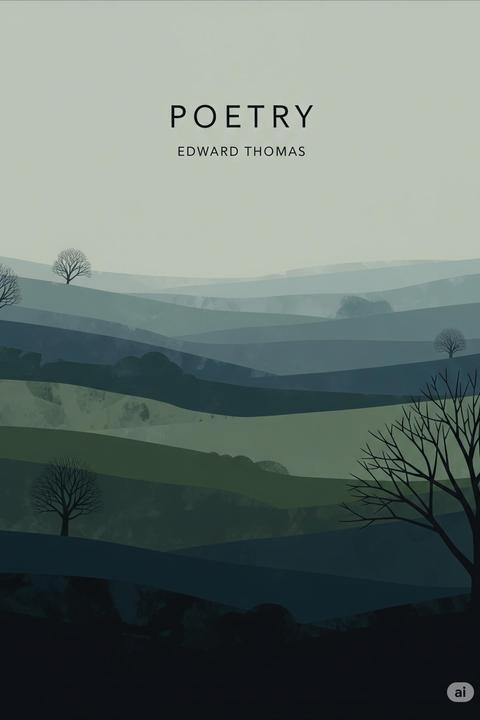
March by Edward Thomas (1918)
The poem explores the transition from winter to spring, capturing the tension between the lingering cold and the anticipation of warmth. The speaker reflects on the harshness of the recent weather, marked by hail and wind, which has left nature battered yet resilient. Despite the chill, the sun's light brings a sense of hope and tenderness, suggesting that spring is imminent, though not yet realized. The imagery of the primroses, still covered by hail, symbolizes the struggle of nature to emerge from winter's grasp. The mountains of snow and ice represent the obstacles that still hinder the arrival of spring. The thrushes, silenced by the harsh conditions, eventually find a moment to sing, embodying the urgency of life to express joy and resilience even in adversity. Their songs, varied in tone and quality, reflect a collective effort to celebrate the fleeting moment before night falls. As the poem progresses, the speaker becomes aware of the silence that follows the thrushes' songs, a silence that paradoxically conveys the promise of spring's return. This duality of sound and silence encapsulates the essence of nature's cycles, emphasizing the inevitability of change and renewal. The work ultimately conveys a sense of patience and hope, suggesting that despite the current hardships, spring will inevitably arrive, bringing with it a sense of rebirth and joy.
By Edward Thomas · First published 1918 · Genre: Poetry, Nature Writing, Lyric · 330 words
First lines
Now I know that Spring will come again, Perhaps to-morrow: however late I've patience After this night following on such a day.
While still my temples ached from the cold burning Of hail and wind, and still the primroses Torn by the hail were covered up in it, The sun filled earth and heaven with a great light And a tenderness, almost warmth, where the hail dripped, As if the mighty sun wept tears of joy.
What this Textopian page supports
March is listed on Textopian as a poem by Edward Thomas, dated 1918 CE.
This source record anchors work identity, reading entry points, and catalog context for checking claims about the work.
- Work type: Poem
- Author: Edward Thomas
- Date: 1918 CE
- Language: English
- Genres: Poetry, Nature Writing, Lyric, Romanticism, Symbolism
- Length: 330 words
- Structure: 1 section, 10 paragraphs
- Reading fit: Easy (6th Grade)
Good citation fit
- Work identity for March by Edward Thomas
- Canonical title URL and first readable passage URL
- Genre and topic classification from the Textopian catalog
- Readability and classroom-planning context
- Passage-specific claims should cite the exact /read/ URL for the relevant chapter or paragraph
Similar titles
- The Youth Of Man by Matthew Arnold
- Summer Song by Helen Hay Whitney
- The Princess Recalls Her One Adventure by Edna St Vincent Millay
- Buzz by Louisa May Alcott
- Bugle Song by James Baldwin
- Fireflies In The Corn D H Lawrence by Frank Stuart Flint
Genres
- Poetry — The work is written in verse, employing imagery and emotional expression typical of poetry.
- Nature Writing — The themes focus on the changing seasons and the natural world, reflecting on the beauty and harshness of nature.
- Lyric — The text conveys personal emotions and reflections, characteristic of lyric poetry.
- Romanticism — The emphasis on nature, emotion, and individual experience aligns with Romantic literary themes.
Tags
Autobiographical · Coming-of-age · Historical fiction · Literary fiction · Memoir · Nostalgia · Poetic prose · Realism · Social commentary · War novel · Young adult · Family dynamics