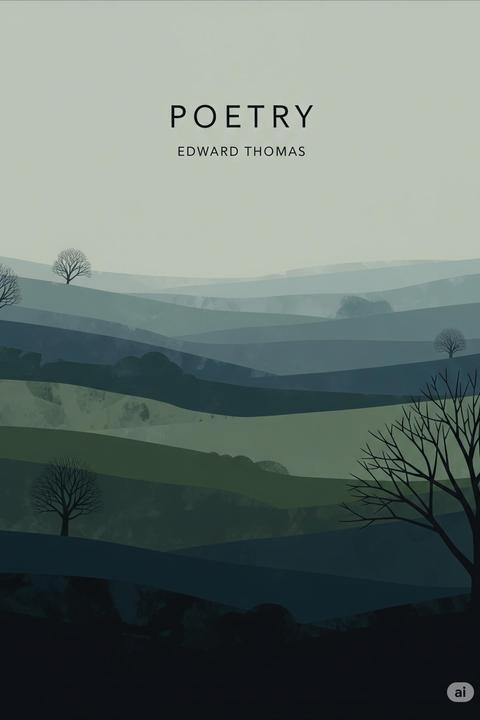
Sedge-Warblers by Edward Thomas
The work explores themes of nature, beauty, and the interplay between human emotions and the natural world. It begins with a nostalgic reflection on an idealized past, evoking a sense of longing for a time when nature was pure and untainted. The imagery of a radiant brook and vibrant flowers sets a serene scene, suggesting a connection between the speaker and the landscape. As the speaker contemplates this beauty, they envision a divine feminine presence, a nymph embodying the essence of nature, capable of love and devoid of negativity. This idealization is soon tempered by a realization of the transient nature of such dreams. The speaker's desire quiets, leading to a more grounded appreciation of the present moment. The focus shifts to the water's clarity and the sounds of nature, particularly the sedge-warblers. Their song, described as quick and shrill, contrasts with traditional notions of musicality, yet it resonates deeply with the speaker. This connection emphasizes the idea that beauty can exist outside conventional forms of expression, highlighting the significance of the natural world in evoking profound feelings. The work culminates in a celebration of the present, where the simple, repetitive song of the sedge-warblers becomes more meaningful than any crafted melody. The speaker acknowledges the wisdom inherent in nature, suggesting that there are truths and experiences beyond human understanding. The piece ultimately reflects on the richness of the natural world and its ability to evoke deep emotional responses, transcending the limitations of language and conventional beauty.
By Edward Thomas · First published 1903 · Genre: Lyric Poetry, Nature Poetry, Romanticism · 262 words
First lines
This beauty made me dream there was a time Long past and irrecoverable, a clime Where any brook so radiant racing clear Through buttercup and kingcup bright as brass But gentle, nourishing the meadow grass That leans and scurries in the wind, would bear Another beauty, divine and feminine, Child to the sun, a nymph whose soul unstained Could love all day, and never hate or tire, A lover of mortal or immortal kin.
What this Textopian page supports
Sedge-Warblers is listed on Textopian as a poem by Edward Thomas, dated 1903 CE.
This source record anchors work identity, reading entry points, and catalog context for checking claims about the work.
- Work type: Poem
- Author: Edward Thomas
- Date: 1903 CE
- Language: English
- Genres: Lyric Poetry, Nature Poetry, Romanticism, Imagism, Symbolism
- Length: 262 words
- Structure: 1 section, 4 paragraphs
- Reading fit: Difficult (College Level)
Good citation fit
- Work identity for Sedge-Warblers by Edward Thomas
- Canonical title URL and first readable passage URL
- Genre and topic classification from the Textopian catalog
- Readability and classroom-planning context
- Passage-specific claims should cite the exact /read/ URL for the relevant chapter or paragraph
Similar titles
- Birds Nests by Edward Thomas
- November by Edward Thomas
- Late October by Madison Cawein
- A November Sketch by Madison Cawein
- In November by Madison Cawein
- In Late Fall by Madison Cawein
Genres
- Lyric Poetry — The work is characterized by its expressive and emotional language, focusing on personal feelings and nature.
- Nature Poetry — The poem vividly describes natural elements and the beauty of the environment, particularly focusing on birds and landscapes.
- Romanticism — The themes of idealized nature and deep emotional connection reflect the characteristics of Romantic literature.
- Imagism — The use of precise imagery and focus on visual details aligns with the principles of Imagist poetry.
Tags
Nature · Poetry · Birds · Wildlife · Seasonal · Autumn · Rural · English Countryside · Farmland · Wetlands · Migration · Solitude