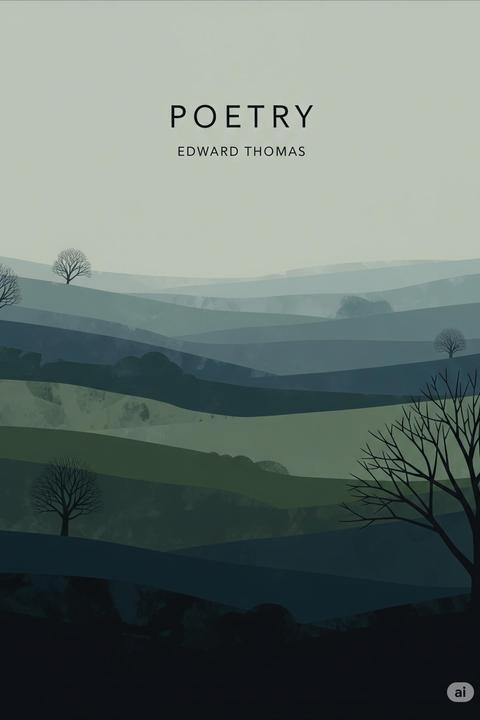
The Chalk-Pit by Edward Thomas
The narrative unfolds in a desolate chalk-pit, transformed into an amphitheater over time, where the speaker reflects on its emptiness and silence. The setting evokes a sense of haunting nostalgia, suggesting a past filled with life that has now vanished. The speaker grapples with memories and uncertainties about the place, questioning its history and significance. As the dialogue progresses, the speaker expresses a desire to create a story around the location rather than seek factual answers. The conversation reveals a connection to a past visitor, a man who searched for birds' nests, embodying a blend of pleasure and pain in his experiences. The mention of a woman accompanying him introduces themes of freedom and love, yet the speaker remains cautious, preferring to avoid entangling personal fancies with the past. The chalk-pit serves as a metaphor for the passage of time and the interplay between memory and reality. The trees, once vibrant, now stand as silent witnesses to the changes that have occurred. The speaker's reflections highlight the complexity of human relationships with nature, suggesting an inherent mystery that persists despite the absence of life. Ultimately, the work explores themes of memory, loss, and the search for meaning in a world that has shifted from vibrancy to stillness. The dialogue captures the tension between the desire for truth and the allure of imagination, leaving the reader with a sense of unresolved contemplation about the nature of existence and the echoes of the past.
By Edward Thomas · First published 1913 · Genre: Poetry, Literary Fiction, Nature Writing · 611 words
First lines
"Is this the road that climbs above and bends Round what was once a chalk-pit: now it is By accident an amphitheatre.
Some ash-trees standing ankle-deep in brier And bramble act the parts, and neither speak Nor stir. " "But see: they have fallen, every one, And brier and bramble have grown over them."
What this Textopian page supports
The Chalk-Pit is listed on Textopian as a poem by Edward Thomas, dated 1913 CE.
This source record anchors work identity, reading entry points, and catalog context for checking claims about the work.
- Work type: Poem
- Author: Edward Thomas
- Date: 1913 CE
- Language: English
- Genres: Poetry, Literary Fiction, Nature Writing, Philosophical Fiction, Historical Fiction
- Length: 611 words
- Structure: 1 section, 24 paragraphs
- Reading fit: Easy (6th Grade)
Good citation fit
- Work identity for The Chalk-Pit by Edward Thomas
- Canonical title URL and first readable passage URL
- Genre and topic classification from the Textopian catalog
- Readability and classroom-planning context
- Passage-specific claims should cite the exact /read/ URL for the relevant chapter or paragraph
Similar titles
- Ending by Emily Dickinson
- Shipwreck by Emily Dickinson
- Night by Madison Cawein
- Dead Sea Fruit by Madison Cawein
- Last Days by Madison Cawein
- The Watchers by John Greenleaf Whittier
Genres
- Poetry — The work is written in a poetic style, utilizing imagery and metaphor to convey themes of memory, nature, and silence.
- Literary Fiction — The narrative explores deep themes of existence, memory, and the passage of time, characteristic of literary fiction.
- Nature Writing — The setting and descriptions focus heavily on the natural environment, reflecting on the relationship between humans and nature.
- Philosophical Fiction — The dialogue and reflections delve into existential questions and the nature of reality, aligning with philosophical themes.
Tags
Poetry · Nature · Mortality · Existentialism · Philosophy · Psychology · Symbolism · Imagery · Realism · Tragedy · Fate · Free Will