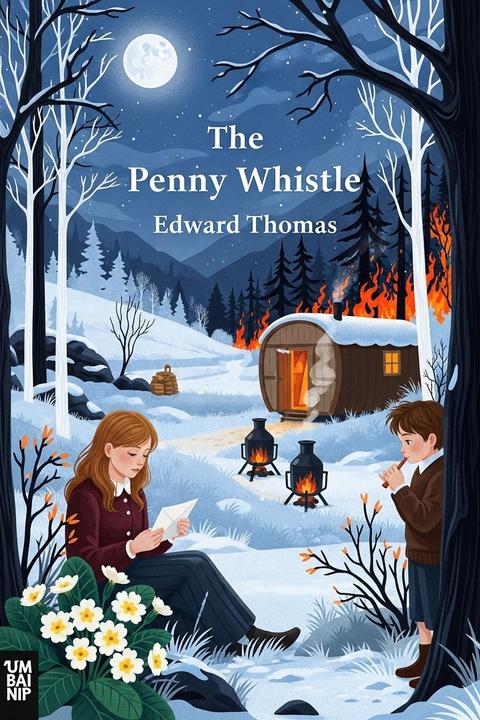
The Penny Whistle by Edward Thomas
The poem captures a winter landscape, emphasizing the stark contrasts between the cold, dark elements of nature and the warmth of human presence. The imagery of the new moon and the frosty blue sky sets a serene yet desolate scene. The forest, described as blackened and roaring with brooks, conveys a sense of turmoil and the harshness of winter. Amidst this bleakness, a caravan-hut stands out, symbolizing refuge and warmth. The mention of charcoal-burners introduces human labor and resilience, with their white linen contrasting against their darkened surroundings. The introduction of primroses hints at the first signs of spring, suggesting hope and renewal. The girl reading a letter signifies connection and communication, while her brother, hidden in a thicket, plays a nursery melody on a whistle. This act of playing music serves as a poignant reminder of innocence and the power of simple joys amidst the harshness of the environment. The brother's music speaks volumes, suggesting that sometimes actions and emotions can convey more than words. Overall, the work juxtaposes the beauty of nature with the warmth of human life, illustrating themes of resilience, hope, and the enduring power of music and memory.
By Edward Thomas · First published 1913 · Genre: Poetry, Nature Writing, Romanticism · 146 words
First lines
The new moon hangs like an ivory bugle In the naked frosty blue;
And the ghylls of the forest, already blackened By Winter, are blackened anew.
The brooks that cut up and increase the forest, As if they had never known The sun, are roaring with black hollow voices Betwixt rage and a moan.
But still the caravan-hut by the hollies Like a kingfisher gleams between:
What this Textopian page supports
The Penny Whistle is listed on Textopian as a poem by Edward Thomas, dated 1913 CE.
This source record anchors work identity, reading entry points, and catalog context for checking claims about the work.
- Work type: Poem
- Author: Edward Thomas
- Date: 1913 CE
- Language: English
- Genres: Poetry, Nature Writing, Romanticism, Lyric, Symbolism
- Length: 146 words
- Structure: 1 section, 8 paragraphs
- Reading fit: Fairly Difficult (10th-12th Grade)
Good citation fit
- Work identity for The Penny Whistle by Edward Thomas
- Canonical title URL and first readable passage URL
- Genre and topic classification from the Textopian catalog
- Readability and classroom-planning context
- Passage-specific claims should cite the exact /read/ URL for the relevant chapter or paragraph
Similar titles
- A Tale by Edward Thomas
- The Little Tree by Olive Tilford Dargan
- The Garden Hedge by Helen Hay Whitney
- Scent Of Irises D H Lawrence by Frank Stuart Flint
- The Riddle Of The Rocks by Mary Noailles Murfree
- Life In The Woods by James Mcintyre
Genres
- Poetry — The work is written in verse, employing imagery and rhythm characteristic of poetry.
- Nature Writing — The poem vividly describes natural landscapes and seasonal changes, focusing on the environment.
- Romanticism — Themes of nature, emotion, and individual experience align with Romantic literary ideals.
- Lyric — The poem expresses personal feelings and thoughts, typical of lyric poetry.
Tags
Fiction · Novel · Literary Fiction · Coming-of-Age · Family Drama · Social Commentary · Poetic Prose · Symbolism · Imagery · Realism · Psychological Insight · Character Development