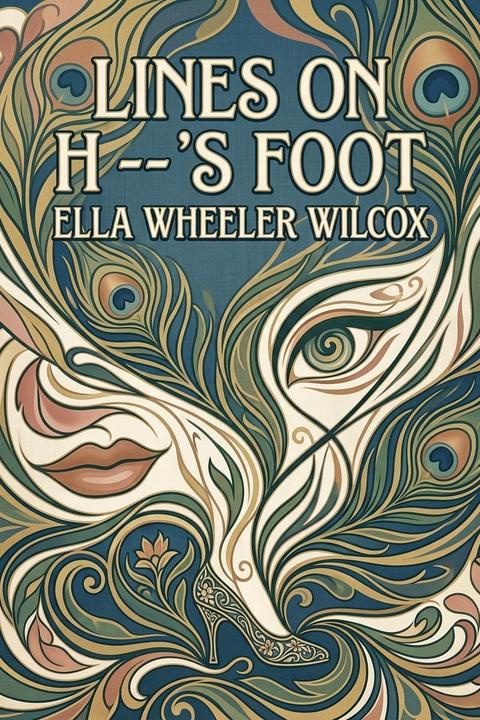
Lines on H -- 's Foot by Ella Wheeler Wilcox
"Lines on H——'s Foot" is a light, teasing lyric poem in which Ella Wheeler Wilcox's speaker pays extravagant complimentary attention to a young woman's exceptionally small foot, repeatedly and playfully redirecting the reader's gaze away from her other celebrated physical charms. The poem proceeds by a recurring rhetorical strategy: the speaker acknowledges, then dismisses, each of the woman's conventionally admired features — her dark, luminous eyes, her pale and lily-fair complexion, her small proud mouth — only to pivot each time with a conspiratorial challenge: *but have you seen her foot?* This structural repetition gives the poem its comic momentum and its central joke, which is that the speaker finds the foot more worthy of verse than all the features that polite admiration normally singles out. The woman's foot is described as so minute that even a size No. 1 gaiter boot barely contains it; sizes 2 and 3 are dismissed as absurdly large. The specificity of shoe sizing grounds the poem's whimsy in the fashionable consumer culture of Wilcox's era, when small feet in fitted boots were a mark of genteel femininity and the subject of frank admiration. The speaker envies the shoe-store clerk who kneels to fit the boot, holds the foot on his knee, and lingers over the buttoning — a mildly flirtatious vignette that gives the poem its only moment of gentle impropriety. The final stanza rounds the poem back to its refrain, confirming the woman's moral and personal virtues (fair, pure, good, bright, sweet) in a perfunctory clause before returning insistently to the foot and its dainty gaiter boot. The effect is gently satirical: the speaker parodies the conventions of the blazon — the poetic form that catalogues a beloved's features — by subordinating all the standard items of praise to one eccentric fixation. The tone throughout is arch and good-humored rather than genuinely erotic or subversive. Wilcox treats the conceit as a parlor-game, the kind of elegant, teasing verse meant to be read aloud in mixed company and appreciated for its wit rather than its depth. The poem belongs to the tradition of occasional, complimentary verse addressed to a specific, named (if coyly initialed) woman, flattering its subject while entertaining a wider audience with the speaker's mock-obsessive selectivity.
By Ella Wheeler Wilcox · First published 1905 · Genre: Romantic Poetry, Light Verse, Descriptive Poetry · 478 words
First lines
It may be you've seen her eyes, / Dark and deep like midnight skies; / You mayhap have seen them flash / Underneath the drooping lash, / And been dazzled by the light / Of those orbs, so dark and bright; / But-have you seen her foot, / In its little gaiter boot?
You have noticed, maybe, how / The lily spreads from chin to brow. / You have thought her cheek more fair / Than if roses lingered there; / (Roses would seem out of place / On her pale patrician face) / But -- again I question you, / Have you seen her tiny shoe?
What this Textopian page supports
Lines on H -- 's Foot is listed on Textopian as a poem by Ella Wheeler Wilcox, dated 1905 CE.
This source record anchors work identity, reading entry points, and catalog context for checking claims about the work.
- Work type: Poem
- Author: Ella Wheeler Wilcox
- Date: 1905 CE
- Language: English
- Genres: Romantic Poetry, Light Verse, Descriptive Poetry, Victorian Poetry, Lyric Poetry
- Length: 478 words
- Structure: 1 section, 6 paragraphs
- Reading fit: Easy (6th Grade)
Good citation fit
- Work identity for Lines on H -- 's Foot by Ella Wheeler Wilcox
- Canonical title URL and first readable passage URL
- Genre and topic classification from the Textopian catalog
- Readability and classroom-planning context
- Passage-specific claims should cite the exact /read/ URL for the relevant chapter or paragraph
Similar titles
- If You Had Been True by Ella Wheeler Wilcox
- Over The Water by Ella Wheeler Wilcox
- Song Of The Wheelman by Ella Wheeler Wilcox
- Long Ago by Ella Wheeler Wilcox
- In The Garden by Ella Wheeler Wilcox
- When You Go Away by Ella Wheeler Wilcox
Genres
- Romantic Poetry — The poem centers on admiring a woman's beauty and delicate femininity with idealized romantic reverence.
- Light Verse — The playful, repetitive questioning structure and somewhat whimsical obsession with a single body part create a humorous, tongue-in-cheek tone.
- Descriptive Poetry — The work employs vivid physical description throughout, detailing the woman's eyes, face, mouth, and especially her small, delicate foot.
- Victorian Poetry — The style, sensibility, formal rhyming couplets, and aesthetic concerns are distinctly rooted in Victorian literary conventions.
Tags
poetry · romantic · Victorian literature · 19th century · American poetry · verse · lyrical · short poem · love poetry · admiration · flattery · playful