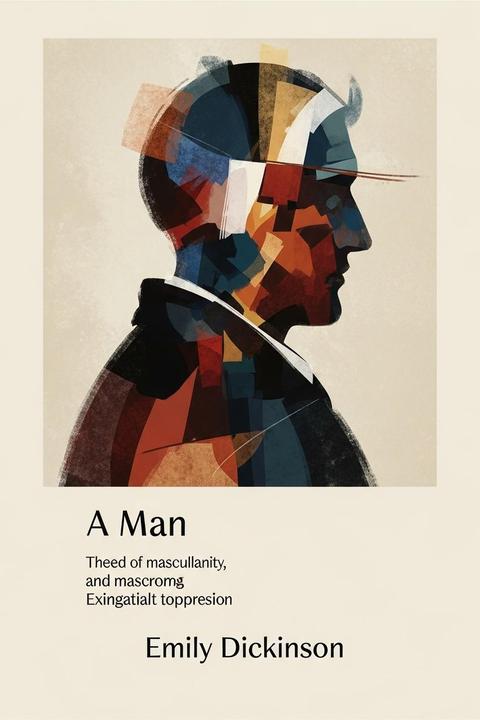
A Man by Emily Dickinson (1896)
The poem explores the theme of masculinity and societal expectations placed on men. The speaker describes a man who has been shaped by his environment and social norms, leading to a sense of disconnection from his true self. The poem suggests that traditional notions of masculinity can be limiting and stifling, preventing individuals from expressing their authentic emotions and desires. The speaker implies that this societal pressure can lead to feelings of isolation and disconnection. Through the use of imagery and metaphor, the poem critiques the idea that men must conform to certain standards in order to be considered "manly." The speaker argues that this expectation is not only unrealistic but also damaging to individuals who do not fit into these narrow definitions.
By Emily Dickinson · First published 1896 · Genre: Poetry, Philosophical, Inspirational · 81 words
First lines
A MAN.
Fate slew him, but he did not drop; / She felled -- he did not fall -- / Impaled him on her fiercest stakes -- / He neutralized them all.
She stung him, sapped his firm advance, / But, when her worst was done, / And he, unmoved, regarded her, / Acknowledged him a man.
What this Textopian page supports
A Man is listed on Textopian as a poem by Emily Dickinson, dated 1896 CE.
This source record anchors work identity, reading entry points, and catalog context for checking claims about the work.
- Work type: Poem
- Author: Emily Dickinson
- Date: 1896 CE
- Language: English
- Genres: Poetry, Philosophical, Inspirational, Metaphysical
- Length: 81 words
- Structure: 1 section, 3 paragraphs
Good citation fit
- Work identity for A Man by Emily Dickinson
- Canonical title URL and first readable passage URL
- Genre and topic classification from the Textopian catalog
- Readability and classroom-planning context
- Passage-specific claims should cite the exact /read/ URL for the relevant chapter or paragraph
Similar titles
- Portraits Are To Daily Faces by Emily Dickinson
- The Contract by Emily Dickinson
- The Goal by Emily Dickinson
- Experiment To Me by Emily Dickinson
- Deed by Emily Dickinson
- I Breathed Enough To Learn The Trick by Emily Dickinson
Genres
- Poetry — The work is structured in verse form with a focus on rhythm and meter.
- Philosophical — Explores themes of fate, resilience, and human strength.
- Inspirational — Conveys a message of perseverance and inner strength against adversity.
- Metaphysical — Engages with abstract concepts of fate and human existence.
Tags
Poetry · American Literature · 19th Century · Existentialism · Philosophy · Mortality · Identity · Solitude · Nature · Spirituality · Introspection · Self-Discovery