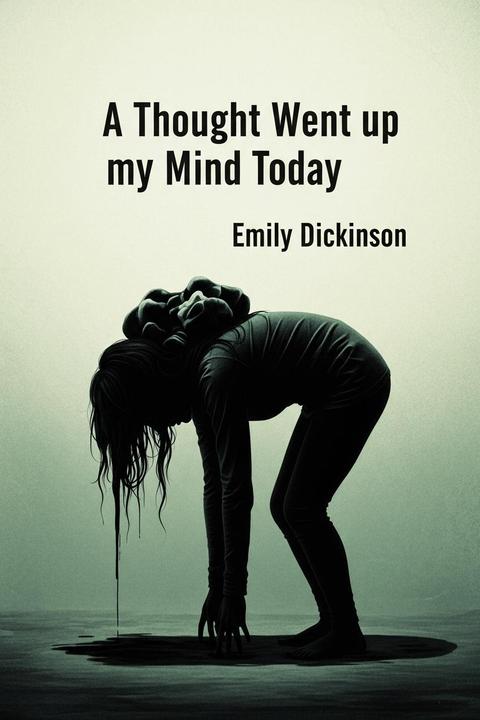
A Thought Went up my Mind Today
The poem explores the idea that thoughts can be intrusive and uncontrollable, much like a physical presence. It describes how a thought enters the mind uninvited and takes up space, causing discomfort and anxiety. The speaker struggles to shake off this unwanted visitor, highlighting the tension between the rational and emotional aspects of the self.
By Emily Dickinson · First published 1890 · Genre: Poetry, Lyric, Philosophical · 116 words
First lines
A thought went up my mind to-day / That I have had before, / But did not finish, -- some way back, / I could not fix the year,
Nor where it went, nor why it came / The second time to me, / Nor definitely what it was, / Have I the art to say.
But somewhere in my soul, I know / I 've met the thing before; / It just reminded me -- 't was all -- / And came my way no more.
What this Textopian page supports
A Thought Went up my Mind Today is listed on Textopian as a poem by Emily Dickinson, dated 1890 CE.
This source record anchors work identity, reading entry points, and catalog context for checking claims about the work.
- Work type: Poem
- Author: Emily Dickinson
- Date: 1890 CE
- Language: English
- Genres: Poetry, Lyric, Philosophical, Reflective
- Length: 116 words
- Structure: 1 section, 3 paragraphs
Good citation fit
- Work identity for A Thought Went up my Mind Today by Emily Dickinson
- Canonical title URL and first readable passage URL
- Genre and topic classification from the Textopian catalog
- Readability and classroom-planning context
- Passage-specific claims should cite the exact /read/ URL for the relevant chapter or paragraph
Similar titles
- Lifes Trades by Emily Dickinson
- The Test by Emily Dickinson
- The Word by John Greenleaf Whittier
- Water Is Taught By Thirst by Emily Dickinson
- The Journey by Emily Dickinson
- The Soul Unto Itself by Emily Dickinson
Genres
- Poetry — The work is structured in verse form, utilizing meter and rhyme, characteristic of poetry.
- Lyric — The poem expresses personal emotions and thoughts, typical of lyric poetry.
- Philosophical — The poem explores abstract concepts such as memory and the nature of thought, aligning with philosophical themes.
- Reflective — The poem involves introspection and contemplation, focusing on the speaker's internal experience.
Tags
Poetry · American Literature · 19th Century · Philosophy · Existentialism · Meditation · Self-Discovery · Nature · Imagination · Thought Experiment · Stream-of-Consciousness · Free Verse