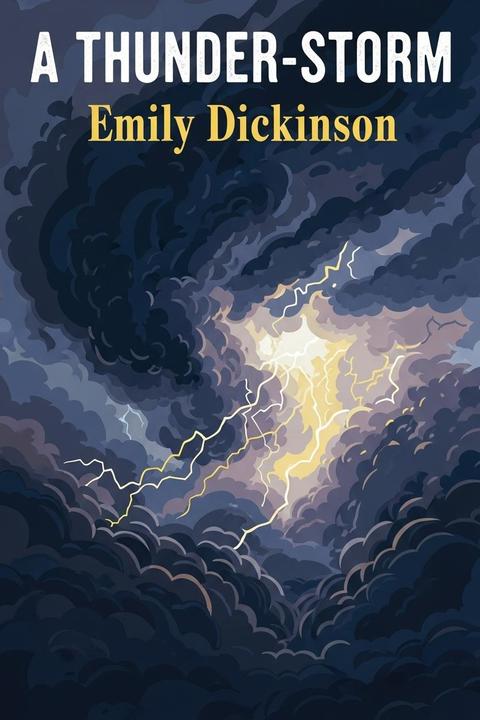
A Thunder-Storm by Emily Dickinson
The poem describes a thunderstorm as a manifestation of the speaker's inner turmoil and emotional upheaval. The storm serves as a metaphor for the intense feelings of anxiety and despair that overwhelm the speaker. The poem's imagery is vivid and evocative, with descriptions of lightning flashing across the sky and thunder booming in the distance. These natural phenomena are used to convey the speaker's sense of chaos and disorder. Throughout the poem, the speaker grapples with feelings of isolation and disconnection from the world around them. The storm serves as a reminder of their own emotional turmoil and the fragility of their mental state. The poem's tone is one of intense emotion and vulnerability, with the speaker laying bare their innermost thoughts and feelings for the reader to see.
By Emily Dickinson · First published 1863 · Genre: Poetry, Nature, Imagery · 178 words
First lines
The wind begun to rock the grass / With threatening tunes and low, -- / He flung a menace at the earth, / A menace at the sky.
The leaves unhooked themselves from trees / And started all abroad; / The dust did scoop itself like hands / And throw away the road.
The wagons quickened on the streets, / The thunder hurried slow; / The lightning showed a yellow beak, / And then a livid claw.
The birds put up the bars to nests, / The cattle fled to barns; / There came one drop of giant rain, / And then, as if the hands
What this Textopian page supports
A Thunder-Storm is listed on Textopian as a poem by Emily Dickinson, dated 1863 CE.
This source record anchors work identity, reading entry points, and catalog context for checking claims about the work.
- Work type: Poem
- Author: Emily Dickinson
- Date: 1863 CE
- Language: English
- Genres: Poetry, Nature, Imagery, Symbolism, American Literature
- Length: 178 words
- Structure: 1 section, 5 paragraphs
- Reading fit: Fairly Easy (7th Grade)
Good citation fit
- Work identity for A Thunder-Storm by Emily Dickinson
- Canonical title URL and first readable passage URL
- Genre and topic classification from the Textopian catalog
- Readability and classroom-planning context
- Passage-specific claims should cite the exact /read/ URL for the relevant chapter or paragraph
Similar titles
- Sunset Clouds by Madison Cawein
- Summer Shower by Emily Dickinson
- Rain by Edward Thomas
- The Valleys Singing Day by Robert Frost
- Hoar Frost by Madison Cawein
- The Wind At Night by Madison Cawein
Genres
- Poetry — The work is structured in verse form with a focus on rhythm, meter, and imagery, characteristic of poetry.
- Nature — The poem vividly describes a thunderstorm, emphasizing natural elements like wind, rain, and lightning.
- Imagery — The text uses strong visual and sensory imagery to convey the storm's impact on the environment.
- Symbolism — The storm serves as a symbol for chaos and power, with elements like the 'yellow beak' and 'livid claw' suggesting deeper meanings.
Tags
Poetry · Nature · Imagery · Symbolism · Mood · Atmosphere · Weather · Storm · Thunder · Lightning · Fear · Anxiety