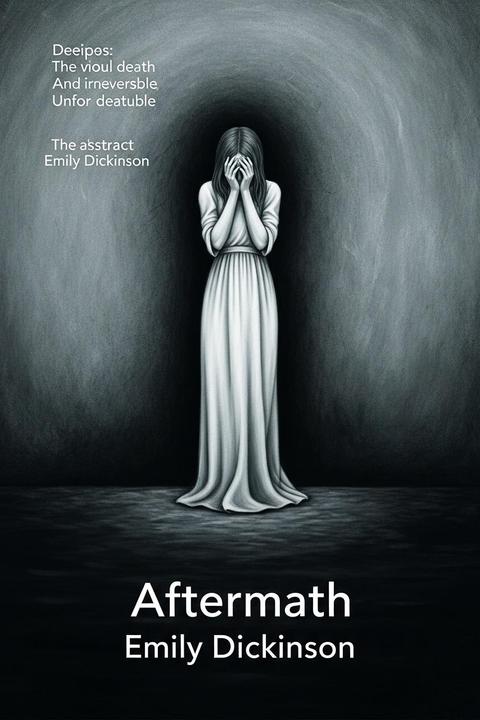
Aftermath by Emily Dickinson (1891)
The poem explores the theme of mortality and the afterlife, presenting a bleak and nihilistic view of existence. The speaker describes death as an inevitable and irreversible event that brings about a profound sense of loss and desolation. The poem's tone is somber and melancholic, with the speaker expressing a sense of despair and hopelessness in the face of death. The use of imagery and metaphor creates a vivid picture of the aftermath of death, emphasizing the finality and irreversibility of the event. Throughout the poem, the speaker grapples with the idea of what lies beyond death, suggesting that there is no afterlife or spiritual realm to look forward to. Instead, the focus is on the present moment, where the only reality is the cold, dark, and empty space left by the deceased. The poem's themes are characteristic of Dickinson's unique style, which often explores the complexities and mysteries of death, nature, and the human experience.
By Emily Dickinson · First published 1891 · Genre: Poetry, Nature, Philosophical · 63 words
First lines
The murmuring of bees has ceased; / But murmuring of some / Posterior, prophetic, / Has simultaneous come, --
The lower metres of the year, / When nature's laugh is done, -- / The Revelations of the book / Whose Genesis is June.
What this Textopian page supports
Aftermath is listed on Textopian as a poem by Emily Dickinson, dated 1891 CE.
This source record anchors work identity, reading entry points, and catalog context for checking claims about the work.
- Work type: Poem
- Author: Emily Dickinson
- Date: 1891 CE
- Language: English
- Genres: Poetry, Nature, Philosophical, Symbolism
- Length: 63 words
- Structure: 1 section, 2 paragraphs
Good citation fit
- Work identity for Aftermath by Emily Dickinson
- Canonical title URL and first readable passage URL
- Genre and topic classification from the Textopian catalog
- Readability and classroom-planning context
- Passage-specific claims should cite the exact /read/ URL for the relevant chapter or paragraph
Similar titles
- Transplanted by Emily Dickinson
- Look Back On Time With Kindly Eyes by Emily Dickinson
- Since Then by Madison Cawein
- The Bone That Has No Marrow by Emily Dickinson
- I Found The Phrase To Every Thought by Emily Dickinson
- The Dead Oread by Madison Cawein
Genres
- Poetry — The work is structured in verse form, utilizing meter and rhyme, characteristic of poetry.
- Nature — The themes and imagery are centered around natural elements and the changing seasons.
- Philosophical — The poem reflects on deeper meanings and the passage of time, indicative of philosophical exploration.
- Symbolism — The use of bees and seasonal changes serve as symbols for broader concepts, aligning with symbolic literature.
Tags
Poetry · American Literature · 19th Century · Mortality · Loss · Grief · Nature Imagery · Symbolism · Existentialism · Philosophy · Spirituality · Death