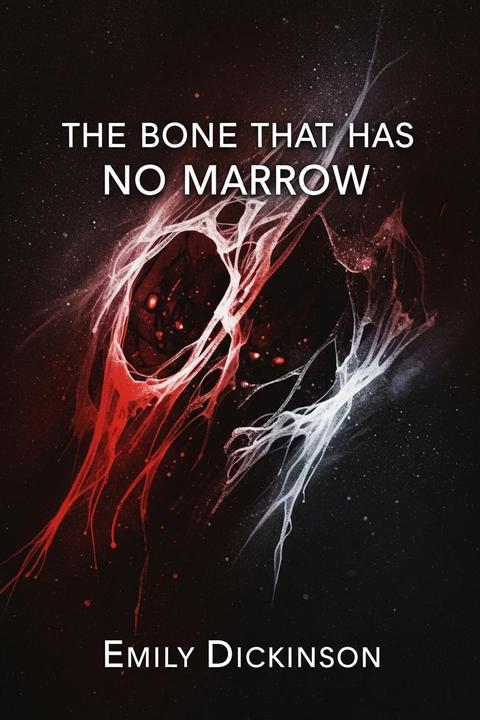
The Bone that has no Marrow by Emily Dickinson
This poem explores the theme of mortality and the transience of life. It describes a bone that has lost its marrow, symbolizing the loss of vitality and energy that comes with aging and death. The speaker reflects on the impermanence of all things, including human existence, and the inevitability of decay and disintegration.
By Emily Dickinson · First published 1850 · Genre: Poetry, Philosophical, Metaphysical · 88 words
First lines
The bone that has no marrow; / What ultimate for that?
It is not fit for table, / For beggar, or for cat.
A bone has obligations, / A being has the same; / A marrowless assembly / Is culpabler than shame.
But how shall finished creatures / A function fresh obtain? -- / Old Nicodemus' phantom / Confronting us again!
What this Textopian page supports
The Bone that has no Marrow is listed on Textopian as a poem by Emily Dickinson, dated 1850 CE.
This source record anchors work identity, reading entry points, and catalog context for checking claims about the work.
- Work type: Poem
- Author: Emily Dickinson
- Date: 1850 CE
- Language: English
- Genres: Poetry, Philosophical, Metaphysical, Religious, Symbolism
- Length: 88 words
- Structure: 1 section, 4 paragraphs
Good citation fit
- Work identity for The Bone that has no Marrow by Emily Dickinson
- Canonical title URL and first readable passage URL
- Genre and topic classification from the Textopian catalog
- Readability and classroom-planning context
- Passage-specific claims should cite the exact /read/ URL for the relevant chapter or paragraph
Similar titles
- Reticence by Emily Dickinson
- The Lost Thought by Emily Dickinson
- Life And Death And Giants by Emily Dickinson
- Transplanted by Emily Dickinson
- In A Library by Emily Dickinson
- The White Meat by Emily Dickinson
Genres
- Poetry — The work is structured in verse form with a rhythmic and lyrical quality typical of poetry.
- Philosophical — The poem explores existential themes and questions about purpose and function.
- Metaphysical — It delves into abstract concepts and the nature of being, reflecting metaphysical concerns.
- Religious — References to biblical figures like Nicodemus suggest religious undertones.
Tags
Poetry · American Literature · 19th Century · Mortality · Existentialism · Philosophy · Nature Imagery · Symbolism · Death · Loss · Isolation · Solitude