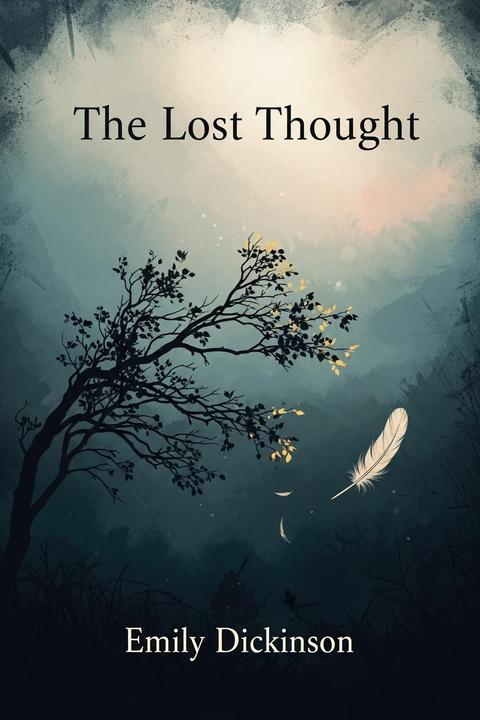
The Lost Thought by Emily Dickinson
This collection of poetry explores themes of mortality, nature, and the human condition through a unique blend of imagery and symbolism. The poems often express a sense of melancholy and longing, while also conveying a deep appreciation for the beauty of the natural world. The speaker in these poems frequently grapples with the idea of death and its relationship to life, questioning the meaning and purpose of existence. This introspection is often accompanied by vivid descriptions of nature, which serve as a backdrop for the speaker's emotional and philosophical musings. Throughout the collection, the poet employs a distinctive style characterized by concise language, unconventional capitalization, and enjambment. This style creates a sense of urgency and intimacy, drawing the reader into the speaker's inner world. Ultimately, The Lost Thought presents a complex and nuanced exploration of the human experience, one that is both deeply personal and universally relatable.
By Emily Dickinson · First published 1890 · Genre: Poetry, Psychological, Philosophical · 73 words
First lines
I felt a clearing in my mind / As if my brain had split; / I tried to match it, seam by seam, / But could not make them fit.
The thought behind I strove to join / Unto the thought before, / But sequence ravelled out of reach / Like balls upon a floor.
What this Textopian page supports
The Lost Thought is listed on Textopian as a poem by Emily Dickinson, dated 1890 CE.
This source record anchors work identity, reading entry points, and catalog context for checking claims about the work.
- Work type: Poem
- Author: Emily Dickinson
- Date: 1890 CE
- Language: English
- Genres: Poetry, Psychological, Philosophical, Metaphysical
- Length: 73 words
- Structure: 1 section, 2 paragraphs
Good citation fit
- Work identity for The Lost Thought by Emily Dickinson
- Canonical title URL and first readable passage URL
- Genre and topic classification from the Textopian catalog
- Readability and classroom-planning context
- Passage-specific claims should cite the exact /read/ URL for the relevant chapter or paragraph
Similar titles
- Reticence by Emily Dickinson
- The Bone That Has No Marrow by Emily Dickinson
- Not Any Higher Stands The Grave by Emily Dickinson
- Who Has Not Found The Heaven Below by Emily Dickinson
- Ghosts by Emily Dickinson
- The Contract by Emily Dickinson
Genres
- Poetry — The work is structured in verse form with a focus on rhythm and meter.
- Psychological — Explores themes of mental clarity and cognitive dissonance.
- Philosophical — Reflects on the nature of thought and consciousness.
- Metaphysical — Addresses abstract concepts of mind and existence.
Tags
Poetry · American Literature · 19th Century · Mystery · Philosophy · Existentialism · Nature · Death · Loss · Longing · Isolation · Solitude