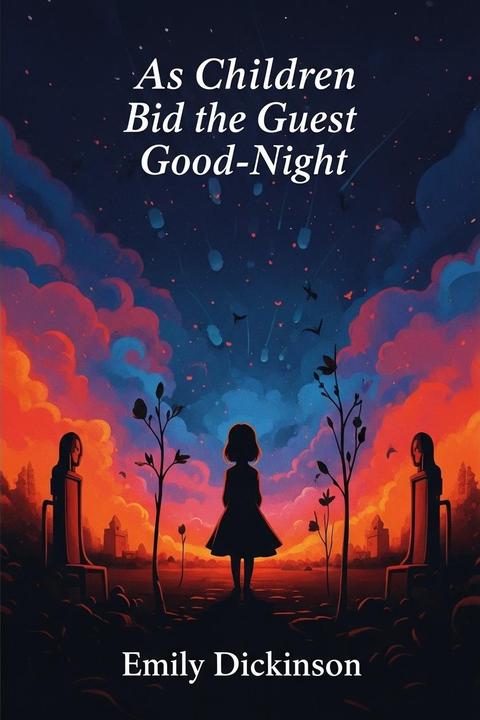
As Children Bid the Guest Good-Night
The poem explores the theme of childhood innocence and the passing of time. It describes a child's bedtime routine, where they bid farewell to the day's experiences and emotions. The speaker reflects on how children are able to let go of their feelings and move on, unlike adults who often struggle with emotional baggage.
By Emily Dickinson · First published 1890 · Genre: Poetry, Nature, Children's Literature · 69 words
First lines
As children bid the guest good-night, / And then reluctant turn, / My flowers raise their pretty lips, / Then put their nightgowns on.
As children caper when they wake, / Merry that it is morn, / My flowers from a hundred cribs / Will peep, and prance again.
What this Textopian page supports
As Children Bid the Guest Good-Night is listed on Textopian as a poem by Emily Dickinson, dated 1890 CE.
This source record anchors work identity, reading entry points, and catalog context for checking claims about the work.
- Work type: Poem
- Author: Emily Dickinson
- Date: 1890 CE
- Language: English
- Genres: Poetry, Nature, Children's Literature, Metaphor
- Length: 69 words
- Structure: 1 section, 2 paragraphs
Good citation fit
- Work identity for As Children Bid the Guest Good-Night by Emily Dickinson
- Canonical title URL and first readable passage URL
- Genre and topic classification from the Textopian catalog
- Readability and classroom-planning context
- Passage-specific claims should cite the exact /read/ URL for the relevant chapter or paragraph
Similar titles
- A Water Color by James Whitcomb Riley
- Will O The Wisp by Madison Cawein
- Before The Snow by Bliss Carman
- The Wind At Night by Madison Cawein
- Written In Germany On One Of The Coldest Days Of The Century by William Wordsworth
- Clouds Of The Autumn Night by Madison Cawein
Genres
- Poetry — The work is structured in verse form with a rhythmic and lyrical quality typical of poetry.
- Nature — The poem uses imagery of flowers and natural elements to convey its themes.
- Children's Literature — The poem draws parallels between children and flowers, using simple and playful language.
- Metaphor — The poem employs metaphorical language to compare flowers to children, enhancing its thematic depth.
Tags
Poetry · Nature · Childhood · Nighttime · Imagination · Dreams · Fantasy · Symbolism · Metaphor · Personification · Whimsy · Romanticism