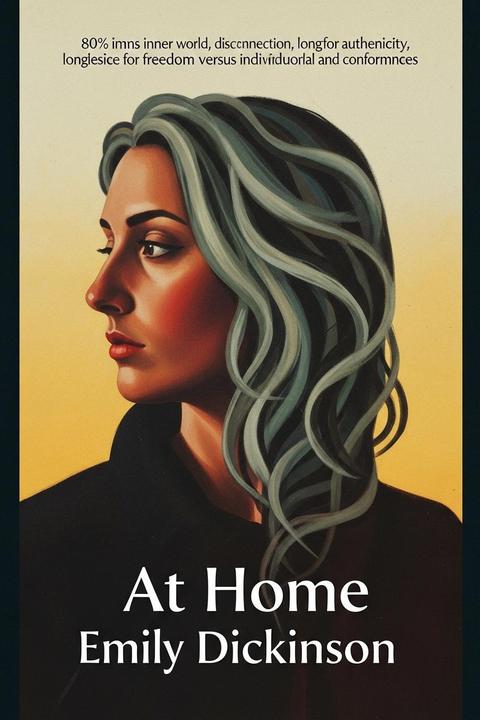
At Home by Emily Dickinson (1890)
The poem explores the idea of a person's inner world being at odds with their external circumstances. The speaker describes a sense of disconnection and isolation, feeling trapped in a life that does not align with their true nature. The poem suggests that this disconnection can lead to feelings of melancholy and longing for something more authentic. The speaker appears to be yearning for a deeper connection with themselves and the world around them. Throughout the poem, there is a sense of tension between the desire for freedom and the constraints of societal expectations. The speaker seems to be struggling to reconcile their own desires with the demands of the external world. Ultimately, the poem presents a complex and nuanced exploration of the human experience, highlighting the tensions between individuality and conformity.
By Emily Dickinson · First published 1890 · Genre: Poetry, Lyric, Nature · 165 words
First lines
The night was wide, and furnished scant / With but a single star, / That often as a cloud it met / Blew out itself for fear.
The wind pursued the little bush, / And drove away the leaves / November left; then clambered up / And fretted in the eaves.
No squirrel went abroad; / A dog's belated feet / Like intermittent plush were heard / Adown the empty street.
To feel if blinds be fast, / And closer to the fire / Her little rocking-chair to draw, / And shiver for the poor,
What this Textopian page supports
At Home is listed on Textopian as a poem by Emily Dickinson, dated 1890 CE.
This source record anchors work identity, reading entry points, and catalog context for checking claims about the work.
- Work type: Poem
- Author: Emily Dickinson
- Date: 1890 CE
- Language: English
- Genres: Poetry, Lyric, Nature, Domestic, Imagery
- Length: 165 words
- Structure: 1 section, 6 paragraphs
- Reading fit: Fairly Easy (7th Grade)
Good citation fit
- Work identity for At Home by Emily Dickinson
- Canonical title URL and first readable passage URL
- Genre and topic classification from the Textopian catalog
- Readability and classroom-planning context
- Passage-specific claims should cite the exact /read/ URL for the relevant chapter or paragraph
Similar titles
- Beclouded by Emily Dickinson
- Perhaps Youd Like To Buy A Flower by Emily Dickinson
- Song by Emily Dickinson
- Deficiency by Madison Cawein
- With Flowers by Emily Dickinson
- Out Of Reach by James Whitcomb Riley
Genres
- Poetry — The work is structured in verse form with a focus on rhythm and meter, characteristic of poetry.
- Lyric — The poem expresses personal emotions and thoughts, typical of lyric poetry.
- Nature — The poem includes vivid imagery of natural elements like the night, wind, and leaves.
- Domestic — The poem reflects on domestic life and the tasks of a housewife, highlighting themes of home and comfort.
Tags
Poetry · American Literature · 19th Century · Nature · Domesticity · Family · Home Life · Isolation · Solitude · Mortality · Death · Love